

A property that commands a five-figure monthly rent isn't just a dwelling; it's a high-performance financial engine that requires a specialized set of keys to start. When you are analyzing a luxury rental property investment, the standard calculators used for mid-market condos often fail to capture the nuance of the elite tier. You likely recognize that while high-end real estate offers a unique hedge against volatility, the path to true yield is paved with complexities that generic models ignore. Inaccurate vacancy projections and the high cost of maintaining bespoke finishes can quickly turn a crown jewel into a heavy burden.
We'll move beyond basic cap rates to master the sophisticated metrics required for maximum portfolio growth in 2026. This guide provides a clear framework for luxury underwriting, helping you navigate high-maintenance realities and the rising demand for longevity-driven living spaces. You'll gain the confidence to choose between short-term and long-term models while learning why a boutique partner is essential for maintaining the soul of your asset. From the impact of current 7.02% jumbo loan rates to the nuances of new pied-à-terre taxes, we're refining the craft of high-stakes acquisition.

Key Takeaways
- Learn why traditional rental benchmarks fail in the high-end market and how to adjust your cap rate expectations for safer, long-term asset security.
- Master the refined craft of analyzing a luxury rental property investment by integrating high-touch management costs and bespoke maintenance into your financial modeling.
- Discover the concept of lifestyle yield and how community-focused narratives drive premium nightly rates and tenant retention.
- Compare the gross revenue potential of short-term vacation rentals against the stability and lower turnover costs of long-term luxury leases.
- Identify the strategic advantages of a boutique partnership to ensure your acquisition timeline and management model are optimized for maximum portfolio growth.
Table of Contents
- Defining the High-End Asset: How Luxury Analysis Diverges from Standard Rentals
- Quantifying the Intangible: Essential Financial Metrics for Premium Real Estate
- Beyond the Spreadsheet: Evaluating Lifestyle Yield and Amenity Value
- Strategic Management Models: Comparing Short-Term Vacation vs. Long-Term Luxury Leases
- Executing Your Acquisition: The Boutique Path to Portfolio Optimization
Defining the High-End Asset: How Luxury Analysis Diverges from Standard Rentals
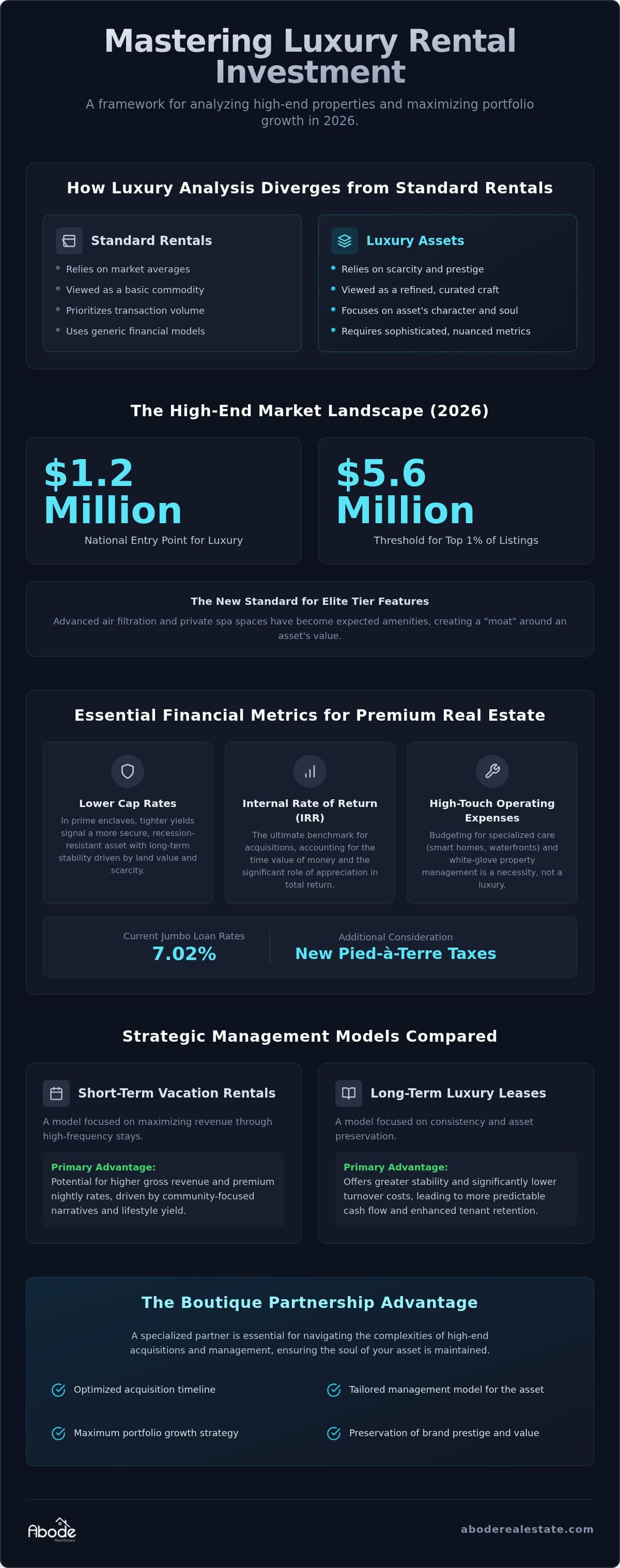
A luxury asset is defined by more than a simple price tag. While the national entry point for the luxury market has stabilized near $1.2 million in 2026, the true distinction lies in a property's essential character and spirit. When you are analyzing a luxury rental property investment, you must account for architectural integrity and the emotional resonance of the space. Standard rental benchmarks often fail because they prioritize volume over value. A generic apartment relies on market averages, but a luxury residence relies on scarcity. This shift requires moving from a transactional mindset to a curated asset philosophy where the home is viewed as a refined craft rather than a basic commodity.
The real estate appraisal process for these high-end homes often requires a deeper dive into comparable sales that share similar prestige rather than just similar square footage. You aren't just buying a building; you're acquiring a lifestyle that attracts high-net-worth individuals seeking privacy and wellness. Features like advanced air filtration and private spa spaces have become the new standard for the elite tier. These elements create a "moat" around the asset, protecting its value even when the broader market faces headwinds.
The Exclusivity Premium in Rental Analysis
Limited inventory in the top 1% of listings, which reached a threshold of $5.6 million in early 2026, creates a unique competitive landscape. Historical occupancy data for these tiers is often skewed by the low number of available units, making traditional projections unreliable. Designer finishes and high-end appliances aren't just aesthetic choices; they are critical tools for tenant retention. In this elite tier, luxury rental yield is defined as a harmonious blend of consistent cash flow and the long-term appreciation of brand prestige.
Investor Profile: Why Luxury Attracts Sophisticated Capital
Sophisticated investors look toward high-barrier-to-entry real estate to anchor their portfolios against market volatility. Luxury rental demand remains remarkably resilient during economic shifts because the target demographic is less sensitive to inflationary pressures. Aligning investment property acquisition with specific lifestyle objectives allows for a more tactical approach to wealth building. This isn't just about the numbers on a spreadsheet. It's about securing an asset that offers emotional security and personal retreat while serving as a sophisticated discipline for the modern global traveler.
Quantifying the Intangible: Essential Financial Metrics for Premium Real Estate
Financial underwriting for high-end assets requires a departure from the volume-based metrics of standard rentals. When analyzing a luxury rental property investment, you'll often find that a lower entry cap rate signals a more secure, recession-resistant asset. Prime enclaves typically trade at tighter yields because the underlying land value and scarcity drive long-term stability. While a generic apartment might offer a higher initial return, the luxury premium is found in the asset's ability to retain its soul and value during economic shifts. It is a sophisticated discipline that prioritizes asset preservation over quick, volatile wins.
The Internal Rate of Return stands as the ultimate benchmark for these acquisitions. It accounts for the time value of money and the significant role that appreciation plays in the total return profile. Understanding luxury market dynamics helps investors see beyond the immediate cash flow to the wealth-building potential of the eventual exit. This long-term view is essential for those who treat real estate as a curated move into a new chapter of financial security.
Operating Expenses in the High-End Market
Operating a premium residence requires an unhurried, meticulous approach to maintenance. You must budget for specialized care, such as the upkeep of sophisticated smart-home ecosystems or the preservation of delicate waterfront structures. White-glove property management is not a luxury; it is a necessity for maintaining the high-touch service that elite tenants demand. These management fees are higher than industry averages, but they protect the asset from the friction of neglect. Specialized insurance considerations for high-value residential assets also play a pivotal role, as coverage for bespoke finishes requires a well-connected advisor. If you're looking for a partner to guide you through these high-stakes transitions, our team is ready to provide the personalized attention your portfolio deserves.
Projecting Appreciation and Exit Strategies
Growth in luxury enclaves frequently outpaces national averages, especially as global interest in U.S. real estate continues to rise. Forcing equity through capital improvements, such as wellness-focused renovations or high-end kitchen upgrades, remains a refined craft. This tactical planning ensures the property remains competitive in a market where buyers seek turnkey perfection. The national entry point for the luxury market has stabilized near $1.2 million in 2026, but the ultra-luxury segment continues to climb, with the top 1% now reaching a threshold of $5.6 million. By employing specific investment property acquisition strategies, you can align your portfolio with the 5% average price increases seen in the luxury segment over the last year. When analyzing a luxury rental property investment for long-term growth, consider how these enclaves provide a hedge against broader market cooling.
Beyond the Spreadsheet: Evaluating Lifestyle Yield and Amenity Value
Success in the high-end market often hinges on factors that a standard financial model cannot quantify. When you are analyzing a luxury rental property investment, you must consider the concept of lifestyle yield. This metric measures how the emotional resonance of a home drives nightly rates and long-term occupancy. A property isn't just a collection of rooms; it's a curated experience that offers a sense of belonging and retreat. Investors who understand this move beyond the numbers to evaluate the essential character and spirit of a residence by exploring community-focused narratives that define a neighborhood's prestige.
Specific amenities act as the primary hooks for elite tenants who prioritize wellness and social connection. Features such as private infinity pools, integrated smart-home technology, and professional-grade outdoor kitchens offer a high return on investment by justifying premium pricing. These elements transform a dwelling into a personal sanctuary, providing the emotional security that high-net-worth individuals crave. In the 2026 market, these are no longer optional extras but foundational requirements for any serious acquisition of premium real estate. A well-placed fire pit or a temperature-controlled wine cellar can be the difference between a vacant property and a year-long waitlist.
The Curated Guest Experience as a Revenue Driver
The visual narrative of a property begins the moment a potential tenant views the listing. Professional staging and bespoke interior design are vital because they establish a sense of arrival before a guest even steps through the door. This aesthetic consciousness directly impacts rental demand by differentiating the asset from generic, mass-market offerings. In the world of luxury, the property is a service, not just a structure. This high-touch approach ensures that each stay feels like a curated move into a new chapter of living, fostering the social bonds that lead to repeat bookings and long-term leases.
Market Sentiment and Trend Analysis
Staying ahead of the curve requires monitoring the subtle movements of high-net-worth demographics. Current shifts show a deep preference for wellness-focused architecture, with features like advanced air filtration and dedicated meditation spaces significantly affecting property value. Analyzing a luxury rental property investment requires a well-connected guide who understands that prestige is a tangible asset. By leveraging local market insights, you can identify the next sought-after luxury pocket before it reaches peak saturation. This refined craft of trend analysis allows you to align your portfolio with the evolving desires of a global audience seeking both stability and style.
Strategic Management Models: Comparing Short-Term Vacation vs. Long-Term Luxury Leases
Choosing the right operational framework is a pivotal step when analyzing a luxury rental property investment. The decision between high-velocity short-term stays and the quiet stability of a long-term lease depends on your appetite for involvement and your specific yield targets. In 2026, we see a distinct shift toward the professionalization of short-term rentals. This model offers significant gross revenue potential, often outperforming traditional leases in prime destinations. However, it requires a meticulous approach to guest relations and a deep understanding of local ordinances, which are becoming increasingly complex as platforms face stricter accountability measures. Your choice should align with whether you view your asset as a high-touch service business or a long-term wealth preservation vehicle.
Conversely, the luxury long-term lease remains the gold standard for the passive investor. It offers a predictable cash flow and significantly lower turnover costs, preserving the integrity of the dwelling over time. While broader market conditions and elevated interest rates make cash flow more challenging, these high-end leases provide a buffer against the volatility of seasonal demand. A third option, the mid-term rental for stays between 30 days and 12 months, is gaining popularity as it often avoids the stringent regulations placed on short-term models while offering more flexibility than a multi-year commitment. It's a balanced path for those seeking to optimize their portfolios without the constant churn of vacation guests.
The Boutique Advantage in Vacation Rental Management
In the short-term market, the quality of your management partner determines your success. Professional cleaning and multi-platform optimization are non-negotiable standards for maintaining a five-star reputation. High-touch guest communication directly impacts your review scores, which in turn drive your nightly rates. This is where a boutique model outshines the cold, clinical feel of national franchises. A dedicated team ensures every guest experience feels like a curated arrival, fostering the social bonds that lead to repeat bookings. If you want to maximize your returns through a tailored approach, consider the benefits of full-service property management that treats your home as a refined craft.
Long-Term Leasing for the Passive Investor
Managing a long-term luxury lease requires sophisticated tenant screening processes that go beyond basic credit checks. You're looking for individuals who will respect the architectural significance and high-end finishes of your estate. Lease enforcement strategies for premium properties must be firm yet professional, ensuring the asset's integrity is maintained through regular oversight. This model provides emotional security for the investor, knowing the property is in the hands of a vetted resident. To see how we curate these long-term relationships and maintain the highest standards for our clients, explore our current luxury listings for rent and discover the Abode difference.
Executing Your Acquisition: The Boutique Path to Portfolio Optimization
The transition from theoretical underwriting to physical ownership is a high-stakes moment that requires steady, intentional guidance. When you finish analyzing a luxury rental property investment, the execution phase begins. This is where a boutique brokerage provides a distinct advantage by offering personal, client-centric attention that national franchises simply cannot replicate. We view every transaction as a curated move into a new chapter of your financial legacy. Our deep roots in the market allow us to identify off-market opportunities that never reach public listings, ensuring you have access to the most exclusive assets before they are widely known.
The acquisition timeline for a premium residence is often swifter and more discreet than standard real estate deals. You need a partner who can manage the unhurried pace of negotiations while maintaining a sense of calm confidence. Once the deal is secured, the focus shifts to optimization. Transitioning your new acquisition into a high-performing rental asset requires a tactical plan that begins well before the closing date. This proactive approach reduces the anxiety often associated with complex transitions and ensures your portfolio begins growing from day one. It is a refined craft that turns a mere property into a sophisticated financial engine.
The Role of the Trusted Advisor
A refined local expert acts as a high-level facilitator, moving beyond market data to discuss the essential character and spirit of a location. National franchises often treat luxury deals with a cold, clinical approach, but a boutique firm understands that you are investing in a lifestyle. We integrate rigorous investment analysis with lifestyle-oriented guidance to ensure your property serves both your financial and emotional objectives. This relationship is built on integrity and transparency, focusing on long-term portfolio growth rather than a single transactional win. We guide you through the logical progression of scaling your holdings while analyzing a luxury rental property investment for its future potential.
Final Steps to a Curated Investment
The final stages of a professional engagement should feel frictionless and transparent. Setting up your management structure early is the key to maintaining the soul of your new asset. Whether you choose a short-term vacation model or a stable long-term lease, having professional oversight ready before the first tenant arrives is essential for asset integrity. This seamless transition allows you to step back and enjoy the rewards of your tactical planning while we handle the specialized craft of high-touch management. If you are ready to take the next step in your journey, reach out to our team for a tailored investment property analysis today.
Securing Your Legacy in the High-End Market
Mastering the art of analyzing a luxury rental property investment requires a shift from viewing real estate as a transaction to seeing it as a curated asset. You've explored how to quantify lifestyle yield, navigate the 2026 regulatory landscape, and choose between the gross revenue of vacation stays or the stability of long-term leases. These choices define the trajectory of your portfolio and your personal peace of mind. Success in this elite tier isn't found in generic data; it's found in the specialized insights of a partner who understands the essential character and spirit of high-end enclaves.
At Abode Real Estate, we provide a boutique approach to high-stakes luxury transitions, blending residential sales expertise with professional property management. Our team acts as a well-connected guide, offering deeply rooted market knowledge that identifies opportunities before they reach the public eye. We believe that your move into a new chapter of investment should be as unhurried and intentional as the life you've built. When you're ready to move from analysis to acquisition, we're here to facilitate every detail with quiet authority. Explore our exclusive portfolio of luxury homes for sale and begin your next curated journey with confidence.
Frequently Asked Questions
What is a good cap rate for a luxury rental property investment?
A good cap rate typically ranges between 3% and 5% because high-end assets prioritize capital preservation over high immediate yield. When you are analyzing a luxury rental property investment, you'll find that these properties trade at tighter yields due to the scarcity of prime land and the resilience of the ultra-luxury segment. Lower entry yields often signal a safer, more stable long-term asset that is less sensitive to the economic volatility affecting the broader market.
How do I calculate the vacancy rate for high-end properties?
Calculating vacancy requires examining historical occupancy data specifically within the top 10% of the market. You shouldn't use national averages, as luxury units often have longer lease cycles but lower turnover rates. In 2026, the luxury entry point has stabilized near $1.2 million; your projections must account for the unique behavior of high-net-worth tenants who prioritize privacy and long-term belonging over the convenience of a quick move.
Should I manage my luxury rental myself or hire a boutique firm?
Hiring a boutique firm is almost always preferable for high-stakes assets because the management of a luxury residence is a refined craft. Self-management often leads to underestimating maintenance costs or failing to provide the 24/7 concierge level of service that elite guests expect. A specialized firm provides the high-touch communication and meticulous oversight necessary to maintain the property's soul while optimizing your asset's performance through professional, localized expertise and personal attention.
What amenities provide the highest return on investment for luxury rentals?
Wellness-focused features and advanced smart-home technology currently provide the highest return. Investing in private fitness spaces, spa-grade bathrooms, and professional outdoor kitchens justifies higher nightly rates and attracts long-term residents. High-net-worth individuals are increasingly seeking turnkey properties that prioritize health and longevity-driven living. These amenities aren't just luxuries; they are essential tools for tenant retention and forced equity in a competitive market where experience drives value and nightly rates.
How does the tax treatment differ between short-term and long-term luxury rentals?
Tax treatment varies significantly based on the duration of stay and local regulatory frameworks. Short-term rentals are frequently subject to hospitality and occupancy taxes, which requires precise financial tracking and reporting. Long-term leases generally benefit from standard residential tax treatments but may face specific luxury tier taxes in certain high-cost markets. It's vital to consult with a specialized advisor to understand how these obligations impact your net operating income and overall portfolio growth.
Is it better to invest in a luxury condo or a single-family estate?
The choice depends on your personal involvement preferences and desired lifestyle yield. Luxury condos often offer a more turnkey experience with shared amenities and lower individual maintenance responsibilities. Single-family estates, however, typically provide greater privacy and more significant opportunities for forced equity through capital improvements. While condos offer convenience, estates often attract the ultra-luxury demographic seeking a personal sanctuary and a deeper sense of arrival and belonging in a neighborhood.
What are the risks of investing in the high-end rental market?
The primary risks include underestimating the high cost of specialized maintenance and navigating the complex regulatory landscape for seasonal rentals. Inaccurate vacancy projections can also impact cash flow, especially when analyzing a luxury rental property investment during periods of elevated interest rates. The high-end market is susceptible to shifts in design trends; an asset can lose its competitive edge if it doesn't align with modern, wellness-focused architectural standards or amenity demands.
How do I find off-market luxury investment properties?
Finding off-market opportunities requires a partnership with a well-connected boutique brokerage that has deep roots in the luxury sector. Many high-end sellers prefer discreet transactions to maintain their privacy, meaning the most exclusive homes never reach public listing platforms. A trusted advisor uses specialized market insights and social bonds within the community to identify these hidden gems, ensuring you have the first opportunity to acquire an asset that perfectly aligns with your financial objectives.
Posted by Brook Walsh onEnjoy this blog post? Click here to subscribe for updates
Leave A Comment