

In 2026, the most successful investors have stopped viewing real estate as a simple collection of physical dimensions and price points. Instead, they recognize that a second home is a tactical financial instrument that requires a lifestyle-led management philosophy to reach its full ROI potential. If you're considering buying a second home for investment, you've likely weighed the tension between seeking a personal sanctuary and ensuring the underlying numbers remain resilient. It's natural to feel a sense of caution regarding management headaches or the hidden costs of secondary ownership, especially as mortgage rates for these specific assets have stabilized near 7.45%.
We believe that high-stakes transitions deserve a curated approach rather than a clinical transaction. This guide will show you how to transform a secondary property into a high-performing asset through expert acquisition strategies and sophisticated management. We'll explore the latest tax advantages, including the permanent 100% bonus depreciation; we'll also identify the specific geographic shifts that are driving long-term capital appreciation and sustainable passive income in the current market. By the end of this guide, you'll have a clear roadmap for building a legacy asset that balances financial precision with personal joy.
Key Takeaways
- Adapt to the 2026 economic landscape by moving beyond speculative buying toward a strategy focused on intentional asset curation and long-term stability.
- Master the financial nuances of buying a second home for investment by calculating the true cost of ownership and navigating current debt-to-income requirements.
- Compare the high-yield potential of short-term vacation rentals with the reliable security of long-term leasing to determine which model fits your lifestyle.
- Identify high-performing properties by prioritizing locations with historical demand and understanding how architectural significance impacts future resale value.
- Streamline your journey from discovery to closing with a management philosophy that treats property oversight as a refined craft rather than a mere transaction.
Table of Contents
- The Strategic Value of a Second Home Investment in 2026
- Analyzing the Financial Framework and ROI Potential
- Selecting the Right Rental Model: Short-Term vs. Long-Term
- Critical Selection Criteria for a High-Performing Asset
- Navigating the Acquisition and Management Journey
The Strategic Value of a Second Home Investment in 2026
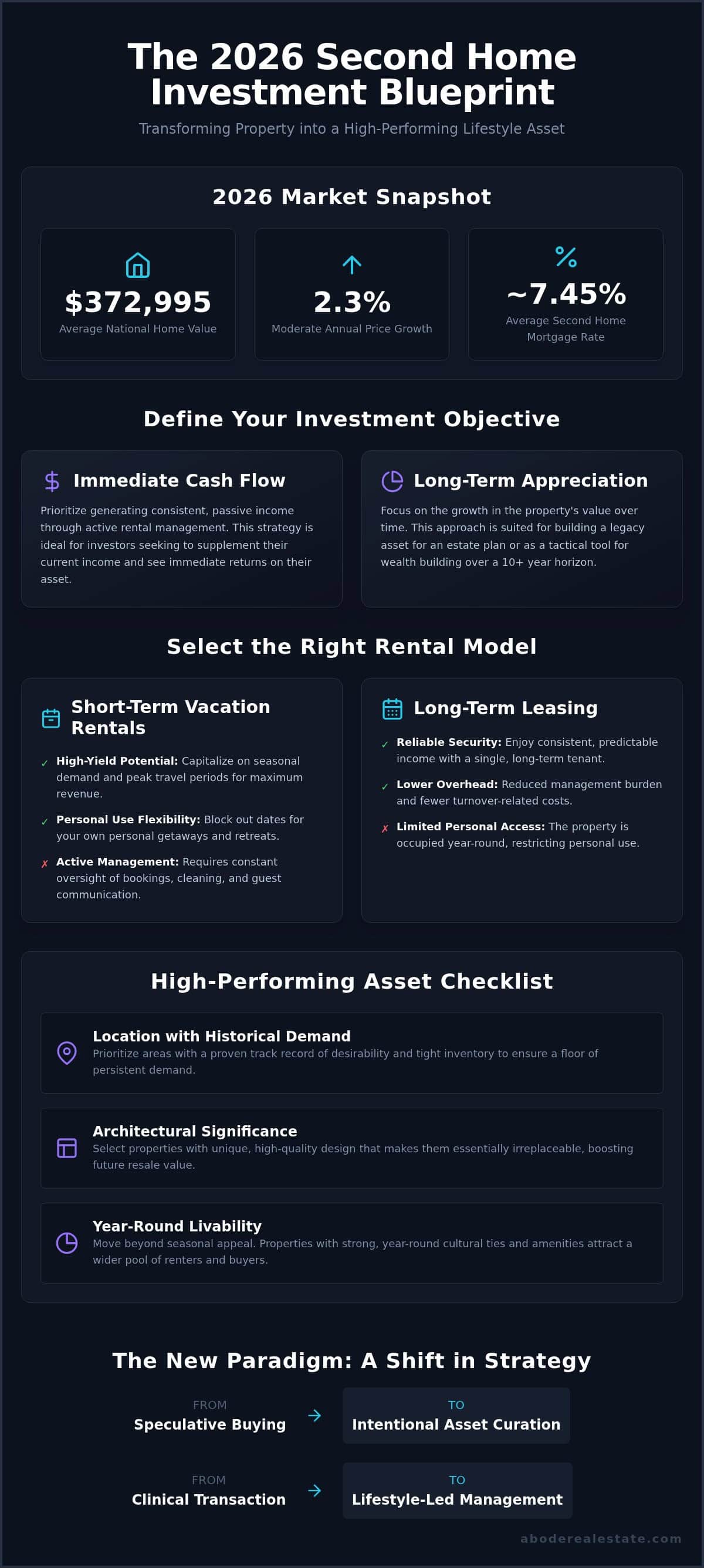
The 2026 housing market has entered a phase of quiet, confident stability. With national home values averaging $372,995 and price growth moderating to a steady 2.3%, the era of frantic, speculative bidding has been replaced by a more intentional era of asset curation. For those considering buying a second home for investment, this environment offers a rare opportunity to move with precision. Real estate remains a premier hedge against the volatility seen in traditional equities because it provides a tangible anchor for wealth that isn't subject to the same overnight fluctuations as the stock market. It's a choice that blends financial optimization with the deeply personal desire for a curated retreat.
To better understand the financial nuances of this transition, watch this helpful video:
Today's sophisticated buyers are looking past basic ownership. They are utilizing advanced real estate investing strategies to ensure their secondary residences serve multiple purposes. This shift toward value-based curation means prioritizing properties that offer year-round livability and strong cultural ties rather than just seasonal appeal. When you're buying a second home for investment in this climate, you aren't just purchasing a structure; you're acquiring a lifestyle asset that must perform under professional scrutiny while still offering a sense of personal belonging and arrival.
Defining Your Investment Objectives
Clarity is your most valuable asset during the acquisition process. You must decide if your primary goal is immediate cash flow through active rental management or long-term capital appreciation. While some properties can achieve both, the most successful portfolios prioritize one to guide their search. It's also vital to consider how this property fits into your broader estate plan. Is this a legacy asset meant to be passed down, or a tactical tool for wealth building over a ten-year horizon? Our guide on investment property acquisition can help you align these goals with market realities.
Market Resilience and Long-Term Appreciation
Luxury residential markets have shown remarkable durability, often outperforming broader averages during economic shifts. High-end transactions now account for 28% of global second-home purchases, driven by a buyer class that values exclusivity and architectural significance. Because inventory in these premium pockets remains historically tight, property values are supported by a floor of persistent demand. In the context of 2026 supply constraints, market resilience is the ability of a property to retain and grow its value because its unique location and quality make it essentially irreplaceable for future buyers.
Analyzing the Financial Framework and ROI Potential
The financial architecture of buying a second home for investment requires a level of precision that goes far beyond a simple mortgage payment calculation. In the current 2026 market, where the national average for second home mortgage rates reached 7.45% in July, successful acquisition depends on a rigorous understanding of your debt-to-income ratio. Lenders have maintained strict standards for non-primary residences, often requiring significant cash reserves and down payments ranging from 10% to 20% for second homes, or up to 25% for pure investment properties. Understanding these requirements for purchasing a second home is the first step in ensuring your portfolio remains resilient against shifting interest rates.
Projecting a reliable net operating income means looking past the sticker price to the true cost of ownership. You must account for the $40,000 State and Local Tax (SALT) deduction cap for joint filers, alongside specialized insurance premiums and professional management fees. A comprehensive investment property analysis helps transform these variable costs into a predictable model for growth. It's about optimizing the asset so it serves as a stable foundation for your broader estate, providing both financial security and a sense of personal retreat.
Financing Strategies for Secondary Properties
Securing the right capital structure is a refined craft that balances conventional loan limits with the necessity of jumbo financing for luxury assets. Many sophisticated buyers are leveraging the equity in their primary residences to fund new acquisitions, creating a frictionless path to closing. Portfolio lenders offer an alternative for unique investment structures, providing customized terms that national franchises cannot match. These boutique financial arrangements allow for greater flexibility in how you manage your debt-to-income profile while building a diverse real estate portfolio.
Understanding Tax Advantages and Deductions
The 2026 tax landscape offers powerful incentives for those buying a second home for investment, particularly through the permanent 100% bonus depreciation made available by recent legislation. This allows you to deduct the full cost of qualified property in the first year, significantly offsetting your annual tax liability. The 14-day rule remains a vital tool, allowing you to collect rental income tax-free if you limit the property's rental use to two weeks or less annually. For those looking to scale, consulting with a professional on 1031 exchange opportunities can help you defer capital gains and reinvest in even higher-performing assets. If you're ready to explore how these strategies apply to specific markets, you can connect with our advisory team for a personalized consultation.
Selecting the Right Rental Model: Short-Term vs. Long-Term
Choosing between a short-term and long-term rental model is a decision that fundamentally shapes your daily experience as an owner. While vacation and investment home purchases account for approximately 16% of all existing-home sales in 2026, the success of these assets depends heavily on aligning your choice with local legal frameworks. For instance, investors in New York City face highly restrictive laws that favor primary residents, while those buying a second home for investment in states like Indiana or Idaho benefit from 2026 legislation that limits local government interference. This regulatory landscape should be your first consideration before deciding whether to prioritize maximum yield or predictable stability.
The Vacation Rental Market: High Yield and Lifestyle
The vacation rental model offers a dynamic way to optimize your property's earning potential while maintaining the flexibility of a personal retreat. By targeting high-end guests with curated experiences, you can command premium nightly rates that far exceed traditional monthly leasing income. Success in this space requires meticulous platform optimization and a focus on high-touch service to ensure maximum annual occupancy despite seasonal shifts. Many owners find that our full-service property management approach removes the friction of daily operations, allowing the asset to perform at its peak. This hybrid model is ideal for those who value the ability to block off weeks for personal use while still generating significant income during peak travel windows.
Long-Term Leasing: Predictable Income and Stability
For the risk-averse investor, long-term residential leasing provides a sense of calm and financial clarity. This model significantly reduces operational costs by eliminating the frequent cleaning and turnover associated with short-term stays. Screening for high-quality tenants is essential in the luxury market to ensure your dwelling is treated with the respect it deserves. When you're buying a second home for investment with a long-term focus, you're trading the high-ceiling yield of vacation rentals for a steady, reliable cash flow. The stability premium in long-term residential sales is the measurable financial advantage gained from consistent, year-round occupancy that insulates an investor from seasonal market shifts and high turnover costs. You can view our current portfolio of homes for rent to see how high-quality assets attract long-term residents who value premium living environments.
Critical Selection Criteria for a High-Performing Asset
A truly high-performing asset is never a commodity. When you're buying a second home for investment, you must look for properties that possess an inherent scarcity, ensuring they remain desirable regardless of broader market fluctuations. While the average home value in the U.S. sits at $372,995 as of June 2026, luxury dwellings often operate on a different trajectory, fueled by architectural significance and historical demand. These properties don't just provide shelter; they offer a sense of arrival and a connection to the local spirit that generic builds simply cannot replicate. By focusing on dwellings with unique character, you create a portfolio that resists commoditization and maintains its allure for the next generation of high-net-worth buyers.
Location Factors That Drive Demand
Precision in location is the difference between a standard return and an exceptional one. We often see the micro-market effect in action, where one street significantly outperforms another due to subtle factors like sunset views or proximity to a hidden cultural hub. Prioritizing areas with planned infrastructure improvements or robust school districts creates a foundation for long-term growth. You can explore our detailed guides on various local communities to understand the unique character and spirit of the areas we serve.
Essential Amenities for Premium Rental Rates
In 2026, the discerning renter expects more than just a beautiful view. Modern, tech-forward home automation has moved from a luxury to a necessity, allowing guests to control their environment with seamless ease. Outdoor living spaces, designed as true extensions of the interior, are now the primary driver of interest for high-net-worth individuals. These retreats should feature high-end finishes and thoughtfully curated landscapes that foster social bonds and personal relaxation. Properties that offer these high-touch features consistently command higher nightly rates and maintain better occupancy levels.
Interior design trends for 2026 emphasize a blend of aesthetic consciousness and functional elegance. Properties that integrate sustainable materials and wellness-focused features, such as advanced air filtration or dedicated meditation spaces, stand out in a crowded market. By selecting a dwelling that aligns with these evolving lifestyle preferences, you ensure your investment remains a high-performing legacy asset. If you're ready to find a property that meets these exacting standards, browse our current luxury homes for sale to begin your search.
Navigating the Acquisition and Management Journey
The transition from search discovery to a successful closing marks the beginning of a property's life as a tactical financial instrument. While many view the purchase as the final step, the most successful investors understand that the journey of curating a high-performing portfolio is just beginning. In the 2026 market, buying a second home for investment involves navigating complex reporting requirements, such as the new FinCEN disclosures for all-cash buyers using entities like LLCs or trusts. This sophisticated environment demands a guide who acts as a high-level facilitator rather than a traditional salesperson, ensuring every detail is managed with quiet authority and transparency.
The Boutique Acquisition Process
A boutique brokerage offers a distinct advantage by identifying off-market opportunities that never reach the public eye. These exclusive dwellings often provide the best value because they aren't subject to the same competitive pressures as listed inventory. Negotiation in high-stakes luxury transactions is a refined craft; it requires a deep understanding of local market spirit and the ability to build long-term relationships. By utilizing localized insights, you can uncover undervalued assets that offer superior long-term capital appreciation. For a deeper look at wealth building, explore our proven investment property acquisition strategies to refine your approach.
Protecting Your Investment with Professional Management
The true measure of a passive income stream is the quality of the oversight behind it. While self-hosting might seem appealing, the reality often involves significant management headaches and hidden costs that erode your ROI. Professional oversight transforms a property from a physical liability into a frictionless asset. This includes everything from coordinating maintenance to providing detailed financial reporting for remote owners who may be managing their portfolio from across the country. We believe that professional management is the key to maintaining the essential character of your retreat while optimizing its performance. Discover how our full-service property management ensures your asset remains in pristine condition, allowing you to enjoy the lifestyle benefits without the operational burden.
Building a real estate legacy is an unhurried, intentional process. By aligning with a trusted advisor who understands the intersection of financial precision and lifestyle-led management, you ensure your secondary residence becomes a cornerstone of your estate. The goal is a seamless arrival at your new chapter, where every high-stakes decision has been handled with care and sophistication.
Curating Your Real Estate Legacy
Real estate in 2026 has evolved into a discipline of precision, where the most successful assets blend financial resilience with genuine lifestyle appeal. By aligning your acquisition with the strategic frameworks we've discussed, you move beyond simple ownership into the realm of intentional wealth curation. A high-performing portfolio depends on the synergy between expert analysis and a management philosophy that treats property oversight as a refined craft. Whether you're seeking the dynamic yields of the vacation market or the steady calm of long-term leasing, your investment should serve as a cornerstone for your broader estate.
Buying a second home for investment is a high-stakes transition. It deserves personalized, hands-on attention. We invite you to begin your curated investment journey with Abode Real Estate and experience the difference of boutique luxury expertise. Our team provides comprehensive investment property analysis and full-service management to ensure your asset remains a source of joy and security. Your next chapter of wealth building starts with a single, intentional step toward a property that truly belongs in your legacy.
Frequently Asked Questions
Is buying a second home for investment better than the stock market?
Real estate provides a tangible anchor for wealth that often resists the volatility of traditional equities. While the stock market offers liquidity, buying a second home for investment allows you to leverage permanent tax advantages, such as 100% bonus depreciation. It's a choice that balances financial optimization with the personal joy of owning a curated retreat. Many investors prefer this dual track return of capital appreciation and consistent passive income.
What are the typical down payment requirements for a second home?
Lenders generally require a down payment between 10% and 20% for a secondary residence intended for personal use. If the dwelling is classified strictly as an investment property, that requirement often rises to 25%. These stricter standards ensure that you have significant equity in the asset from day one. Stronger credit scores and larger cash reserves are also typical expectations for these high stakes transactions.
Can I use rental income to qualify for a second home mortgage?
You can often use a portion of projected rental income to qualify for a mortgage, provided you have a professional appraisal or a signed lease agreement. Lenders typically count about 75% of that income to account for potential vacancies and maintenance costs. This additional cash flow can help you meet the necessary debt to income ratios. It's a strategic way to increase your purchasing power when building a diverse real estate portfolio.
What is the difference between a second home and an investment property for tax purposes?
The primary difference lies in the number of days you personally use the dwelling versus the time it's rented to others. When buying a second home for investment, a property rented for 14 days or fewer allows for tax-free income under current regulations. An investment property is rented for longer periods and offers broader deductions like depreciation. Both models offer unique paths to asset optimization depending on your specific lifestyle goals.
How much should I budget for property management fees?
Professional management fees are an essential line item that reflects the complexity and level of service required for your property. Long-term residential leasing typically involves a different fee structure than high-touch vacation rental management. You should view these costs as an investment in the preservation of your asset's condition and the guest experience. Professional oversight ensures a frictionless experience for both the owner and the residents or guests.
What happens if my second home is vacant for several months?
Extended vacancy periods should be factored into your initial financial framework through a robust cash reserve. Most lenders expect to see several months of mortgage payments held in reserve to ensure the asset remains secure during quiet seasons. Effective marketing and professional management can help minimize these gaps by maintaining high visibility in the market. Consistent occupancy is the goal, but financial preparation provides the calm confidence needed for long-term success.
Is it worth buying a second home in a high-interest rate environment?
Purchasing in a high interest rate environment is often a tactical move for those who prioritize long-term appreciation over immediate borrowing costs. If the property is in a high-demand location with limited inventory, the 2.3% projected price growth for 2026 can still make the acquisition worthwhile. You also have the option to refinance if rates decrease in the future. The focus should remain on the intrinsic value and scarcity of the specific dwelling.
Can I manage a short-term rental myself from another state?
Managing a property from another state is possible with the right technology, but it often leads to significant operational friction. Local professional oversight is often the key to achieving a truly passive income stream and maintaining high guest satisfaction. A refined local expert can handle emergency repairs and guest needs with a level of precision that is difficult to replicate from a distance. This ensures your retreat remains a high-performing asset without the daily stress.
Posted by Brook Walsh onEnjoy this blog post? Click here to subscribe for updates
Leave A Comment