

The most impressive home isn’t always the right purchase. When buying luxury real estate, a striking view or elegant finish can capture your attention, but the details that shape daily life and long-term ownership deserve equal consideration. The right choice fits the way you want to live and the financial goals you’ve set.
It’s natural to wonder which features merit a closer look, what might be hidden behind a polished presentation, and how to weigh lifestyle against investment potential. A confident purchase starts with clear priorities and careful review, not just a compelling first impression.
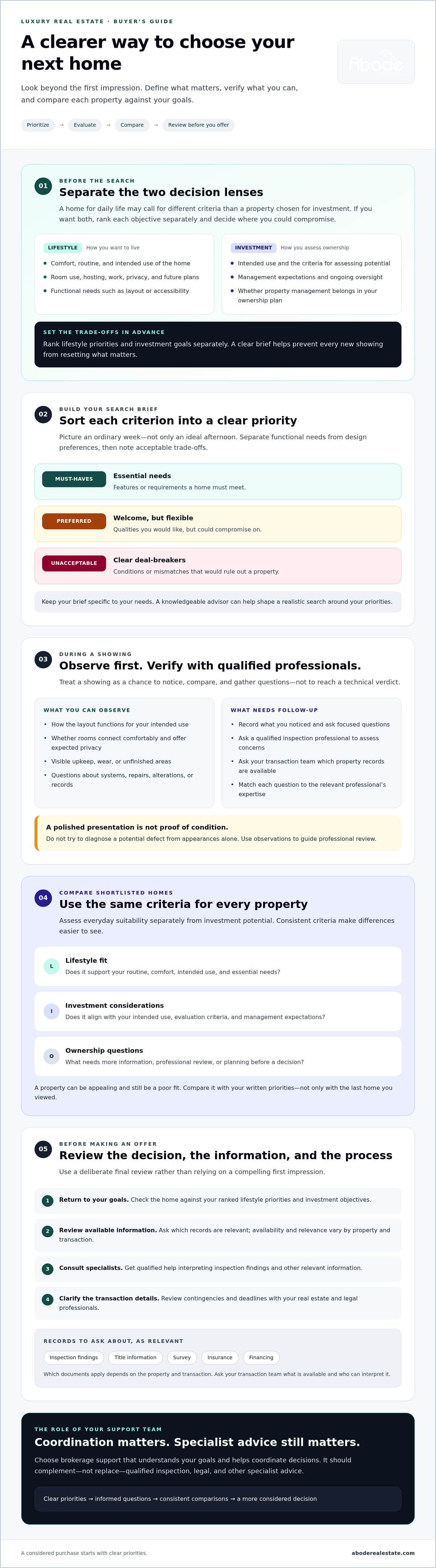
This guide will help you define your must-haves before viewing properties, assess a home and its documentation with qualified professionals, and consider the responsibilities of ownership before you commit. It also explains how personal preferences and investment objectives can shape your decision, including when property management may be part of the plan with Abode Real Estate.

Key Takeaways
- Separate lifestyle priorities from investment goals, then rank each list before viewing properties.
- Look beyond finishes and staging. Prepare focused questions for qualified inspectors and other relevant professionals.
- Compare shortlisted homes against consistent criteria, assessing everyday suitability separately from investment potential.
- Before making an offer, revisit your goals, review available information, consult specialists, and clarify contingencies and deadlines with your real estate and legal professionals.
- Choose brokerage support that understands your goals and helps coordinate decisions without replacing specialist advice.
Table of Contents
- Buying Luxury Real Estate: Define Your Priorities Before You Search
- How to Evaluate a Luxury Property Beyond Its First Impression
- Compare Luxury Homes Using Lifestyle Fit, Ownership, and Investment Criteria
- A Practical Due-Diligence Checklist Before Making an Offer
- Choose the Right Support for Your Luxury Real Estate Purchase
Buying Luxury Real Estate: Define Your Priorities Before You Search
A significant property purchase deserves clarity before the excitement of a beautiful view, striking architecture, or immaculate staging takes over. Before buying luxury real estate in South Florida, decide what the home needs to do for you. A thoughtful brief helps you compare properties on what matters instead of letting each new showing reset your priorities.
Separate lifestyle priorities from investment goals, then rank each list on its own. A residence chosen for daily comfort may call for different criteria than a property acquired for income or long-term potential. For an introduction to residential, commercial, and investment property, see understanding the fundamentals of real estate.
For a visual look at how property types can differ, watch this overview:
How to turn a luxury-home wish list into useful criteria
Picture an ordinary week, not just an ideal afternoon. Consider how you’ll use the rooms, host guests, work, and adapt the home to future plans. Separate functional needs, such as a particular layout, privacy, or accessibility, from preferences like a specific finish or design detail. Then note acceptable trade-offs. A less preferred style, for example, may be worthwhile if the layout better supports daily life.
Organize your criteria into three groups:
- Must-haves: Essential features or needs a home must meet.
- Preferred: Qualities you’d welcome but could compromise on.
- Unacceptable: Conditions or mismatches that would rule out a property.
Use these priorities with a knowledgeable advisor to create a realistic search brief. Keep it specific to your needs rather than relying on broad assumptions about what every luxury buyer should want.
Should you buy for lifestyle, investment, or both?
Personal use and investment are different decision lenses. For a home you’ll enjoy, weigh comfort, routine, and the experience you want it to provide. For an investment, clarify the intended use, management expectations, and criteria you’ll use to assess its potential. If ongoing oversight matters, include property management considerations in your ownership planning.
If the purchase has an investment focus, review investment property acquisition strategies to develop your evaluation approach. When a property needs to meet both lifestyle and investment goals, rank each objective separately and decide in advance where you’re willing to compromise. That gives you a clearer basis for comparing homes.
How to Evaluate a Luxury Property Beyond Its First Impression
Polished finishes and careful staging can make a home feel move-in ready, but they don’t replace an independent evaluation. Treat a showing as an opportunity to observe, compare, and gather questions, not to reach a technical verdict about the property.
Visual appeal can invite a closer look, but it cannot establish a property’s condition.
Look at how the home functions as well as how it photographs. Notice the layout, visible upkeep, and whether the spaces suit your intended use. If something raises a question, record what you observed and ask a qualified inspection professional to assess it. Don’t try to diagnose a potential defect from appearances alone.
What should a buyer examine during a property review?
Walk through with your priorities in mind. Consider whether rooms connect comfortably, whether the property offers the privacy you expect, and whether visible wear or unfinished areas call for follow-up. Note questions about systems, past repairs, alterations, or supporting records. These observations can help an inspector focus on areas where you need more information.
Which documents and specialists can inform your decision?
Ask your transaction team what property records are available and which specialists can help interpret them. Depending on the property and transaction, questions may involve inspection findings, title information, a survey, insurance, or financing. Availability and relevance vary, so don’t assume the same documents or reviews apply to every purchase.
Match each question to the right expertise. An inspector can address the property’s physical condition; legal questions belong with a qualified legal professional, while insurance and financing questions should go to the relevant providers. Ask who should review each record, what it does and doesn’t tell you, and whether you need more information before deciding.
Keep a simple follow-up list as you review the home and its documentation:
- What did you observe, and what needs professional assessment?
- Which questions about systems, repairs, or alterations remain unanswered?
- What records are available, and who can explain their relevance?
- What further review would help you make a considered decision?
Careful evaluation doesn’t mean expecting certainty from a showing. It means knowing what you’ve observed, what remains unknown, and who can help assess it.
Compare Luxury Homes Using Lifestyle Fit, Ownership, and Investment Criteria
Once you’ve clarified your priorities and gathered questions for professional review, apply the same standards to every shortlisted property. Consistent criteria make it easier to assess whether a home fits your routine, what ownership may involve, and which assumptions still need evidence. A comparison can keep a memorable showing from outweighing practical considerations.
A fair comparison uses the same criteria for every property, even when one home makes a stronger first impression.
How do you compare two luxury homes fairly?
Create a simple scorecard based on your must-haves and preferred qualities. Use one consistent rating scale, such as 1 to 5, and add a note explaining each score. Record strengths, concerns, unanswered questions, and the evidence behind your assessment. A high score should reflect how well a property meets your priorities, not how persuasive its presentation feels.
Keep daily-use suitability separate from investment potential. A home may work beautifully for personal use but need more investigation as an investment. Treat asking prices and financial assumptions as specific to each property, and verify current information with the appropriate professionals rather than relying on generalized claims.
What changes when the property is an investment?
Begin with the intended use, then consider the responsibilities it brings. Ask who will oversee the property, what level of management you expect, and which operating assumptions need review. Before estimating outcomes, consult qualified professionals about assumptions involving income, expenses, and ownership structure. Label each estimate as confirmed, unverified, or dependent on further review.
If ongoing oversight is part of your plan, explore what full-service property management may involve. Management needs can shape the ownership experience, so consider them alongside the home’s lifestyle fit and investment case.
A useful comparison sheet might include:
- Lifestyle fit: Daily routines, layout, privacy, and intended use.
- Ownership considerations: Known responsibilities, open questions, and information still to confirm.
- Investment review: Intended use, management expectations, and assumptions requiring professional input.
- Evidence: The source and date of the information supporting each rating.
Resist changing the criteria to favor a home you already love. If new information changes your priorities, update the scorecard for every candidate. This keeps the decision grounded, gives specialists clear questions to address, and helps distinguish a genuine match from an appealing but unverified possibility.
A Practical Due-Diligence Checklist Before Making an Offer
A clear review process can help turn open questions into decisions you’re prepared to make. Before making an offer, work through these steps with your transaction team. The right reviews, documents, contingencies, and deadlines depend on the specific property and purchase, so confirm what applies rather than assuming every transaction follows the same path.
What questions should you resolve before submitting an offer?
- Revisit your goals. Does the property still meet your essential criteria and intended use? Consider whether new information has changed your priorities or revealed a mismatch.
- Review available information. Gather the records provided for the property and note what remains unclear. List questions about inspection findings, title, insurance, financing, and other documentation for the relevant professionals.
- Consult specialists. Ask qualified professionals to address questions within their expertise. Direct property-condition concerns to an inspector, title questions to an appropriate title or legal professional, and insurance or financing questions to the relevant providers.
- Decide with the terms in view. Before committing, ask your real estate and legal professionals to explain proposed offer terms, any contingencies, and applicable deadlines. Confirm how those terms relate to your specific transaction.
Keep the distinction between an unanswered question and a confirmed concern clear. Not every issue can be resolved in the same way, and the appropriate next step may depend on the property, available information, and terms under discussion.
How can buyers keep due diligence organized?
Use a shared checklist to track each document or question, who is responsible for follow-up, and when you expect an update. Label information by source: verified record, seller statement, professional estimate, or your own assumption. This distinction helps you see where you still need confirmation.
- Question or document: What needs review?
- Responsible professional: Who can address it?
- Status: Verified, awaiting follow-up, or an assumption?
- Next step: What action or timing has your team confirmed?
This record can keep conversations focused as you move from initial interest toward a decision. If you’re still exploring options, browse luxury homes for sale and use your priorities to guide the search.
Choose the Right Support for Your Luxury Real Estate Purchase
A luxury property purchase can involve connected decisions, from identifying suitable homes to preparing an offer and coordinating follow-up. The right advisor should communicate clearly and bring relevant market knowledge while keeping your priorities at the center of the process. An advisor can help organize decisions, but doesn’t replace independent legal, inspection, insurance, or financing advice.
What should you expect from a luxury buyer’s advisor?
Notice whether an advisor listens closely, explains options in plain language, and adapts the search to your stated needs rather than steering you toward a standard template. Ask how they’ll help assess potential properties, prepare an offer, and coordinate questions with the appropriate professionals. Understand the proposed scope of representation and services before starting a professional relationship.
A useful conversation is specific. Share what matters most, then ask how the advisor will help you compare properties and keep open questions visible as the process moves forward. An advisor can offer market context and help coordinate next steps, while specialists remain responsible for guidance within their fields.
How do you move from research to a tailored search?
Bring together your preferred property characteristics, ranked priorities, and unresolved questions. Include how you plan to use the property and which trade-offs you’re comfortable considering. This brief gives an advisor a practical starting point and makes it easier to refine the search as you learn more.
If the purchase is an investment, distinguish acquisition guidance from ongoing property management. Evaluating whether a property fits your investment objectives is different from planning who will oversee it after purchase. Ask what management responsibilities you may need to plan for, and clarify which services are included in any professional relationship before relying on them.
Before proceeding, consider whether the advisor’s communication style, market knowledge, and proposed support fit your goals. You can also discuss how investment-property acquisition and property management fit into your plans without treating one as a substitute for the other.
Make Your Next Move With Clarity
A confident purchase begins with a clear sense of what matters to you, supported by careful evaluation and a realistic ownership plan. Buying luxury real estate in South Florida is a personal decision as well as a significant financial commitment, so keep lifestyle priorities distinct from investment assumptions as you weigh your options.
Before moving forward, make sure you understand what’s confirmed, what still needs professional review, and how each property aligns with your goals. The right support can help bring those decisions into focus without replacing advice from legal, inspection, insurance, or financing specialists.
Abode Real Estate focuses on luxury residential sales and offers investment property analysis for buyers considering an acquisition through an investment lens. Led by local market experts, the boutique firm can help you approach your search with tailored guidance.
Discuss your luxury property search with Abode Real Estate and share what you’re looking for.
Frequently Asked Questions
How do I start buying luxury real estate?
Begin by defining how you intend to use the property, which features are essential, and what ownership responsibilities you’re prepared to take on. Organize your financing questions and identify qualified professionals who can advise on the parts of the purchase within their expertise. Then review properties against one consistent brief. The right sequence can vary with the buyer and transaction, so confirm applicable steps with your professional team.
What should I look for when buying a luxury home?
Look for a fit with your daily routines, preferred layout, privacy needs, visible condition, available documentation, and ownership plan. Attractive finishes and staging can help you imagine living there, but they’re only part of the evaluation. Note questions for follow-up, and consider an independent inspection or specialist review where appropriate. The right scope depends on the property and transaction, so ask qualified professionals what further evaluation may be useful.
Is buying a luxury property different from buying a standard home?
The core decisions are familiar: assess whether the property suits your needs, review available information, and understand the proposed transaction with qualified guidance. Luxury buyers may have more specific lifestyle, property, or investment criteria to weigh, but the price tier alone doesn’t establish quality or suitability. Set priorities before comparing options, and seek professional review tailored to each property rather than assuming luxury homes share the same features or considerations.
Can a luxury home also be a sound investment?
It can be considered as an investment, but suitability depends on the specific property, intended use, purchase assumptions, expenses, and ownership plan. No outcome is guaranteed. Personal enjoyment and financial performance are separate considerations, even when both matter to you. Before relying on projections, ask qualified real estate, financial, and tax professionals to review the assumptions and explain uncertainties relevant to your circumstances and the property.
What professionals should I consult before buying luxury real estate?
Your team may include a real estate advisor, property inspector, legal professional, insurance professional, lender, and tax professional, depending on your needs and the transaction. The purchase still calls for advice tailored to the particular property and terms. A brokerage can support real estate decisions and communication, but it doesn’t replace legal, lending, inspection, insurance, or tax expertise. Ask each professional to clarify their role and scope.
How can I compare two luxury properties objectively?
Build a side-by-side table and apply the same buyer-defined criteria to each property. Track the supporting evidence, unanswered questions, visible condition, fit with your intended use, and ownership assumptions in separate fields. Verify relevant details with appropriate professionals. Consistent criteria help reveal trade-offs without letting one memorable feature dominate the comparison. They can’t guarantee future performance or establish a property’s value on their own.
Should I hire a real estate advisor when buying a luxury home?
An advisor may help clarify priorities, identify relevant properties, coordinate transaction communication, and support offer discussions within the agreed service scope. Before choosing one, ask about relevant experience, process, communication, and representation terms. Confirm what support is included and how questions will be handled. Depending on the purchase, you may also need independent legal, financial, inspection, and insurance advice; an advisor’s role doesn’t replace those specialists.
Posted by Brook Walsh onEnjoy this blog post? Click here to subscribe for updates
Leave A Comment