

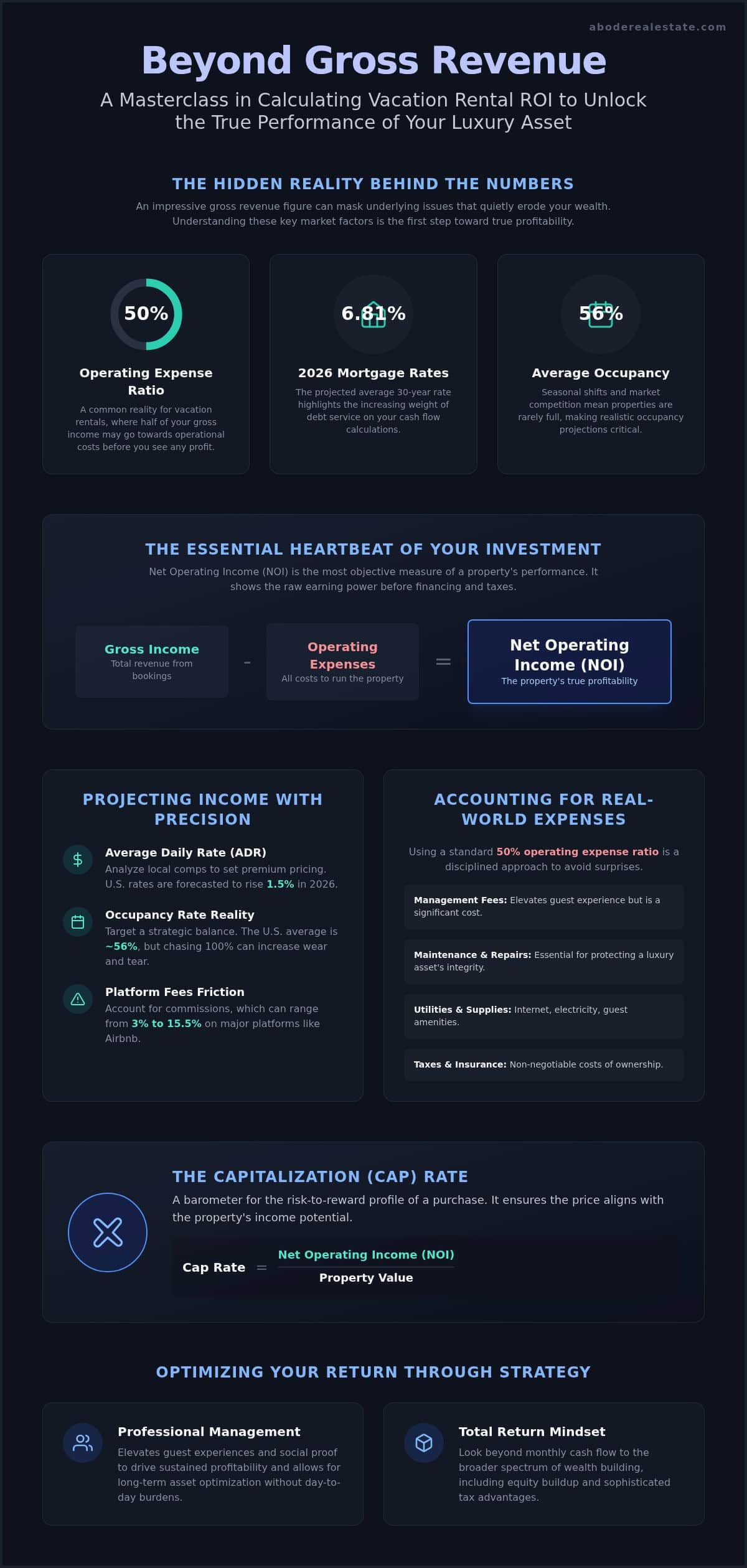
What if the most impressive gross revenue figure in your portfolio is actually masking a property that is quietly eroding your wealth? Many investors step into the short-term market with a vision of curated retreats and effortless income, yet they often find themselves unsettled by the reality of a 50% operating expense ratio or the weight of 2026's 6.81% mortgage rates. It's a common anxiety, the fear that hidden costs or seasonal shifts in our 56% average occupancy might turn a dream escape into a financial hurdle.
This guide will empower you to move beyond surface-level estimates, offering a masterclass in calculating ROI on a vacation rental to ensure your next acquisition becomes a high-performing luxury asset. We'll provide a precise, step-by-step framework that balances your personal use with maximum yield. You'll gain the confidence to optimize your assets through tactical planning, uncovering the sophisticated tax benefits and wealth-building potential that exist far beyond monthly cash flow. From precise revenue projections to the art of professional management, we'll transform the way you view your investment journey.

Key Takeaways
- Identify Net Operating Income as the essential heartbeat of your investment, providing the clarity needed to assess the true health of a luxury asset.
- Master a sophisticated framework for calculating ROI on a vacation rental that accounts for initial furnishing costs and the nuances of modern debt service.
- Learn to project income with precision by analyzing seasonality trends and Average Daily Rates specifically curated for premium residential dwellings.
- Protect your wealth by integrating realistic operating expense ratios into your forecasts, ensuring that maintenance and capital expenditures never come as a surprise.
- Discover how professional management models elevate guest experiences and social proof to drive sustained profitability and long-term asset optimization.
Table of Contents
- The Essential Metrics for Vacation Rental Profitability
- Estimating Gross Income and Occupancy Trends
- Accounting for Real-World Operating Expenses
- A Step-by-Step Framework for Projecting Cash-on-Cash Returns
- Optimizing Your Return Through Professional Management
The Essential Metrics for Vacation Rental Profitability
Approaching a new investment dwelling requires more than just an eye for aesthetic design; it demands a disciplined understanding of the mathematics that drive long-term wealth. When you begin the process of calculating ROI on a vacation rental, you're essentially translating the emotional appeal of a property into a clear financial narrative. This narrative starts with a few core metrics that serve as the foundation for any sophisticated investment property acquisition strategy. While many investors focus solely on top-line revenue, the true measure of success lies in the relationship between income, expenses, and asset value. A fundamental grasp of Return on Investment (ROI) allows you to look past the surface and evaluate how hard your capital is actually working.
It's also vital to distinguish between simple yield and your total return. Simple yield provides a snapshot of current performance, but total return accounts for the broader spectrum of wealth building, including equity buildup and specific tax advantages. This distinction is what separates a casual host from a professional investor who views their property as a high-performing luxury asset. By mastering these metrics, you can transition from speculative buying to a curated, results-oriented investment model.
Net Operating Income (NOI) Defined
Net Operating Income is gross income minus all operating expenses before taxes and financing. It represents the most objective measure of a property's performance because it ignores individual variables like mortgage interest or personal tax brackets. To normalize NOI for a fair comparison between different properties, smart investors often apply a standard operating expense ratio, which typically hovers around 50% for vacation rentals in 2026. This allows you to see the raw earning power of the dwelling itself, independent of how you choose to fund the purchase. It's the heartbeat of your calculation, revealing whether the asset can stand on its own two feet before debt service enters the equation.
The Role of the Capitalization Rate
The Capitalization Rate, or Cap Rate, acts as a barometer for the risk-to-reward profile of a potential purchase. In the luxury market, you might encounter lower Cap Rates than in the economy sector, as high-end assets often trade on their scarcity and potential for significant appreciation rather than just immediate cash flow. Using localized market data helps you determine if a listing price is fundamentally sound or if it has been inflated by temporary trends. In 2026, with 30-year mortgage rates averaging 6.81%, understanding the Cap Rate is essential for ensuring your purchase price aligns with the actual income the property can generate in a competitive environment.
Estimating Gross Income and Occupancy Trends
Forecasting top-line revenue is where many investors allow optimism to overshadow evidence. While the future of real estate suggests a global market reaching $101.06 billion this year, individual success depends on your ability to pin down two volatile numbers: your Average Daily Rate (ADR) and your annual occupancy. Speculative projections often fail because they ignore the friction of platform fees, which can range from 3% to 15.5% on Airbnb alone. When calculating ROI on a vacation rental, relying on historical performance data from similar premium dwellings provides the most secure foundation for your financial model. This data allows you to see past the peak season and understand the quiet periods that define your true annual yield.
Predicting ADR in the Luxury Segment
Premium pricing is rarely an accident. It's a result of curated design, exclusive amenities, and a deep understanding of your competitive set. In 2026, U.S. daily rates are forecasted to increase by a modest 1.5%, making dynamic pricing software more essential than ever to capture every dollar of potential yield. By analyzing specific local benchmarks rather than broad national averages, you can position your property to command the high-register rates its quality deserves. This precision ensures your revenue reflects the exclusivity of the lifestyle you are offering to your guests.
The Reality of Occupancy Rates
While the average U.S. occupancy rate sits at approximately 56% for 2026, high-end properties often target a more strategic balance. Chasing 100% occupancy can lead to accelerated wear and tear, potentially compromising the dwelling's long-term integrity and increasing your maintenance burden. A more sophisticated approach involves identifying your break-even point and optimizing for total revenue rather than just filled nights. Seasonal shifts play a significant role here; a mountain retreat will see vastly different rhythms than a coastal sanctuary, requiring a tailored calendar strategy to maintain steady cash flow throughout the year.
Navigating these trends requires a blend of data-driven precision and local intuition. If you are exploring new opportunities to expand your portfolio, reviewing South Florida luxury homes for sale can help you identify properties with the inherent traits needed to sustain premium occupancy and rates. This level of tactical planning is what transforms a simple purchase into a high-performing investment asset.
Accounting for Real-World Operating Expenses
While revenue makes for an enticing headline, the true character of an investment is revealed in the meticulously managed expense ledger. Most vacation rentals operate with an expense ratio of approximately 50%, a figure that often surprises those accustomed to traditional long-term rentals. To maintain the integrity of a premium dwelling, you must account for non-negotiables like property taxes, utilities, and specialized short-term rental insurance, which in 2026 typically ranges from $2,500 to $4,000 annually. Understanding how to calculate ROI on a rental property involves recognizing that these costs are the baseline for protecting your asset. Precision here is what separates a speculative purchase from a calculated move toward long-term wealth.
High-end assets demand a higher level of care. Beyond basic repairs, luxury investors must budget for curated guest experiences, concierge services, and professional-grade turnover that ensures every arrival feels like a premiere. This includes the replacement of high-end linens, artisanal consumables, and the maintenance of specialized amenities like infinity pools or advanced smart-home systems. These are the high-touch costs that generic calculators often omit, yet they are essential for sustaining the premium daily rates your property deserves. When you are calculating ROI on a vacation rental, overlooking these details can lead to inaccurate yield projections and unnecessary stress.
Fixed vs. Variable Expenses
Managing a luxury property requires a clear distinction between recurring fixed costs and usage-based variable expenses. Fixed costs, such as property taxes and insurance, remain steady regardless of how many nights are booked. Variable costs, including professional cleaning, laundry services, and guest consumables, fluctuate with your occupancy levels. Establishing a robust reserve fund is essential for preserving the dwelling’s integrity over time. Smart investors typically set aside a percentage of gross revenue for capital expenditures, ensuring that major repairs or aesthetic refreshes never compromise the property's status as a high-performing asset.
Professional Management Fees
The decision between self-hosting and professional oversight is often a choice between a job and an investment. In 2026, fees for full-service property management typically range from 15% to 35% of gross revenue, with most premium services settling between 20% and 25%. While this is a significant line item, a sophisticated manager pays for themselves by optimizing your ADR and occupancy simultaneously. They handle the complexities of guest relations and technical maintenance, transforming the property into a truly passive vehicle for wealth. This level of professional integration is what allows you to focus on portfolio growth rather than daily logistics.
A Step-by-Step Framework for Projecting Cash-on-Cash Returns
While Net Operating Income reveals how a dwelling performs as a standalone entity, the cash-on-cash return tells you how effectively your specific capital is working. This metric is the true north for investors who prioritize liquidity and immediate yield. When calculating ROI on a vacation rental, you must look beyond the purchase price and account for every dollar out of pocket. This includes closing costs, initial aesthetic updates, and the significant capital required for high-end furnishing and curated decor. By subtracting your annual debt service from your NOI, you arrive at your pre-tax cash flow. Dividing this figure by your total initial investment provides a percentage that allows you to compare your real estate asset against traditional equities or bonds with precision.
This calculation offers a grounded perspective on your actual liquidity. It transforms the abstract idea of property ownership into a concrete financial result. For the sophisticated investor, this step is where the transition from a lifestyle purchase to a high-performing asset is finalized. By understanding exactly how much cash is returning to your pocket each year, you can make informed decisions about scaling your portfolio or reinvesting in further property enhancements.
The Impact of Leverage
Financing is a powerful tool that can significantly amplify your cash-on-cash return. By using debt to cover a portion of the purchase price, you reduce the initial cash required, which often results in a higher percentage return on the capital you actually deployed. However, this tactical leverage comes with the responsibility of maintaining a healthy debt coverage ratio. In a fluctuating rental market, over-leveraging can turn a minor dip in occupancy into a financial hurdle. A balanced approach ensures that your property remains a source of security rather than a liability, allowing you to navigate market cycles with calm confidence.
Long-Term Wealth and Tax Advantages
The true brilliance of a short-term rental investment often lies in the benefits that exist below the surface of monthly cash flow. Depreciation serves as a potent non-cash expense, often allowing you to reduce your taxable rental income significantly while the asset itself appreciates in value. Beyond this, sophisticated investors utilize 1031 exchanges to defer capital gains, allowing them to roll equity from one property into a larger, more lucrative dwelling. These are essential strategies for building long-term wealth that transform a single investment into a legacy of financial freedom.
If you are ready to move from speculative estimates to a curated investment strategy, we invite you to contact our team for a sophisticated analysis of your next potential acquisition.
Optimizing Your Return Through Professional Management
Calculating ROI on a vacation rental is often viewed as a static exercise performed at the time of purchase, yet the most successful investors understand that this number is a living metric. True optimization occurs after the acquisition, through the unhurried and intentional execution of a professional management strategy. Sophisticated management does more than just maintain a property; it acts as a revenue engine that simultaneously drives higher Average Daily Rates and consistent occupancy. By treating the guest experience as a refined craft, professional oversight transforms a simple dwelling into a sought-after destination that commands a premium in any market cycle.
The role of guest reviews and social proof has evolved into a primary driver of long-term profitability. In the 2026 landscape, a property's digital reputation is an intangible asset that directly influences its financial yield. High-register reviews create a virtuous cycle, allowing for price increases without sacrificing occupancy. Beyond the immediate cash flow, professional management ensures asset preservation. Rigorous maintenance schedules and high-touch care protect your equity, ensuring that the physical integrity of the dwelling remains a cornerstone of your wealth-building strategy. This transition from being a property owner to a strategic investor is what ultimately secures your financial legacy.
The Boutique Management Advantage
Boutique management provides a level of personalized attention that national rental franchises simply cannot replicate. While large corporations often rely on cold, clinical processes, a boutique approach focuses on curating a lifestyle that resonates with discerning travelers. This localized expertise allows for a more nuanced understanding of seasonal trends and community narratives, which are essential for maximizing top-line revenue. Abode Real Estate facilitates the optimization of high-end assets by blending tech-savvy market analysis with a hands-on, client-centric philosophy. We treat every property as a unique portfolio piece, ensuring it receives the precision and care required to perform at its peak.
Next Steps for Your Investment Journey
As you finalize your plans for 2026, conducting a final audit of your ROI projections is a vital step toward a confident investment. Success in this competitive market requires a partner who understands both the sophisticated mathematics of the industry and the emotional resonance of luxury living. Selecting a guide who is deeply rooted in the local market will help you navigate the complexities of short-term rentals with ease and clarity. We invite you to reach out for a curated investment analysis to see how your potential acquisition can be transformed into a high-performing luxury asset. Your journey toward a more sophisticated portfolio begins with a single, well-informed decision.
Securing Your Legacy in the Short-Term Market
The transition from a casual property owner to a strategic investor is defined by a commitment to precision and unhurried tactical planning. By moving beyond surface-level estimates and prioritizing Net Operating Income, you replace the anxiety of hidden costs with the calm confidence of a verified financial narrative. True success in 2026 requires balancing these sophisticated mathematics with the refined craft of professional management to ensure your asset consistently outperforms the competition.
Mastering the technical discipline of calculating ROI on a vacation rental allows you to identify high-potential opportunities where others only see a simple dwelling. At Abode Real Estate, we act as high-level facilitators for your success, offering specialized investment property analysis and access to an exclusive luxury vacation rental portfolio. Our boutique, high-touch management model is designed to optimize your yield while preserving the long-term integrity of your equity. Consult with Abode Real Estate for a personalized investment analysis to begin your next chapter with clarity. The path to a high-performing portfolio is well within reach when you have the right data and a trusted advisor by your side.
Frequently Asked Questions
What is considered a good ROI for a luxury vacation rental in 2026?
A target cash-on-cash return of 10% to 15% is generally considered a strong benchmark for luxury dwellings in the current market. While top-line revenue is attractive, sophisticated investors prioritize asset optimization and long-term appreciation. This balanced approach ensures the property remains a high-performing vehicle for wealth rather than just a source of monthly cash flow.
How do I calculate the cap rate for a short-term rental property?
You calculate the capitalization rate by dividing the annual Net Operating Income by the total purchase price of the property. This metric is essential for comparing the raw performance of different dwellings because it ignores personal variables like financing and individual tax brackets. It provides a clear, objective view of the asset's fundamental earning power in a competitive landscape.
Is cash-on-cash return more important than the capitalization rate?
Both metrics serve distinct purposes in a professional investment analysis. The cap rate reveals the property's intrinsic value and risk profile, while the cash-on-cash return measures how effectively your specific capital is working after debt service. Most investors prioritize cash-on-cash returns when liquidity is the goal, but they use cap rates to ensure they aren't overpaying for the asset.
Can I include my own personal use of the property in the ROI calculation?
Personal use should be accounted for as an opportunity cost rather than a financial gain. When you are calculating ROI on a vacation rental, it's best to treat personal nights as blocked revenue to maintain a realistic view of the property's performance. This transparency helps you balance the emotional rewards of a personal retreat with the practical requirements of your financial objectives.
What are the most common hidden expenses in vacation rental management?
Specialized short-term rental insurance is a frequent surprise, often costing between $2,500 and $4,000 annually. Other hidden costs include high-register guest consumables, frequent deep cleanings, and the capital expenditures required to preserve the dwelling's integrity. Accounting for these real-world expenses early prevents them from eroding your projected net operating income and ensures a more accurate financial forecast.
How does professional property management affect my overall ROI?
Professional oversight typically increases your return by optimizing both your average daily rate and occupancy through sophisticated pricing tools and marketing. While management fees are a significant line item, the professionalization of hosting often leads to higher guest satisfaction and better social proof. This curated approach transforms the property into a truly passive investment that sustains premium performance over time.
What tax benefits are available for vacation rental owners?
Owners can leverage powerful tools like depreciation to significantly reduce their taxable rental income each year. Additionally, 1031 exchanges allow you to defer capital gains when transitioning between investment properties, facilitating the unhurried growth of a luxury portfolio. These benefits are fundamental to building long-term wealth and protecting the equity you've worked hard to build within your residential assets.
Should I prioritize high occupancy or a high average daily rate?
Strategic investors often prioritize a higher average daily rate over maximum occupancy to reduce wear and tear on the dwelling. In 2026, the average U.S. occupancy is approximately 56%, but luxury properties can often achieve better net results by focusing on premium guests at higher price points. This strategy preserves the property's condition while maintaining the exclusivity required to command top-tier rates in the future.
Posted by Brook Walsh onEnjoy this blog post? Click here to subscribe for updates
Leave A Comment