
What if the most profitable move in a buyer's market isn't finding the lowest price, but identifying the one asset that others are too intimidated to manage? You've likely noticed the shifting landscape of the Cape Coral investment property market, where 5.8 months of inventory and rising insurance premiums have finally cooled the frantic pace of previous years. It's a period of adjustment that feels heavy to the uninitiated, yet it offers a rare window for the disciplined investor to secure high-performing assets at a significant discount.
We understand that the prospect of navigating 2026's stricter rental regulations and the $350 annual registration fees can feel like a hurdle. This guide is designed to help you master these nuances and learn how to engineer maximum ROI through tactical acquisition and boutique luxury management. We'll preview how to identify undervalued waterfront gems, execute a seamless 1031 exchange, and establish a hands-off income stream that stands out in a competitive rental environment. By the end of this article, you'll have a clear roadmap to turning market corrections into a curated, high-yield portfolio.
Key Takeaways
- Identify the unique equity growth potential found within the local canal system and the economic drivers fueling South Florida's continued appeal.
- Compare the distinct cash-flow advantages of short-term luxury rentals against multi-family units to align with your specific tax and portfolio goals.
- Master the art of boutique acquisition by uncovering a Cape Coral investment property with hidden potential before it ever hits the open market.
- Calculate your true net ROI by navigating the 2026 insurance landscape and new municipal regulations with precision and clarity.
- Learn how elite, full-service management transforms a high-stakes acquisition into a seamless, hands-off lifestyle asset.
The 2026 Landscape for a Cape Coral Investment Property
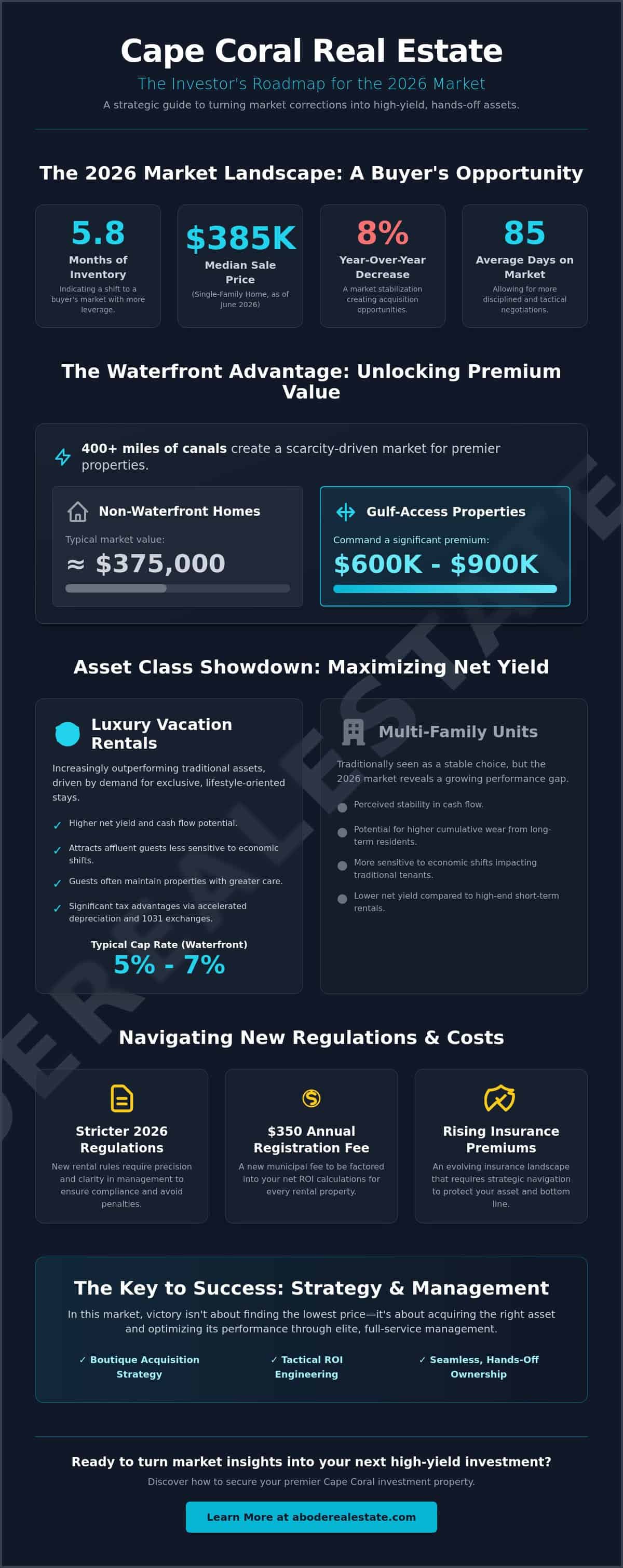
The real estate narrative in Cape Coral, Florida, has evolved from the rapid appreciation of the early 2020s into a sophisticated buyer's market. As of June 2026, the median sale price for a single-family home sits at approximately $385,000, representing an 8% decrease year-over-year. This correction isn't a sign of weakness. It's a necessary stabilization that provides investors with newfound leverage. With 5.8 months of active inventory and properties averaging 85 days on the market, the power has shifted back to those looking to acquire a Cape Coral investment property with long-term vision.
To gain insight into the evolving regulatory environment and how it impacts your bottom line, watch this report on recent fee changes for local rentals:
Investors find the region's most compelling economic moat within the extensive canal system. With over 400 miles of waterways, the scarcity of gulf-access land ensures that well-chosen assets maintain a distinct competitive advantage over inland alternatives. While non-waterfront homes hover around $375,000, gulf-access properties command between $600,000 and $900,000. This price gap reflects the enduring demand for the Florida lifestyle, where a private dock serves as a gateway to the Gulf of Mexico. This shift from simple homeownership to strategic asset acquisition defines the current era of local real estate.
Market Fundamentals and Appreciation Trends
While the market saw a 4.7% decline in values through February 2026, forecasts suggest stabilization by the year's end as the 7% increase in new listings meets steady demand. Infrastructure investment is particularly visible in the North Cape, where utility expansions are unlocking previously undervalued parcels for modern development. In the current climate, the market cap rate for luxury waterfront homes typically ranges between 5% and 7% when managed with a focus on high-end short-term stays.
The Shift Toward Lifestyle-Driven Investments
The profile of the typical renter has changed significantly. Remote work is no longer a temporary trend; it's a permanent fixture for high-net-worth individuals who choose this region as their seasonal sanctuary. These tenants aren't just looking for a roof. They're seeking an emotional retreat that offers security and social connection. By focusing on properties that serve as a personal oasis, you align your portfolio with the migration patterns of affluent professionals who value quality of life above all else. Success in 2026 requires moving beyond the primary residence mindset to treat each acquisition as a curated lifestyle product.
Evaluating Asset Classes: Luxury Rentals vs. Multi-Family Units
Choosing the right asset class for your Cape Coral investment property requires a balance between immediate cash flow and long-term equity preservation. While many traditional investors gravitate toward multi-family units like duplexes or triplexes for their perceived stability, the 2026 market has revealed a significant performance gap. High-end luxury vacation rentals, particularly those with gulf access, are increasingly outperforming multi-family assets in terms of net yield. This shift is driven by a demographic of travelers who prioritize exclusive, lifestyle-oriented stays over sterile hotel environments. These assets serve as a hedge against volatility; the affluent guests who frequent luxury rentals are typically less sensitive to the minor economic shifts that can impact traditional long-term tenant stability.
Tax advantages also play a pivotal role in this evaluation. Investors can leverage accelerated depreciation and strategic 1031 exchanges to optimize their portfolios. The Cape Coral Office of Economic & Business Development provides resources that highlight the region's commitment to sustainable growth, which supports the underlying value of these sophisticated assets. When you compare the tenant profiles, luxury guests often treat a property with more care than long-term residents, reducing the cumulative wear and tear that can erode the bottom line of a multi-unit building. If you are looking to refine your portfolio, exploring our investment property acquisition services can help you identify which path aligns with your financial goals.
The Case for Luxury Vacation Rentals
In 2026, waterfront estates in prime locations are achieving premium nightly rates that far exceed the monthly income of standard residential leases. Success in this sector depends on more than just location; it's about the curation of a guest experience. High-net-worth travelers look for homes that offer an emotional retreat, complete with high-end finishes and seamless indoor-outdoor living. While the annual short-term rental registration fee has risen to $350, the potential for high-yield returns remains robust for those who utilize professional marketing to mitigate seasonal fluctuations. A well-managed luxury home isn't just a building. It's a high-performance lifestyle asset.
Multi-Family Dynamics in the Current Market
Multi-family units continue to offer a reliable path for those seeking consistent, long-term income. These properties benefit from a lower annual registration fee of $35, which appeals to investors focused on minimizing overhead. However, the management intensity can be higher due to the frequency of tenant turnover and the maintenance requirements of aging multi-unit structures. Investors must also stay mindful of shifting local regulations and potential discussions regarding rent stabilization. While the entry point for a non-waterfront multi-family property is often more accessible, the ceiling for appreciation is generally lower than that of a unique, gulf-access luxury residence.
Calculating Real ROI: Beyond the Purchase Price
True wealth isn't just found in the acquisition price; it's engineered through meticulous operational oversight. When calculating ROI on a property investment, you must look past the monthly mortgage payment and account for the unique variables of the Florida Gulf Coast. A Cape Coral investment property demands a sophisticated financial model that integrates specialized insurance, seasonal maintenance, and the value of elite management. By viewing these costs as investments in asset preservation rather than simple expenses, you position your portfolio for superior long-term performance.
Elite management is often viewed through the lens of cost, yet it's truly a vehicle for value optimization. High-touch oversight ensures your property remains a top-tier retreat, commanding premium nightly rates and securing the visibility required to thrive in a competitive market. This proactive approach prevents small maintenance issues from evolving into expensive financial hurdles. It reduces the anxiety of remote ownership and allows you to focus on the broader strategy of portfolio expansion while we handle the intricate details of guest relations and property care.
The Hidden Costs of Waterfront Ownership
The 2026 insurance landscape requires a proactive and precise budget. For a waterfront Cape Coral investment property, homeowners insurance typically ranges from $4,000 to over $9,000 annually, with flood insurance in Zone AE adding another $1,500 to $4,500. Beyond insurance, specialized maintenance for seawalls, boat lifts, and docks is essential for protecting your equity. We recommend a rigorous due diligence process during the acquisition phase, focusing on these specific elements:
- Professional inspection of seawall caps and tie-backs for structural integrity.
- Assessment of boat lift motor functionality and cable wear.
- Verification of roof age and wind mitigation features to optimize insurance premiums.
- Evaluation of HVAC systems for efficiency in high-humidity environments.
Leveraging Tax Strategies for Maximum Yield
Maximizing your net return involves more than just collecting rent; it requires tactical planning with a specialized real estate CPA. Utilizing a 1031 exchange allows you to defer capital gains taxes, rolling your equity into higher-performing Florida assets to accelerate portfolio growth. Many sophisticated investors also employ cost segregation studies to front-load depreciation benefits on non-structural components like luxury cabinetry, high-end flooring, and professional landscaping. This level of financial craftsmanship transforms a standard real estate transaction into a refined discipline of wealth creation.
The Boutique Acquisition Strategy: Securing High-Performance Assets
Securing a high-performing asset in 2026 requires a departure from the standard digital search. While national franchises rely on broad MLS data and high-volume sales tactics, a boutique approach focuses on the nuances of specific neighborhoods and the relationships that lead to off-market opportunities. This is where the most significant value is engineered. By identifying a Cape Coral investment property before it reaches the public eye, you bypass the friction of bidding wars and gain the leverage necessary to negotiate terms that favor long-term ROI. This level of exclusivity is not found in a database; it's cultivated through years of local presence and trust.
A refined acquisition strategy blends these human connections with clinical, data-driven analysis. We look beyond the surface level of a listing to examine the essential character of a street, the quality of the water access, and the potential for future infrastructure improvements. This localized expertise allows us to act as high-level facilitators who guide you toward assets that others might overlook. If you're ready to move beyond the public listings, our team specializes in investment property acquisition to help you secure your next high-performance asset.
Identifying Off-Market Opportunities
The most exclusive investment opportunities often exist within the quiet networks of local experts. These pocket listings represent distressed luxury assets or properties held by owners who prefer a discreet transaction over a public listing. Evaluating these opportunities requires a deep understanding of the local market and the specific spirit of the area's sub-markets. Professional networking in real estate acts as the primary bridge between a standard transaction and a high-yield acquisition. By tapping into these private channels, you gain access to properties that have not yet been subjected to market fatigue or competitive overpricing.
Data-Driven Property Analysis
Projecting future rental income is a craft that blends historical data with current market trends. In 2026, we look beyond simple occupancy rates to analyze the specific performance of comparable gulf-access homes. This includes evaluating seasonal demand shifts and the impact of premium amenities on nightly rates. By using historical data to forecast future returns, we reduce the anxiety associated with complex acquisitions. Accurate analysis ensures that every asset in your portfolio is chosen for its mathematical potential rather than just its aesthetic appeal. Analyzing comparable properties accurately prevents the common mistake of overestimating yield based on outliers, ensuring your Cape Coral investment property remains a predictable income stream.
Maximizing Asset Value with Professional Management
Engineering a high-yield portfolio concludes not at the closing table, but in the daily refinement of the guest experience. Professional management acts as the engine that drives a Cape Coral investment property toward its full financial potential. While some consider self-hosting a path to savings, the reality of the 2026 market suggests otherwise. A boutique approach transforms a simple rental into a premium lifestyle destination. We integrate acquisition expertise with elite management to ensure the vision we identified during the search is realized in every booking. It is a frictionless transition that honors the asset's unique character and long-term equity.
Visual storytelling is our first tool for optimization. High-end photography and curated listing descriptions do more than just show a house; they evoke an emotional response that justifies premium nightly rates. By optimizing across multiple platforms, we capture the attention of high-net-worth travelers who value exclusivity and precision. Once they arrive, our 24/7 communication and concierge-level service ensure their stay feels like a personal retreat rather than a transaction. This level of care fosters the social bonds and loyalty that lead to repeat guests and five-star reviews. We treat every guest arrival as a curated moment of belonging that reinforces the property's reputation.
Revenue Optimization and Dynamic Pricing
Success in the South Florida market requires a sophisticated pricing strategy that moves beyond static rates. We utilize a blend of advanced algorithms and deep local insights to adjust nightly rates in real-time. This ensures your Cape Coral investment property remains competitive during shoulder seasons and maximizes yield during peak demand cycles. Professional management reduces vacancy by identifying booking gaps and filling them with tactical promotions. It is a precise craft that protects your bottom line and ensures the asset is always working at its peak capacity, regardless of shifting market trends.
The Abode Difference: A Boutique Approach to Living
At Abode Real Estate, we treat every property as a philosophy of living rather than a mere physical asset. Our full-service model provides out-of-state owners with the transparency and control they need to feel secure from a distance. We handle the mechanical complexities and regulatory requirements so you can enjoy the rewards of your portfolio without the operational friction. This boutique style of service ensures that your move into a new chapter of investment is met with calm confidence and quiet authority. If you are ready to see how your assets can be optimized, we invite you to explore our exclusive investment property analysis services. It is time to turn your acquisition into a high-performing legacy.
Securing Your Legacy in the Florida Sun
The transition from a booming market to a sophisticated buyer's landscape in 2026 has created a rare opening for the discerning investor. We've explored how the intersection of tactical off-market acquisition and boutique management transforms a standard Cape Coral investment property into a high-performing lifestyle asset. By prioritizing the unique scarcity of the canal system and the emotional resonance of luxury retreats, you move beyond mere transactions into the realm of intentional wealth creation. Success now requires a partner who views real estate as a refined craft rather than a volume-based business.
Since 2018, our team has provided the boutique luxury expertise and integrated model necessary to navigate these high-stakes transitions with calm confidence. We invite you to discover high-yield opportunities with Abode Real Estate and explore our curated portfolio of high-performing assets. Whether you're seeking a seamless 1031 exchange or a hands-off income stream, the path to a high-yield future begins with a single, curated move. Your next chapter of arrival and belonging in South Florida is waiting to be written.
Frequently Asked Questions
Is Cape Coral a good place to invest in real estate in 2026?
Cape Coral remains a premier choice for investors due to the current market correction that has increased inventory to 5.8 months. This shift provides a rare window to acquire assets at a lower median price of $385,000 compared to the peak years. The city's 400 miles of canals create a unique geographic scarcity that supports long-term equity growth for waterfront assets during this buyer's market.
What is the average ROI for a Cape Coral investment property?
The average net yield for a Cape Coral investment property typically ranges between 5% and 7% for luxury waterfront assets when professionally managed. While non-waterfront homes offer a lower entry point, they often face higher competition in the rental market. Maximum ROI is achieved by identifying undervalued gulf-access properties and utilizing dynamic pricing strategies to capture high-end seasonal demand throughout the year.
Should I invest in a short-term rental or a long-term multi-family unit?
Your choice depends on whether you prioritize high-yield cash flow or steady, long-term stability. Short-term luxury rentals command significantly higher nightly rates but require navigating the $350 annual registration fee and 5% tourist tax. Multi-family units offer lower management intensity and a $35 registration fee, making them suitable for investors seeking a more traditional income stream with lower seasonal volatility and consistent occupancy.
What are the specific insurance requirements for waterfront properties in Florida?
Waterfront owners must secure a combination of standard homeowners insurance, flood insurance, and often a separate windstorm policy. Properties in Zone AE face higher premiums, typically ranging from $1,500 to $4,500 annually as of 2026. It's essential to obtain a wind mitigation report to qualify for credits that can significantly reduce your total annual costs. Working with a local expert ensures you account for these specific expenses early.
How does professional property management impact my rental yield?
Professional management transforms a rental into a high-performance asset by utilizing dynamic pricing algorithms that adjust rates based on real-time demand. This proactive approach reduces vacancy periods and justifies premium pricing through elite guest services and concierge-level care. While there is a management fee, the increase in gross revenue and the preservation of the property's physical condition often result in a higher net yield for the owner.
Can I use a 1031 exchange to purchase an investment property in Cape Coral?
Yes, a 1031 exchange is a powerful tool for deferring capital gains taxes when transitioning into the Florida market. This strategy allows you to roll equity from a lower-performing asset into a high-yield Cape Coral investment property without immediate tax liability. It's critical to work with a qualified intermediary and follow strict IRS timelines to ensure the exchange remains compliant while you optimize your real estate portfolio for future growth.
What are the common pitfalls to avoid when buying Florida investment real estate?
The most common pitfalls include underestimating the cost of waterfront maintenance and failing to account for rising insurance premiums in your initial pro forma. Investors often overlook the structural integrity of seawalls or the specific registration requirements implemented in January 2026. Avoiding these errors requires deep local insight and a thorough due diligence process that extends far beyond a standard home inspection to protect your capital.
How do I find off-market investment opportunities in the luxury market?
Off-market opportunities are primarily found through boutique brokerages that maintain deep connections with local property owners and private networks. These pocket listings often involve distressed luxury assets or sellers who value discretion over public exposure. Accessing these deals requires a relationship with a refined local expert who acts as a facilitator, identifying value and potential before the asset ever reaches a national search platform or database.
Posted by Brook Walsh onEnjoy this blog post? Click here to subscribe for updates
Leave A Comment