

What if the four walls you call home were actually the foundation of a sophisticated real estate portfolio? Most homeowners view their residence as a sanctuary, yet many hesitate at the thought of converting a primary residence to a rental property because they fear losing the valuable $250,000 capital gains tax exclusion. It's a valid concern, especially when you consider that mortgage rates for investment properties currently hover between 7.20% and 7.70% as of July 2026. You've worked hard to build equity, and the idea of managing tenants or navigating lender requirements can feel like an overwhelming shift from your current lifestyle.
This guide shows you how to seamlessly transition your home into a high-performing investment asset while protecting your equity and optimizing tax benefits. We'll explore the strategic roadmap for a legal and financial conversion that respects the 2-out-of-5-year residency rule, ensuring you don't leave money on the table. From understanding the nuances of landlord insurance to leveraging professional management to reclaim your time, you'll learn how to curate a move that prioritizes both your peace of mind and your long-term wealth.

Key Takeaways
- Learn how to reframe your home as a sophisticated business asset while maintaining calm confidence in your financial future.
- Master the timing of converting a primary residence to a rental property to preserve your capital gains tax exclusion under the critical 2-out-of-5-year rule.
- Identify the essential legal notifications and licensing requirements needed to satisfy mortgage lenders and protect your equity.
- Understand which high-ROI upgrades and staging techniques attract premium tenants and secure top-tier rental rates in the current market.
- Discover how boutique property management transforms a complex transition into a curated experience that maximizes yield and minimizes personal effort.
Table of Contents
- The Strategic Shift: From Personal Sanctuary to Income-Generating Asset
- Navigating the Legal and Financial Framework of Conversion
- Analyzing the Tax Implications and Long-Term Wealth Potential
- Preparing the Property for the High-End Rental Market
- Professional Management: Protecting Your Investment and Your Time
The Strategic Shift: From Personal Sanctuary to Income-Generating Asset
Converting a primary residence to a rental property represents a tactical evolution from a lifestyle choice to a sophisticated asset optimization. It's a journey that begins with a mindset shift, moving away from the emotional comfort of a sanctuary toward the analytical precision of a business entity. While your home serves as a repository for your family's history, it also holds a significant portion of your net worth that could be working harder for your future. This transition is not merely about finding a tenant; it's about repositioning your equity to serve as a cornerstone for generational wealth.
To understand the potential of your dwelling, you must evaluate its Return on Equity. While simple appreciation is a passive gain, applying real estate investing principles allows you to measure how effectively your trapped capital is performing compared to other luxury assets. If your home's value has surged, your current Return on Equity might actually be lower than the potential yield of a high-end rental. This realization often catalyzes for owners to move toward a more diversified and resilient financial portfolio.
To better understand the nuances of this transition, watch this helpful perspective on the process:
Assessing Market Readiness and Rental Demand
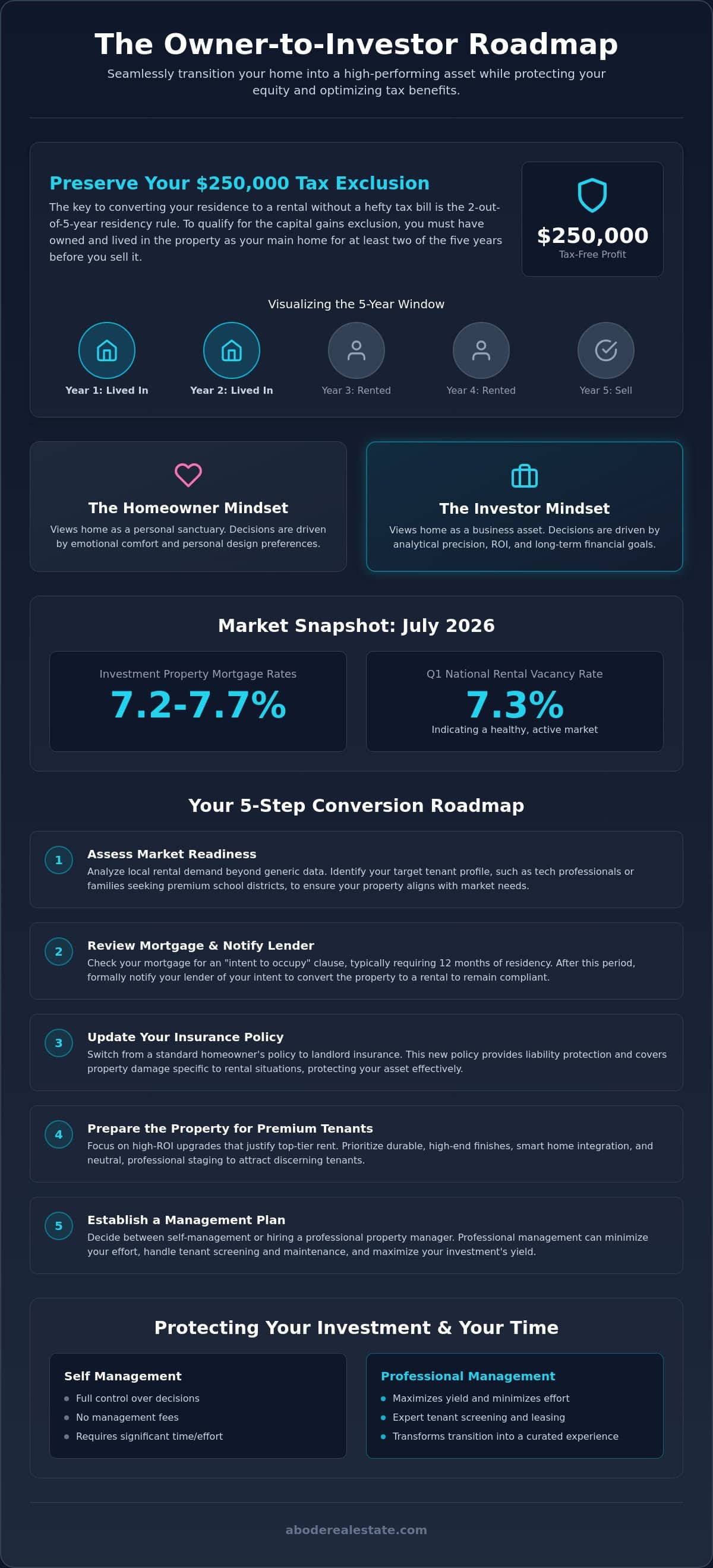
The 2026 market climate offers a unique backdrop for this conversion. National rental vacancy rates reached 7.3% in the first quarter of 2026, which indicates a healthy and active market for quality housing. However, the luxury sector behaves differently than the broader market. You'll need to conduct a specialized analysis that looks past generic data to find the specific tech-driven or lifestyle-oriented demographics moving into your area. Success depends on identifying whether your property fits the profile of a high-earning professional or a family seeking a premium school district. While Sun Belt markets have cooled slightly, tech hubs continue to see strong demand for refined, move-in-ready residences.
The Emotional Decoupling: Treating Your Home as a Business
The most challenging part of converting a primary residence to a rental property is often the emotional distance required to manage it effectively. You must begin to view your home through the eyes of a tenant who values function and lifestyle over your personal design preferences. This means prioritizing high-yield upgrades, such as smart home integration or durable high-end finishes, that justify a premium rent. Establishing a professional distance early on is essential. It prevents the anxiety that often comes with property maintenance and ensures that every decision, from tenant screening to lease terms, is made with your ten-year financial goals in mind. This unhurried, intentional approach is what transforms a former home into a curated investment asset.
Navigating the Legal and Financial Framework of Conversion
Once you've embraced the mindset of an investor, the next step involves securing the structural foundation of your new enterprise. Converting a primary residence to a rental property requires a precise sequence of notifications to ensure your equity remains protected and your operations stay compliant. You aren't just changing a mailing address; you're reclassifying a significant asset in the eyes of lenders, insurers, and local municipalities. It's a process that demands precision to avoid future hurdles during high-stakes financial reviews.
Mortgage Implications: Owner-Occupied vs. Investment Rules
Most standard mortgages contain an "intent to occupy" clause, typically requiring you to live in the home for at least twelve months before changing its use. Violating this without a valid life change can trigger a "due on sale" clause, though most lenders are amenable once the initial period has passed. When you plan your next move, remember that lenders will look at your debt-to-income ratio. While a portion of your future rental income can often offset the mortgage payment, having a clear financial report is essential for securing a favorable rate on your new primary residence. If you're unsure how your current loan structure will react to this shift, a specialized investment property analysis can clarify your standing and provide the calm confidence you need to proceed.
Insurance and Liability: Protecting Your Equity
Your standard HO-3 homeowners policy is designed for personal use and won't provide adequate coverage once you move out. You'll need to transition to a DP-3 landlord policy. In 2026, landlord insurance typically costs between $800 and $3,000 annually, representing a 15% to 25% increase over standard premiums. This higher cost reflects the increased risks associated with tenancies, such as loss of rent or liability for tenant injuries. High-net-worth owners should also consider an umbrella policy to provide an extra layer of security beyond basic limits. Adhering to IRS rules for rental properties ensures you can deduct these insurance premiums as a business expense, softening the financial impact of the transition.
Beyond insurance, local compliance is paramount. Many jurisdictions require a new Certificate of Occupancy or a specific rental license before you can legally collect rent. These requirements often involve a safety inspection to ensure the dwelling meets current codes for smoke detectors, egress, and habitability. Integrating these details into your estate planning ensures that this new business asset is managed with the same precision as the rest of your portfolio. It’s about creating a frictionless transition that honors the legacy of your home while embracing its new purpose as a vehicle for long-term growth.
Analyzing the Tax Implications and Long-Term Wealth Potential
Building wealth through real estate is an exercise in strategic patience. While the legal and insurance foundations discussed previously provide security, the tax advantages of converting a primary residence to a rental property serve as the engine for long-term growth. This transition allows you to move from simply owning a home to managing a sophisticated financial instrument. By aligning your move with specific tax codes, you can protect your existing equity while creating a stream of tax-advantaged income that supports your lifestyle.
Depreciation: The Landlord’s Secret Weapon
One of the most compelling reasons to retain your former home as an investment is the ability to claim depreciation. This non-cash expense allows you to deduct a portion of the building’s value every year, effectively shielding your rental income from immediate taxation. For residential assets, the IRS mandates a 27.5-year schedule. You'll need to separate the value of the land from the structure itself, as only the dwelling is depreciable. Meticulous record-keeping is vital; following the IRS guidelines on rental income will help you identify which improvements add to your cost basis and which are immediate repairs. While you'll eventually face depreciation recapture when you sell, the immediate cash flow benefits can be reinvested to accelerate your portfolio's growth.
Preserving the Capital Gains Exclusion
The Section 121 exclusion is a generous provision in the tax code. It allows you to exclude up to $250,000 in gains as a single filer or $500,000 if married and filing jointly. To keep this benefit, you must have lived in the home for at least two of the five years preceding the sale. This creates a strategic three-year window after converting a primary residence to a rental property where you can still sell and claim the exclusion tax-free. For high-net-worth individuals, this timing is critical. If your property has appreciated significantly, selling within this window might be more beneficial than holding long-term. Conversely, some owners choose to move back into the property later to reset this clock, though this requires careful planning with a tax professional to ensure compliance with 2026 regulations.
Once the three-year window closes, your property is fully classified as an investment asset. This opens the door to a 1031 exchange, a powerful tool that allows you to defer capital gains taxes indefinitely by reinvesting sale proceeds into a like-kind property. It’s a sophisticated move that enables you to trade up into larger or more diversified assets without losing equity to the tax collector. By treating your former home as a curated asset rather than a mere dwelling, you position yourself to build a diversified portfolio that stands the test of time and provides lasting financial security.
Preparing the Property for the High-End Rental Market
Transitioning your dwelling from a personal retreat to a curated asset requires a discerning eye for detail. When you are converting a primary residence to a rental property, the goal is to create an environment that feels both exclusive and enduring. High-end tenants aren't just looking for a place to stay; they are seeking a lifestyle that mirrors their own standards of quality. This begins with professional photography and staging that highlights the architectural integrity of the home, ensuring your listing stands out in a competitive digital landscape. A well-presented home suggests a well-managed investment.
Implementing smart home technology is no longer a luxury; it's a baseline expectation for modern renters. Integrated security systems, automated climate control, and keyless entry provide a sense of emotional security while simplifying the daily management of the property. Beyond the tech, establishing a preventative maintenance schedule is the most effective way to protect your equity. By addressing minor issues before they escalate, you maintain the home's prestige and ensure a frictionless experience for your residents. It's a proactive approach that safeguards your time and your capital.
Functional Improvements vs. Aesthetic Flourishes
In a rental environment, durable, high-end finishes consistently outperform trendy decor. While you might love a specific artisanal wallpaper, a sophisticated neutral palette appeals to a broader demographic and is much easier to maintain between tenancies. Prioritize systems upgrades like a high-efficiency HVAC or a reinforced roof. These foundational investments prevent emergency repairs that can disrupt your cash flow and damage your relationship with a premium tenant. It's about choosing materials that age gracefully under the rigors of daily life while maintaining a premium feel.
Setting the Optimal Rental Rate
Pricing is a delicate balance of market data and asset positioning. In the first half of 2026, the national median rent for a three-bedroom single-family home was $2,100, but luxury markets often command significantly higher figures based on localized demand. You'll need to analyze comparative data with precision to ensure your rate is aggressive yet sustainable. Professional oversight can help you command these higher rents by providing the high-touch service and responsiveness that premium tenants expect. If you want to ensure your property achieves its maximum potential through expert marketing and tenant placement, consider the benefits of full-service property management to handle the nuances of pricing and long-term retention.
Professional Management: Protecting Your Investment and Your Time
The final step of converting a primary residence to a rental property isn't just a logistical hand-off. It's an intentional choice to prioritize your time and peace of mind. While some owners attempt a self-hosting model, this often transforms a passive investment into a demanding second career. Boutique asset management, by contrast, treats your former home as a curated financial instrument. This specialized discipline elevates the ownership experience, allowing you to enjoy the rewards of your equity without the friction of daily operations. It's a move toward a new chapter where your property works for you, not the other way around.
Professional oversight acts as a safeguard for your most valuable residential assets. By employing expert marketing and sophisticated tenant screening, a dedicated manager reduces vacancy periods and secures residents who respect the integrity of your dwelling. This level of precision is especially vital for luxury estates where the stakes are higher. Having a facilitator to coordinate 24/7 maintenance ensures that your home remains a pristine retreat. It provides the calm confidence you need to focus on building a diversified real estate portfolio while your original investment continues to flourish under watchful eyes.
The Value of Boutique Property Oversight
High-touch, personal service is the hallmark of a refined local expert. Unlike large national franchises that often feel cold or clinical, boutique oversight provides a personal connection rooted in your specific geographic market. This model prioritizes long-term relationships through rigorous tenant placement and transparent financial reporting. You receive the same level of attention you would expect from a private family office, ensuring that rent collection and property care are handled with absolute precision. It is a customized approach that respects the emotional and financial significance of your former home.
Tenant Placement and Asset Preservation
Securing the right resident is a craft that begins with a lifestyle-oriented marketing narrative. Your property isn't just a structure; it's a curated retreat for discerning individuals who appreciate the essential character of the area. Expert marketing connects the spirit of your home with the right audience, reducing the time your property sits empty. Once a tenant is placed, regular inspections act as a preventative measure. This proactive oversight catches minor issues before they escalate into expensive repairs. By positioning your home as an exclusive destination, you attract long-term residents who value the quality of their environment. This unhurried, intentional process ensures your asset is preserved for the next generation of wealth building.
Your Next Chapter in Wealth Creation
The journey of converting a primary residence to a rental property is more than a financial transaction; it's a curated move toward long-term security. You now understand how to navigate the intricate 2-out-of-5-year residency rule to protect your equity and how to reposition your dwelling as a high-performing asset in the current market. By focusing on durable, high-end finishes and establishing a proactive maintenance schedule, you ensure your home remains a prestigious retreat for others while it builds a lasting legacy for you.
True asset optimization relies on the bridge between technical expertise and personalized care. We provide the calm confidence needed to transition into this new financial chapter with ease. We invite you to explore our boutique property management services for your high-end investment. Our team specializes in specialized investment property analysis and full-service management for luxury estates, ensuring your transition is as frictionless as it is profitable. Your home has served you well as a sanctuary; now, it's time to let it build your future.
Frequently Asked Questions
Do I need to tell my mortgage company if I convert my home to a rental?
Yes, you must notify your mortgage lender before you officially change the use of the property. Most standard loan agreements include an occupancy clause that requires you to live in the home for at least twelve months. While lenders generally don't object to a conversion after this period, failing to disclose the shift could technically trigger a default. Transparency ensures your financial standing remains secure as you transition into this new chapter.
How does converting a primary residence to a rental affect capital gains taxes?
The transition reclassifies your home from a personal sanctuary to an income-producing business asset. You'll begin to benefit from depreciation deductions that shield your rental income, but you also face depreciation recapture taxes when you eventually sell. It’s a sophisticated trade-off that requires careful planning to protect your equity. Aligning your move with current tax codes allows you to maximize your long-term wealth potential while minimizing your immediate liabilities.
Is landlord insurance more expensive than homeowners insurance?
Yes, landlord insurance is typically 15% to 25% more expensive than a standard homeowners policy. This increased cost reflects the unique risks associated with tenancies, such as liability for tenant injuries or loss of rental income during repairs. In 2026, owners generally pay between $800 and $3,000 for a comprehensive DP-3 policy. While the premium is higher, it is a fully tax-deductible business expense that provides essential emotional security.
Can I still use the Section 121 tax exclusion after I rent out my house?
You can still use the exclusion, but only if you sell within a specific timeframe. The IRS requires you to have lived in the home for at least two of the five years preceding the sale. When you are converting a primary residence to a rental property, this "2-out-of-5" rule effectively gives you a three-year window to sell the asset and still exclude up to $500,000 in capital gains from your taxes.
What are the first steps to take when converting a home to a rental property?
Begin with a professional investment analysis to ensure the property’s yield aligns with your financial goals. Your first practical steps after converting a primary residence to a rental property should be notifying your mortgage servicer and updating your insurance coverage to a landlord-specific policy. You should also verify local compliance needs, such as obtaining a rental license or a Certificate of Occupancy, to ensure your new enterprise is legally sound from day one.
Should I manage my rental property myself or hire a professional manager?
Hiring a professional is often the difference between a demanding second job and a truly passive investment. Self-management requires you to handle 24/7 maintenance coordination, legal compliance, and tenant disputes personally. A boutique property manager acts as a refined facilitator, providing the calm confidence that your luxury estate is being managed with precision. This choice allows you to reclaim your time while ensuring your asset receives the high-touch attention it deserves.
What happens if I decide to move back into my rental property later?
Moving back into the property is a viable option, but it carries specific tax implications for your future sale. While returning to the home can help you regain the primary residence status, the IRS may look at "non-qualified use" periods when calculating your final tax-free gains. It is a strategic move that can work well for lifestyle changes, but it requires an unhurried consultation with a tax advisor to ensure it aligns with your broader portfolio.
How do I determine the right rental price for my converted home?
Look beyond broad national trends to find the specific value of your neighborhood and dwelling. While the 2026 national median for a single-family home is $2,100, your price should reflect your home's unique high-end finishes and proximity to local tech hubs. Analyze recent leases for similar luxury properties in your specific market. Accurate, data-driven pricing ensures you maximize your yield while maintaining a healthy vacancy rate, which currently sits at 7.3% nationally.
Posted by Brook Walsh onEnjoy this blog post? Click here to subscribe for updates
Leave A Comment