

What should you realistically expect from a multi-million-dollar home? The features of a multi-million-dollar home can range from carefully finished materials and practical layouts to wellness spaces, outdoor living areas, and smart-home technology. But an impressive amenity list does not automatically make a home more comfortable, well-built, or suited to your life.
Luxury listings emphasize different details, which can make properties difficult to compare. A striking pool or high-tech control system may catch your attention, but construction quality, thoughtful design, and ease of everyday use matter just as much. The right priorities depend on how you plan to live in the home.
This guide covers key categories of luxury-home features, from architecture and finishes to comfort, technology, and outdoor spaces. You’ll learn how to distinguish enduring qualities from personal preferences and use a practical framework to assess how well a property fits your routines and plans before moving forward.
Key Takeaways
- Luxury price thresholds and buyer expectations vary by market, so assess a home in its local context.
- The features of a multi-million dollar home can include considered craftsmanship, purposeful design, and amenities tailored to how you live.
- Separate enduring qualities, such as construction and spatial flow, from features that mainly reflect personal taste.
- Evaluate how each amenity supports your routines, including how easy it is to use and care for.
- Compare properties by fit, execution, and everyday value rather than by the length of their feature lists.
Table of Contents
- What Makes a Home a Multi-Million-Dollar Home?
- Which Design and Construction Features Shape a Luxury Home?
- Which Luxury Amenities Improve Comfort, and Which Are Personal Preferences?
- How to Evaluate the Features of a Multi-Million-Dollar Home
- Turn Luxury-Home Features Into a Purchase That Fits Your Life
What Makes a Home a Multi-Million-Dollar Home?
A multi-million-dollar home is a residence valued in the multimillion-dollar range. Its price reflects the property itself, as well as its quality, design, setting, and appeal to buyers in that market. The features of a multi-million dollar home may include considered craftsmanship and practical comfort, but no single amenity or architectural style defines the category. Assess both the home’s value and the experience it offers.
There is no universal price threshold that makes a home luxurious everywhere. Buyer expectations shift with local market conditions, and the same asking price can represent different levels of space, finish, and functionality in different places. The word “mansion,” meanwhile, has its own historical and size-related context, as outlined in Mansion. It is not a simple substitute for “multi-million-dollar home.”
Why the meaning of luxury varies between homes
Market context shapes what buyers expect at a given price level. In one market, architectural distinction may be a priority; in another, privacy, setting, or a well-planned interior may matter more. An asking price reflects what the seller is seeking, not a guarantee that the home’s features or condition will meet every buyer’s expectations.
Imagine comparing two homes offered at similar prices. One may make a strong first impression with dramatic design, while the other may feel more cohesive and comfortable in everyday use. Neither is automatically the better value. Consider what the asking price represents in its market, then assess what each property actually offers.
A feature list is not the same as lasting quality
Amenities can catch the eye, but one impressive feature cannot establish the quality of an entire residence. A striking entertaining space, for example, says little on its own about how well the home is built, how its rooms connect, or whether its layout suits the household.
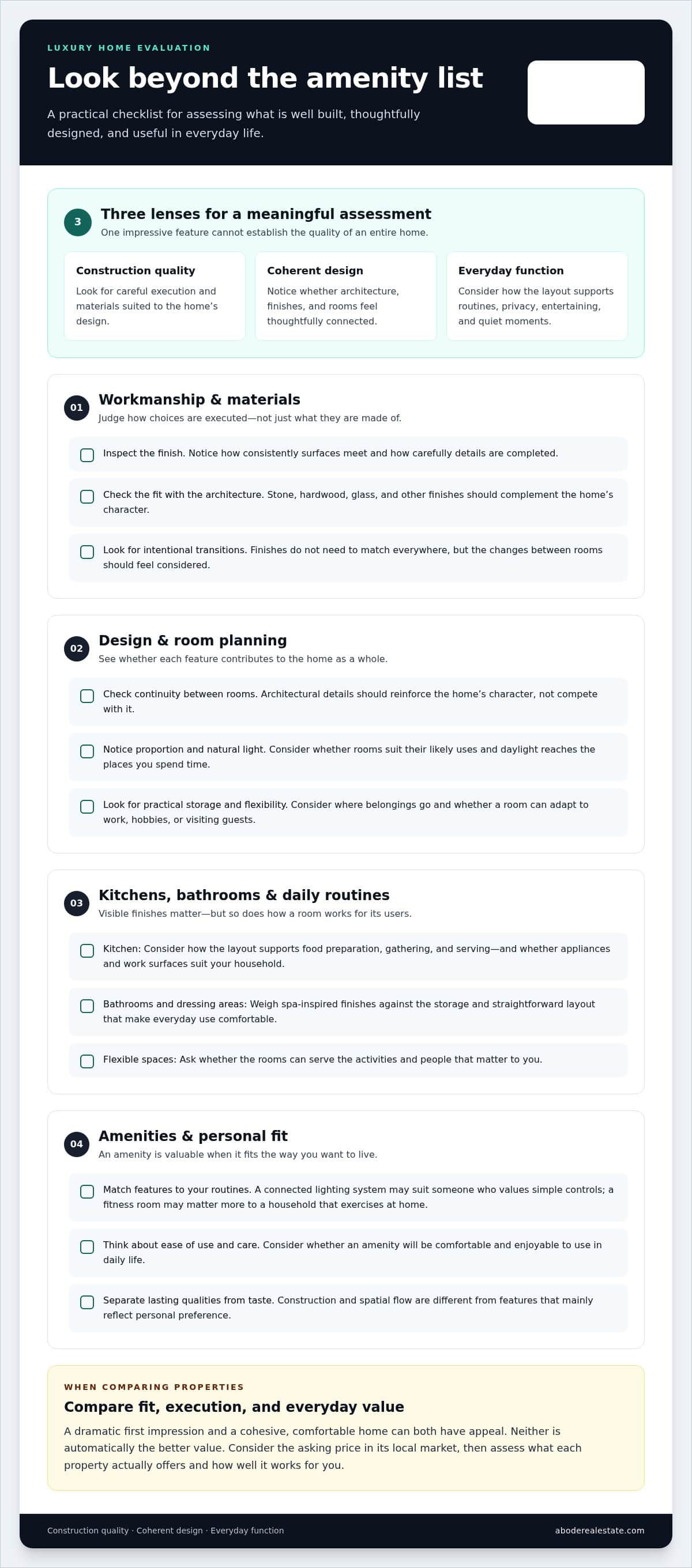
Assess a property through three distinct lenses:
- Construction quality: Look for careful execution and materials that feel appropriate to the home’s design.
- Coherent design: Consider whether the architecture, finishes, and rooms feel thoughtfully connected.
- Everyday function: Notice how the layout supports routines, privacy, entertaining, and quiet moments.
Luxury is not simply a matter of greater size or more conspicuous amenities. A refined home brings its elements together in a way that feels intentional and serves the people who live there. Carry this question into each feature you consider: how well does it work for you?
Which Design and Construction Features Shape a Luxury Home?
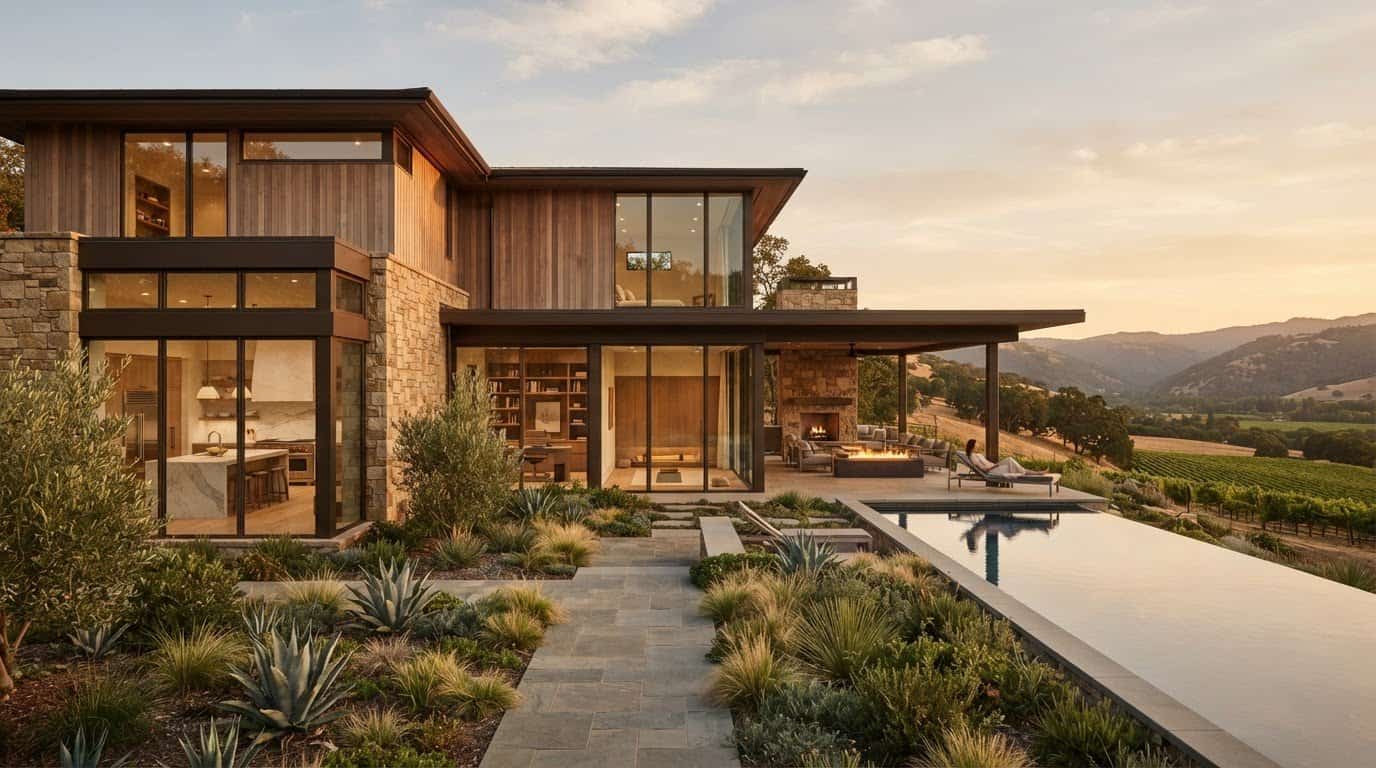
Look beyond a room’s first impression to see how materials, workmanship, architecture, and layout come together. The features of a multi-million dollar home can vary, but a cohesive design makes each choice feel considered rather than added for display. Natural finishes may bring warmth and texture, but they are options, not requirements.
Materials, craftsmanship, and architectural character
Stone, hardwood, glass, and carefully selected finishes can give a home depth and character. Their value depends on more than the material itself. Notice how consistently surfaces meet, how details are finished, and whether the materials complement the home’s architecture. A restrained palette can feel as distinctive as an elaborate one when it suits the structure.
Architectural details work best when they reinforce a home’s character and support its use. A distinctive ceiling, window arrangement, or staircase should contribute to the overall composition rather than compete with it. Look for continuity between rooms, too. Finishes do not need to match everywhere, but transitions should feel intentional.
Thoughtful design brings materials, proportion, and function into balance, so a home feels distinctive without sacrificing ease of use.
Kitchens, bathrooms, and spaces designed around daily life
Rooms with the most visible finishes still need to work well. In a kitchen, consider how the layout supports preparing food, gathering, and serving. Check whether the appliances and work surfaces suit your household’s routines. A separate preparation area may appeal to someone who entertains often, while another buyer may prefer an open kitchen that keeps conversation flowing.
Bathrooms and dressing areas are similarly personal. Spa-inspired finishes can create a sense of retreat, while generous storage or a straightforward layout may matter more to everyday comfort. Neither a lavish bathroom nor a dressing room is a universal measure of quality. The key is whether the space serves the people who will use it.
Room proportions, natural light, and storage influence how the whole home feels. Notice whether rooms accommodate their likely uses, whether daylight reaches the places where you spend time, and whether belongings have practical places to go. Flexible rooms can adapt as needs change, from work to hobbies or visiting guests. Their usefulness depends on how well they fit the home’s overall plan.
As you compare luxury homes for sale, consider how design choices work together, not just how each room photographs. Cohesion, comfort, and craftsmanship can reveal more than a list of premium finishes.
Which Luxury Amenities Improve Comfort, and Which Are Personal Preferences?
The most useful amenities make daily life easier, more comfortable, or more enjoyable for the people who live in the home. A connected lighting system may suit someone who values simple controls, while a fitness room may matter more to a household that exercises at home. The features of a multi-million dollar home do not need to appeal to everyone. Their value depends on how well they match your routines.
Smart-home technology, security, and indoor comfort
Lighting, climate controls, connected appliances, and security features can work as parts of an integrated system. They may offer convenient ways to manage the home and its settings. But a long list of connected devices does not necessarily mean a better experience. Consider whether the controls are intuitive, whether key functions work together, and whether you would use them regularly. A system that feels complicated can add friction rather than ease.
Consider comfort-focused features through the same practical lens. Think about whether the home’s systems support the conditions you prefer and how much attention or upkeep the technology may involve. A feature is most compelling when its day-to-day benefit is clear, not simply because it feels advanced.
Fitness, entertainment, outdoor living, and accessibility
Fitness rooms, media spaces, and recreation areas can bring leisure closer to home, especially when they align with established routines or the way you like to entertain. Outdoor kitchens, covered seating, and other exterior gathering areas may extend the living space for residents who enjoy spending time outside. If those spaces would see little use, their presence alone may not add much to your daily comfort.
Elevators and accessibility-oriented design can be especially meaningful depending on household needs, mobility, and future plans. Their usefulness is personal, not a universal marker of luxury. Weigh each amenity against its likely use, complexity, and care requirements.
| Feature | Potential benefit | Consider if |
|---|---|---|
| Smart-home controls | Convenient management of connected functions | The system feels intuitive and integrated |
| Fitness or recreation room | At-home exercise or entertainment | It fits your routines and won’t sit unused |
| Outdoor living area | More room for relaxing or hosting | You’ll enjoy maintaining and using it |
| Elevator or accessibility features | Easier movement through the home | They address current or anticipated needs |
Compare amenities by the life they support, not by how impressive they sound in a listing. As you explore luxury homes for sale, consider which features would earn a place in your ordinary week and which are simply appealing to imagine.
How to Evaluate the Features of a Multi-Million-Dollar Home
A thoughtful evaluation starts with your priorities, then moves from what you can experience in the home to questions that need closer review. This keeps an impressive finish or amenity from overshadowing practical concerns. Use the same process for each property so you can compare what matters to your household, rather than simply count features.
Build a personal feature-priority framework
Before comparing homes, rank what matters most: daily comfort, entertaining, privacy, technology, and flexibility. Mark each as essential, valuable, or optional. This simple distinction separates genuine needs from appealing extras and gives you a clear reference when a property makes a strong first impression.
For each home, record benefits, trade-offs, and follow-up questions. For instance, a dedicated entertaining area may suit frequent hosts but offer little value to a household that prefers quieter gatherings. The features of a multi-million dollar home are easiest to assess when you consider both their appeal and their relevance to your life.
| Priority | Home A | Home B |
|---|---|---|
| Daily comfort | Benefit, trade-off, question | Benefit, trade-off, question |
| Entertaining | Benefit, trade-off, question | Benefit, trade-off, question |
| Privacy and flexibility | Benefit, trade-off, question | Benefit, trade-off, question |
| Technology and care | Benefit, trade-off, question | Benefit, trade-off, question |
Look beyond the first impression
As you walk through, notice how rooms function, whether workmanship appears consistent, and how much attention features may require. Consider whether connected systems seem straightforward to use or introduce complexity. Beautiful finishes can contribute to a home’s character, but they do not answer broader questions about its condition or performance.
Separate what you can observe from what needs further review. A room may feel comfortable during a visit, while questions about the property’s condition or a particular feature may call for appropriate professional review as part of informed due diligence. Keep those questions alongside your comparison notes rather than relying on first impressions alone.
Abode Real Estate provides tailored guidance for luxury residential sales and investment property acquisition. A consistent comparison of each property’s features, condition, and fit with your priorities can help keep your search focused.
Turn Luxury-Home Features Into a Purchase That Fits Your Life
A considered luxury purchase is not measured by how many features a home can list. It comes down to fit, execution, and the value those features bring to everyday life. A quieter, well-planned space may serve you better than an elaborate amenity you rarely use.
Prepare for a focused luxury-home search
Before comparing properties, write down what you want your home to support. Think about how your household spends its time, the experiences you hope to enjoy, and practical constraints that could shape your decision. Separate must-haves from preferences. That clarity makes it easier to recognize meaningful value without being distracted by polished listing photographs or a striking first impression.
Use the same priorities to assess each property. Consider whether its design, condition, layout, and amenities support your plans, and note where a compelling feature comes with a trade-off. The features of a multi-million dollar home matter most when they connect to a broader purchase objective, whether you are seeking a primary residence or considering an investment property. A consistent comparison gives you a more grounded view of the choices.
Take the next step with thoughtful guidance
Luxury real estate decisions involve more than choosing finishes or favoring one impressive room. They ask you to weigh a home’s character, practical strengths, and potential fit with the life you envision. Abode Real Estate offers tailored guidance for residential sales and investment property acquisition, helping buyers consider how a property aligns with their priorities.
Bring your questions, preferences, and comparison notes into the search. Consider a home’s character and practical strengths alongside the features that matter most to you, rather than treating every premium amenity as essential.
Ready to explore your next move? Discuss your luxury-home search with Abode Real Estate and take the next step with a clear sense of what matters to you.
Choose a Home That Feels Right for What Comes Next
The features of a multi-million dollar home can be striking, but a considered purchase is about more than an impressive list. Look for thoughtful design, quality execution, and amenities that support the way you want to live. Price expectations vary by market, too, so compare each home in context and focus on the details that matter most to your household.
Before moving forward, revisit your priorities and weigh each property’s everyday usefulness alongside its character and condition. A feature that suits one buyer may be unnecessary for another. The right home is the one whose strengths align with your plans, not simply the one with the most to show.
Founded in 2018, Abode Real Estate is a boutique luxury brokerage offering luxury residential sales and investment property acquisition. Its tailored guidance can help you compare homes with care and connect your priorities to a considered purchase. Explore a more considered luxury-home search with Abode Real Estate, and move toward your next chapter with confidence.
Frequently Asked Questions
What features are common in a multi-million-dollar home?
Common features may include thoughtful architecture, quality materials and workmanship, well-planned kitchens and bathrooms, generous storage, and spaces designed for privacy or entertaining. Some homes also include smart-home controls, fitness or recreation areas, and outdoor living spaces. The features of a multi-million dollar home are not a fixed checklist. Buyer expectations vary by market, and a home’s overall quality depends on how its design and features work together.
Does a multi-million-dollar home always have a pool?
No. A pool is a personal amenity, not a requirement for a multi-million-dollar home. It may appeal if you enjoy swimming, outdoor gatherings, or relaxing by the water, but it may be less valuable to a household that would not use it often. Consider how it fits your routines and preferences, along with any ongoing care it may involve. A home’s quality and fit cannot be judged by a single feature.
How do I know whether luxury-home features are worth prioritizing?
Start by separating essential needs from attractive extras. Think about daily comfort, entertaining, privacy, technology, and flexibility, then consider how each feature supports those priorities. A fitness room may be valuable if you exercise at home, while a formal entertaining space may matter more if you regularly host. Also weigh usability and care needs. A feature is worth prioritizing when its practical value to your household justifies the space and attention it requires.
Are smart-home features essential in a multi-million-dollar home?
No. Smart-home technology can add convenience, but the number of connected devices does not determine a home’s quality. Lighting, climate controls, appliances, and security features may be easier to manage when they work together and feel intuitive. Consider which functions you would actually use and whether the system seems straightforward for your household. A well-designed home can suit you with simple controls, too. Prioritize comfort and ease over technology included mainly for its novelty.
What materials are used in luxury homes?
Luxury homes may use materials such as stone, hardwood, glass, and distinctive tile or plaster finishes. There is no required material palette, and a home does not need a particular surface to feel refined. Look at how materials suit the architecture, how finishes transition between rooms, and whether workmanship appears consistent. The overall composition matters more than any single material. A thoughtful mix can give a home character while supporting a cohesive design.
Are luxury amenities more important than location?
Neither should be considered in isolation. Amenities shape the experience inside the home, while location influences how the property fits your wider priorities and routines. Their relative importance depends on what you value. A home with appealing features may still be the wrong fit if its setting does not support your plans; a preferred location may not compensate for a layout or condition that does not work for you. Weigh both against your objectives.
How should I compare two multi-million-dollar homes with different features?
Use the same framework for both properties. List your essential priorities, then note each home’s benefits, trade-offs, and questions. Compare construction and design, everyday usability, amenities you are likely to use, and potential care needs. Do not let a dramatic feature or polished listing photos outweigh how the home functions in person. Questions about condition and performance may need further review as part of due diligence. The stronger choice is the better fit for your plans.
Posted by Brook Walsh onEnjoy this blog post? Click here to subscribe for updates
Leave A Comment