
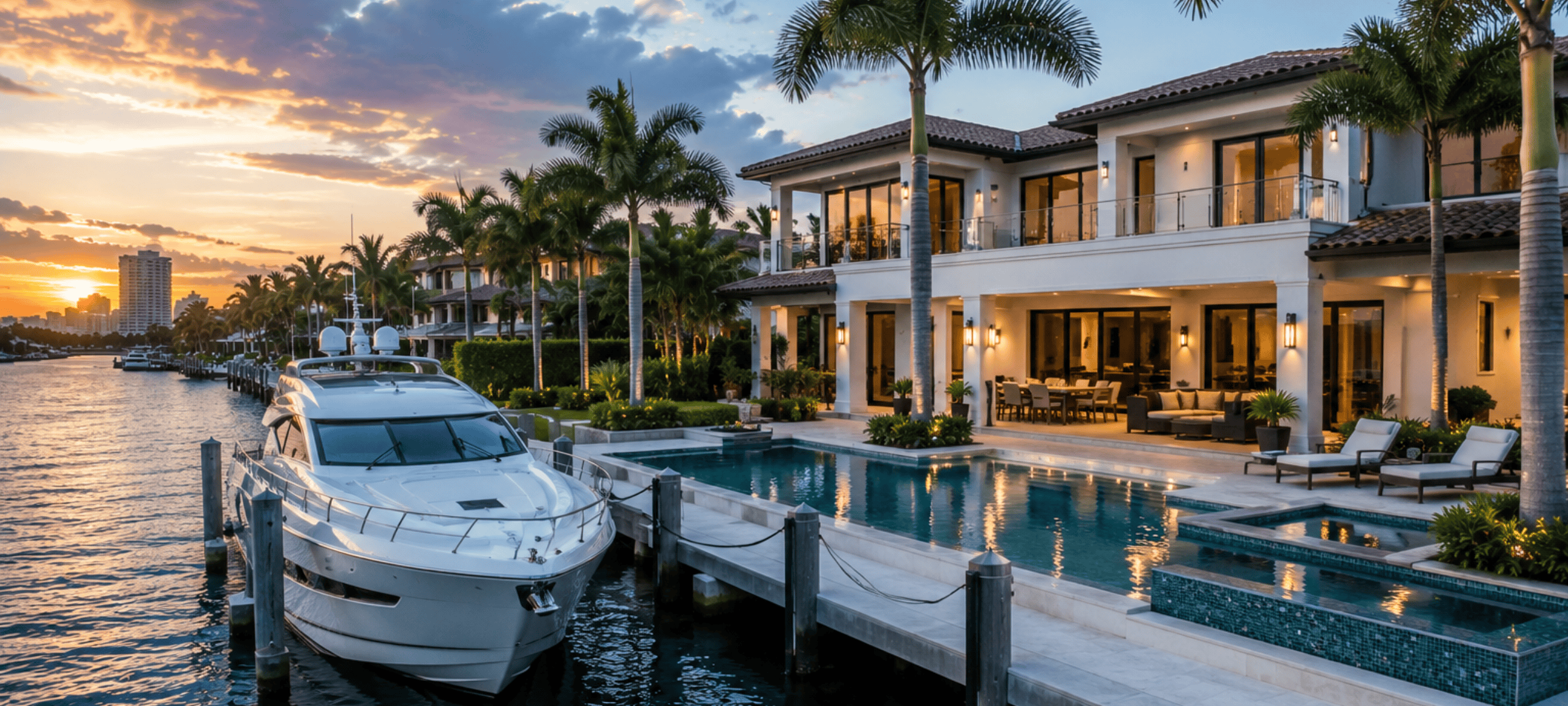
A deep-water home is a maritime infrastructure investment first and a residential purchase second. When you set out to buy a deep water home, you're not just looking for a sanctuary with a view; you're acquiring a complex asset where bridge clearances and dockage depths dictate your daily lifestyle. In 2026, the scarcity of these "no fixed bridge" parcels continues to drive the market, with median prices for prime ocean-access homes often exceeding the multi-million dollar mark. It's a high-stakes transition that requires more than just an eye for design; it requires a curated understanding of the water itself.
You likely already know that prime waterfront locales offer a lifestyle unlike any other, yet you're probably wondering exactly how bridge clearances and water depths will impact your specific vessel. Abode Real Estate believes your move should feel seamless and sophisticated, not like a financial hurdle. This guide provides the technical stewardship you need to master everything from understanding local municipal fees to navigating the nuances of evolving long-term anchoring permits, some of which are slated for implementation in 2026. We'll explore evaluating seawall integrity, calculating draft requirements, and securing insurance in a dynamic market where rates are continually shifting. Let's ensure your next abode is a true maritime sanctuary.
Key Takeaways
- Identify the specific "no fixed bridge" requirements that transform a standard residence into a true maritime sanctuary for your vessel.
- Master the technical relationship between property frontage and vessel beam before you buy a deep water home Fort Lauderdale estates.
- Evaluate the lifestyle impact of wake zones and inlet proximity to ensure your home offers both tranquility and efficient ocean access.
- Learn why specialized seawall and dock inspections are non-negotiable components of your technical due diligence process.
- Discover how a bespoke concierge approach provides stewardship through the complex nuances of high-end waterfront transactions.
Table of Contents
- Defining the Deep Water Lifestyle in Fort Lauderdale
- Navigating Technical Maritime Requirements
- Location Strategy: Canals, Rivers, and the Intracoastal
- The Deep Water Due Diligence Checklist
- The Abode Bespoke Approach to Waterfront Sales
Defining the Deep Water Lifestyle in Fort Lauderdale
The water isn't just a scenic backdrop in the Venice of America; it's the very foundation of your daily rhythm. When you choose to buy a deep water home in Fort Lauderdale, you're investing in a lifestyle where your vessel is a seamless extension of your living room. In 2026, the local maritime standard for "deep water" has evolved. It now typically refers to a minimum of six to eight feet of depth at mean low tide, providing the necessary draft for modern luxury motor yachts and large sailboats. This isn't merely about square footage. It's about the emotional and financial security of a private sanctuary where your investment is protected by the geography itself. Beyond the depth, the true value of these properties is anchored in riparian rights. These rights grant you the legal stewardship to maintain private dockage, ensuring your connection to the Atlantic remains unparalleled and unobstructed.
The allure of this region is deeply rooted in Fort Lauderdale's extensive canal system, which spans over 165 miles of navigable waterways. This network creates a unique community of enthusiasts who value the art of the transaction as much as the art of the cruise. Owning a home here means you're part of a localized culture that understands the soul of the neighborhood is found on the deck of a boat just as much as it is within the walls of an estate.
The "No Fixed Bridges" Distinction
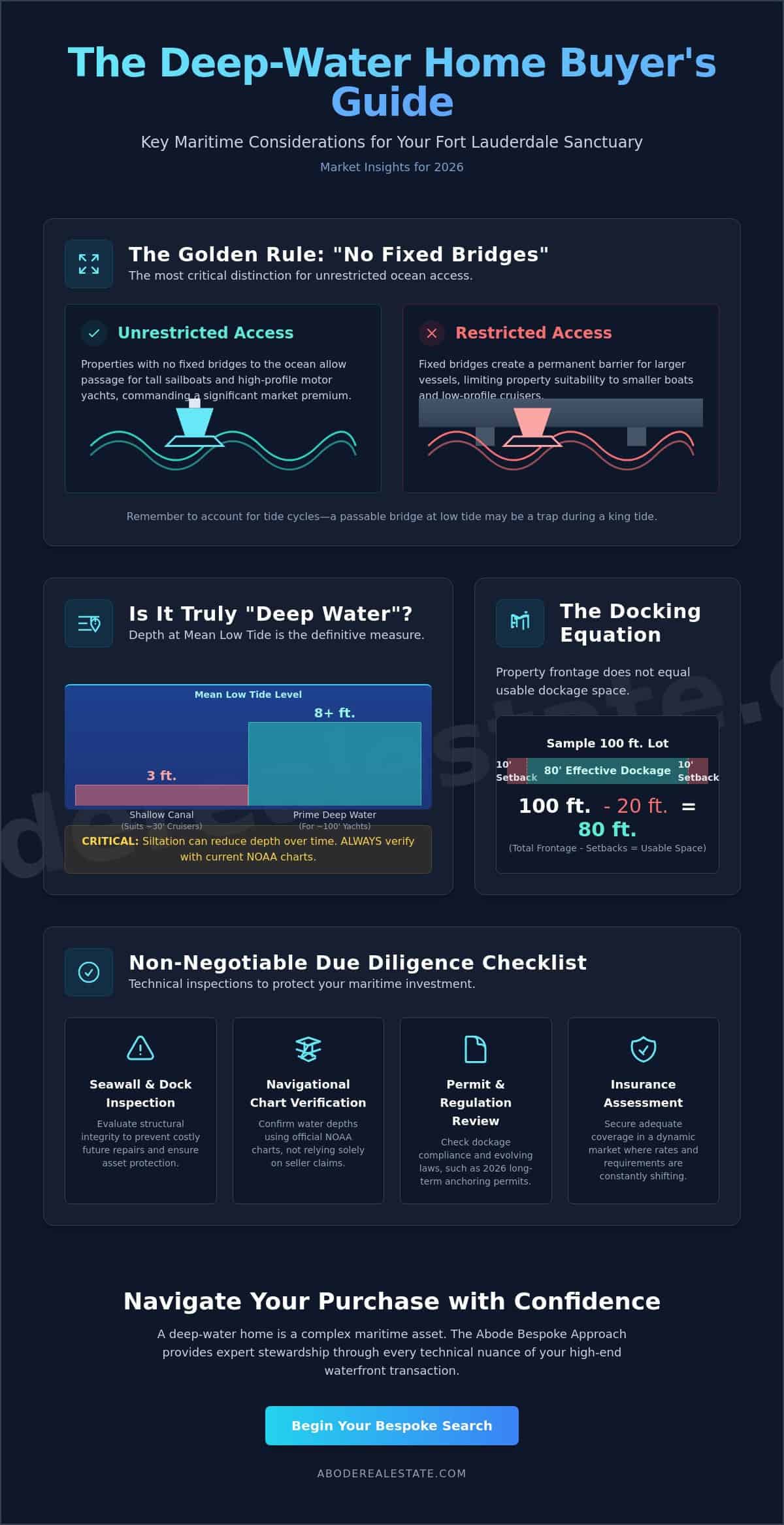
In local real estate, "no fixed bridges" is the most significant phrase you'll encounter. It represents a literal and figurative ceiling on your property's potential. A fixed bridge limits the air draft of any vessel attempting to pass beneath it, creating a permanent barrier for certain yacht classes. If a home sits behind a bridge with a 15-foot clearance, your options are restricted to smaller center consoles or low-profile cruisers. For owners of sailboats with tall masts or high-profile yachts with multiple decks, these bridges are impassable. This scarcity creates a massive premium on estates with direct ocean access. You must also consider tide cycles; a bridge that's passable at low tide might become a trap during a king tide. We focus on these technicalities to ensure your home choice doesn't become a logistical hurdle.
Deep Water vs. Shallow Canal Access
While many homes sit on the water, only a curated few offer the depth required for larger vessels. A 30-foot cruiser might only need three feet of draft, but a 100-foot yacht often requires eight feet or more to navigate safely. Depth is only one part of the equation. Canal width is equally vital because it determines your turning basin. A narrow canal might have depth but lack the space for a large vessel to maneuver or dock safely. Properties situated on the Intracoastal Waterway or wide river bends offer the most effortless entry and exit. We treat these technical nuances as a refined skill, matching your vessel's beam and draft requirements to the perfect dockage. It's about finding a connection between land and sea that feels entirely bespoke to your maritime needs.
Navigating Technical Maritime Requirements
Technical specifications are the heartbeat of a maritime home. When you prepare to buy a deep water home Fort Lauderdale estates, the math matters as much as the view. It's about the ratio of property frontage to vessel beam. If you have 100 feet of frontage, you can't necessarily dock a 100-foot boat. City ordinances generally require a 10-foot setback from each property line, meaning a 100-foot lot effectively provides 80 feet of dockable space. You also need to stay current on Florida boating safety and regulations to ensure your dockage remains compliant as local laws evolve. Verifying official navigational charts against seller claims is a critical step in your stewardship; siltation can reduce a reported 8-foot depth to 6 feet in just a few seasons.
Understanding Draft and Beam Constraints
Calculating your vessel's footprint is a bespoke process that requires precision. Most canals in Fort Lauderdale enforce strict regulations regarding vessel overhang. If your bow or stern encroaches into a neighbor's riparian space, you face immediate legal hurdles. While a side-tie configuration is the standard for most "Venice of America" finger canals, some wider waterways allow for T-docks. These configurations provide more flexibility but require specific permits. Always verify depth using current NOAA charts. Sellers often remember the depth from the date they purchased the home, but tides and shifting sands are constant. For a more detailed look at specific lot potentials, our team at Abode Real Estate can provide a curated analysis of local dockage permits.
Infrastructure: Docks and Seawalls
The stewardship of your waterfront infrastructure is a long-term commitment to your asset's value. In 2026, we see a distinct shift toward composite materials like high-density polyethylene (HDPE). These materials resist the South Florida sun better than traditional pressure-treated wood. Concrete docks remain the gold standard for stability and longevity. However, the seawall is the most critical component of your sanctuary. Look for warning signs of failure: cracks in the concrete cap, sinkholes in the yard, or rusted tie-rods. These indicate the wall's structural integrity is compromised. Repairing a failing wall is a significant undertaking that requires expert navigation of environmental permits.
Modern luxury yachts are essentially floating cities. A standard 30-amp service won't suffice for a 70-foot motor yacht. You'll likely need dual 50-amp or a 100-amp three-phase service to power climate control, stabilizers, and onboard systems. Upgrading a dock’s electrical panel is a technical project that must be factored into your investment strategy. Ensure the home's transformer and existing panel can handle the increased load before you commit to buy a deep water home in Fort Lauderdale. This attention to detail ensures your transition into the maritime lifestyle is as seamless as it is rewarding.
Location Strategy: Canals, Rivers, and the Intracoastal
Location is the ultimate determinant of your maritime experience. When you decide to buy a deep water home in Fort Lauderdale, you're choosing between the high-energy prestige of the Intracoastal and the sheltered tranquility of a finger canal. In 2026, the market for luxury slips has reached a point of extreme scarcity. This makes the strategic placement of your dock a primary driver of long-term asset value. It's not just about the view; it's about the "no-wake" reality and how many minutes stand between your lines and the open Atlantic. Selecting the right waterway is a curated decision that balances your vessel’s needs with your personal desire for a sanctuary.
Proximity to the Port Everglades inlet has become the gold standard for convenience in 2026. For owners of large yachts, every bridge opening and idle-speed zone adds significant time to a journey. A home located within a 15-minute cruise of the inlet offers a level of freedom that properties further upriver simply cannot match. Point lots remain the most coveted pieces of the "Venice of America" landscape. These estates offer multi-exposure views and expanded dockage, often providing over 200 feet of deep-water frontage for a truly bespoke maritime setup. This expanded frontage allows for larger turning basins and the ability to host multiple vessels without compromising your view or privacy.
Intracoastal Frontage: The Pro-Vessel Choice
Living on the Intracoastal Waterway puts you in the center of the action. This is the heart of "Millionaires Row," where high-visibility estates offer unparalleled wide-water views. However, this prestige comes with the stewardship of managing constant vessel traffic. Docks here must be engineered to withstand the persistent wake from passing cruisers. It's a high-energy environment perfect for those who view their home as a front-row seat to the world's most impressive yacht parade. If you buy a deep water home in Fort Lauderdale on the Intracoastal, you're choosing accessibility over silence.
Canal Living: Privacy and Protection
Deep-water canals provide a different kind of sanctuary. These waterways offer superior protection during storm seasons, acting as a natural buffer against the elements. While the views are more intimate, the privacy is unmatched. You must evaluate the "turning radius" if you pilot a long-range cruiser; narrow canals can make maneuvering a 100-foot vessel a technical challenge. This is where the curated community feel of Fort Lauderdale shines. Neighbors often share a deep, localized knowledge of the tides and currents that define their specific canal, creating a connection that goes beyond mere property lines.
The Deep Water Due Diligence Checklist
The transition from viewing an estate to performing technical due diligence is where the art of the transaction truly begins. When you prepare to buy a deep-water home in Fort Lauderdale, your inspection period must extend far beyond the four walls of the residence. It requires a mile-by-mile verification of the navigational path to the Atlantic. You must confirm every bridge clearance and power line height between your dock and the inlet. Even a single bridge with a 15-foot clearance can render a million-dollar dock useless for a high-profile motor yacht. We recommend a maritime-specific survey to ensure your vessel's draft and air draft are compatible with the specific geography of your chosen canal.
Zoning regulations in Fort Lauderdale often dictate that a vessel cannot exceed a certain percentage of the property's waterway width, typically preventing boats from obstructing the central navigation channel. You must also confirm that your riparian rights are clearly defined in the deed. Shared dockage agreements or old easements can create unexpected hurdles for your sanctuary. This level of scrutiny ensures that your transition into waterfront living is as seamless as the wake behind your boat. For a comprehensive review of current listings with pre-verified dockage specs, view our curated maritime portfolio.
The Infrastructure Audit
A standard home inspector is rarely equipped to evaluate the underwater supports of a luxury dock. You must commission a specialized maritime engineer to test the integrity of pilings and underwater supports. These experts use sonar or dive teams to check for boring organisms and erosion that can weaken the foundation of your dockage. A concrete seawall in South Florida typically maintains its structural integrity for 30 to 50 years before requiring significant restoration or replacement. Evaluating the age and lifting capacity of existing boat lifts or davits is equally vital; a 20,000-pound lift is a liability if you plan to dock a 30,000-pound center console.
Legal and Regulatory Clearances
The regulatory landscape for waterfront homes is constantly shifting. City ordinances in Fort Lauderdale are specific about "live-aboard" status, often prohibiting residents from using their vessel as a primary sleeping quarter while docked at a residential property. You must also verify that all existing dock permits are up-to-date and fully transferable to a new owner. In 2026, environmental regulations regarding dock expansion became more stringent to protect local seagrass and manatee habitats. Understanding these limitations before you close ensures your long-term plans to buy deep water home Fort Lauderdale estates remain viable and your investment stays protected.
The Abode Bespoke Approach to Waterfront Sales
Acquiring a maritime estate is a journey that demands more than a traditional real estate license; it requires a specialized stewardship of the local waterways. At Abode Real Estate, we act as a concierge for those looking to buy a deep-water home in Fort Lauderdale, treating every search as a bespoke mission. We understand that the "art of the transaction" lies in the details others overlook, such as the specific draft of your hull or the exact height of your tuna tower. By leveraging our deep-rooted connections within the Venice of America, we often secure access to off-market "no fixed bridge" gems that never reach public listings. This proactive approach ensures you find a sanctuary that fits your vessel perfectly without the noise of a crowded market.
The 2026 market requires a guide who understands the "soul" of each neighborhood, from the wide-water prestige of Harbor Beach to the quiet finger canals of Coral Ridge. With luxury single-family homes in the top 10% of the market, averaging $6.20 million as of Q2 2025, the stakes for your investment are high. We provide calm confidence during these high-stakes transitions, ensuring that every legal and technical hurdle is cleared before you sign. Our goal is to make the process feel less like a financial hurdle and more like a curated transition into a new chapter of life.
Bespoke Search and Acquisition
Our process begins with your vessel's technical specifications. We don't just show you homes; we match your boat's beam and draft to the perfect dockage. To guarantee a seamless transition, we connect you with our vetted network of maritime engineers and seawall specialists. These professionals provide the technical clarity you need to move forward with confidence. We handle the complexities of the acquisition so you can focus on the lifestyle. It's about creating a connection between your home and the water that feels entirely natural and refined. We treat your property search as a strategic investment in your maritime future.
Maximizing Value for Boaters
A deep-water home is a strategic investment that requires ongoing attention to detail. We provide strategic advice on dock upgrades, such as installing high-capacity power pedestals or composite decking, which can significantly increase future resale value in the 2026 market. For our seasonal residents, we offer full-service property management and luxury vacation rental oversight. This ensures your sanctuary is maintained with the highest level of care while you're away. We take pride in navigating the nuances of the local market to protect your asset's long-term value. Welcome home to unparalleled waterfront living with Abode.
Secure Your Maritime Sanctuary
Securing a waterfront estate in the Venice of America is a sophisticated endeavor that demands a blend of technical precision and localized intuition. You've discovered that maritime infrastructure acts as the primary anchor for long-term value, whether you're evaluating the structural integrity of a 50-year concrete seawall or verifying "no fixed bridge" clearances for a high-profile yacht. Success in the 2026 market involves looking beneath the surface to ensure your vessel's specific draft and beam requirements align perfectly with the property's riparian rights and local zoning ordinances.
When you're prepared to buy a deep water home in Fort Lauderdale estates, you need a guide who treats the search as a bespoke mission. Abode Real Estate provides the calm authority and professional stewardship required to manage these high-stakes transitions with ease. We offer specialized expertise in no-fixed-bridge estates, exclusive access to off-market luxury waterfront inventory, and a professional maritime infrastructure network to ensure every detail is seamless. Discover your bespoke deep-water sanctuary with Abode Real Estate and secure an asset that truly reflects your lifestyle. We look forward to welcoming you home.
Frequently Asked Questions
What exactly defines a "deep water" home in Fort Lauderdale?
A deep water home is defined by a minimum depth of six to eight feet at mean low tide, which is the local 2026 maritime standard for luxury vessel accessibility. When you prepare to buy a deep water home in Fort Lauderdale, this depth ensures your yacht's hull remains safe from siltation and shifting sands. It's a technical baseline that distinguishes a true maritime sanctuary from a standard waterfront property. This specific draft allows for the seamless operation of larger motor yachts and sailboats.
What is the difference between "fixed bridges" and "no fixed bridges"?
Fixed bridges are permanent structures with set height clearances, often restricted to 15 or 22 feet, while "no fixed bridges" means your vessel has an unobstructed path to the Atlantic. This distinction is the most significant value driver in the local market. Properties with no fixed bridges command a premium because they accommodate yachts with high-profile tuna towers or tall masts. If a home sits behind a bridge, your vessel's air draft must be calculated against the tide cycles to avoid becoming trapped.
How much does it cost to repair or replace a seawall in 2026?
Costs for seawall restoration are calculated per linear foot and vary based on the choice of materials, such as traditional concrete or modern high-density polyethylene (HDPE). While we don't provide estimates for contracting services, the 2026 market shows a clear preference for composite materials due to their 50-year functional lifespan. Replacing a wall is a significant undertaking that requires municipal permits and specialized marine engineering. It's an essential part of the stewardship required to protect your waterfront investment's long-term value.
Can I dock a yacht that is longer than my property’s waterfrontage?
No, city ordinances generally require a vessel to stay within the "dockable" portion of your frontage, which includes a 10-foot setback from each property line. This means a 100-foot lot effectively supports an 80-foot vessel. Furthermore, your boat cannot obstruct the central navigation channel or encroach upon a neighbor's riparian space. These regulations ensure the safety and accessibility of the canal system for all residents. We always recommend verifying the specific lot width and setbacks before finalizing a purchase.
Do I need a special permit to install a boat lift on my dock?
Yes, installing a boat lift in Fort Lauderdale requires both a building permit from the city and often an environmental review. These reviews ensure the structure doesn't negatively impact local seagrass or manatee habitats, which are strictly protected under 2026 regulations. The permit process also evaluates the lift's capacity and piling depth to ensure structural safety. It's a technical step that ensures your dockage infrastructure remains compliant with the latest maritime standards and environmental stewardship goals.
How far are the deep-water homes from the ocean inlets?
The distance varies by neighborhood, but the most coveted homes are located within a 15-minute cruise of Port Everglades or the Hillsboro Inlet. Properties located further upriver or deep within finger canals may require 45 minutes or more of "no-wake" idling to reach open water. This navigational time is a critical lifestyle factor that we analyze during your search. Proximity to an inlet significantly impacts the frequency of your boating trips and the overall convenience of your maritime sanctuary.
What are riparian rights, and how do they affect my property?
Riparian rights are the legal entitlements granted to landowners whose property borders a navigable waterway, including the right to install dockage and access the water. These rights are a core component of your home's value and must be clearly defined in your deed. They allow you to maintain a private connection to the canal or river while adhering to city and state regulations. Understanding these rights is vital for ensuring your dockage plans don't conflict with shared agreements or municipal easements.
Is it better to buy on a canal or directly on the Intracoastal?
The choice depends on whether you value high-energy prestige or sheltered privacy. The Intracoastal offers unparalleled wide-water views and a front-row seat to the yacht parade, but it requires managing constant vessel traffic and wake. Conversely, deep-water canals provide a tranquil sanctuary with superior protection during storm seasons. While the Intracoastal puts you in the heart of the action, a canal-based home often offers a more intimate community feel and a more stable environment for your vessel.
Posted by Brook Walsh onEnjoy this blog post? Click here to subscribe for updates
Leave A Comment