
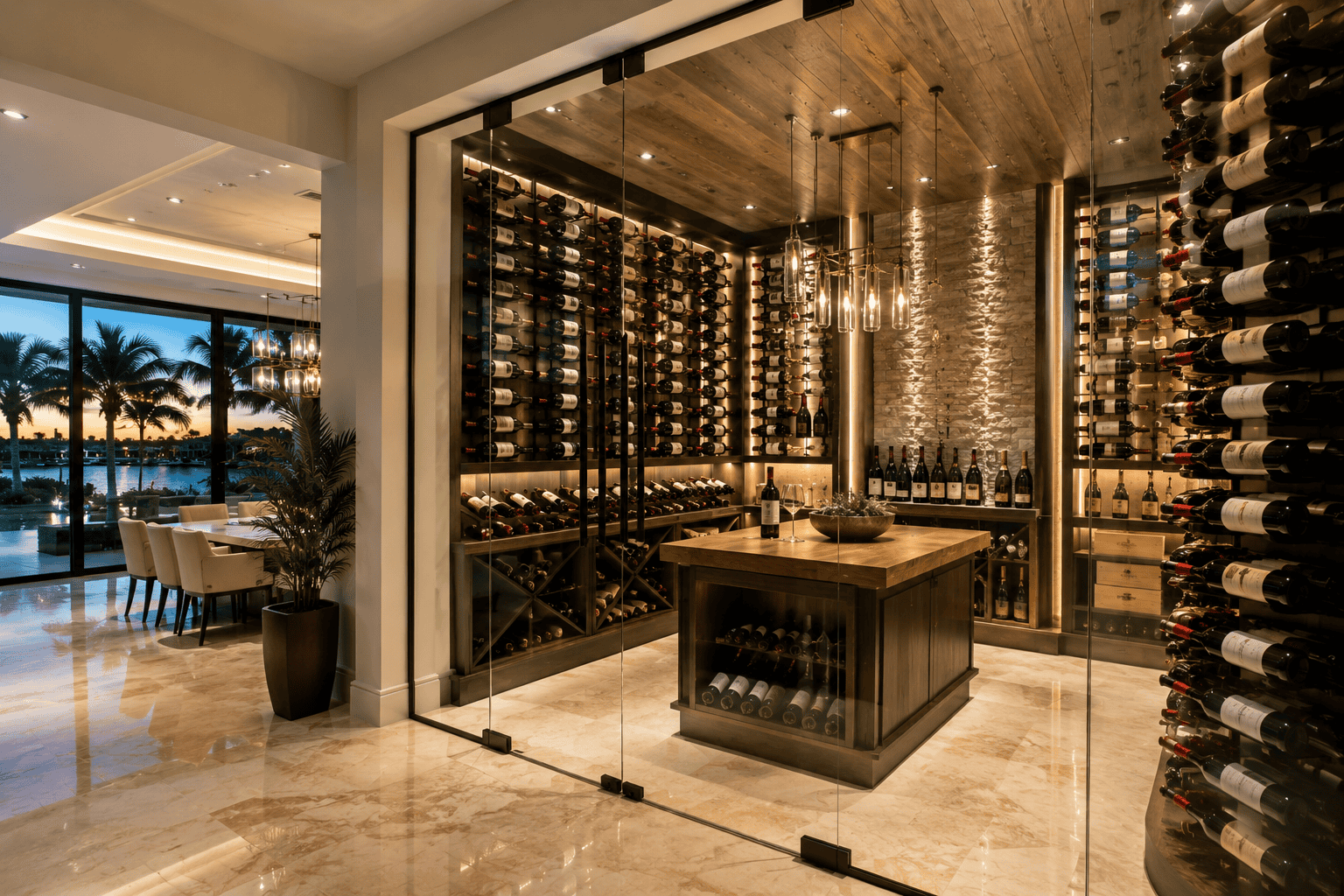
What if your most significant real estate asset isn't the panoramic ocean view, but the temperature-controlled sanctuary tucked just behind the formal dining room? For the serious collector, the search for luxury homes with wine cellars is often fraught with a specific kind of tension. You understand that in various climates, a standard closet with a cooling unit simply won't suffice to protect a legacy collection. It's a valid concern, especially as the luxury real estate market continues its significant growth surge. You deserve a home that functions as a world-class hosting venue without compromising the integrity of your vintage inventory.
We've designed this guide to help you distinguish between a decorative display and a professional-grade cellar. You'll discover how to evaluate the engineering of vapor barriers, explore the latest trends in glass-enclosed architectural anchors, and calculate the true investment value of these specialized spaces. We're moving beyond simple storage to discuss the creation of a private retreat that meets the highest sommelier standards. This is about more than just square footage. It's about gaining the confidence to acquire a property that secures your liquid assets while providing a sophisticated backdrop for your most memorable gatherings.
Key Takeaways
- Learn how modern estates have transformed wine storage from hidden rooms into central architectural showpieces that foster social connection and belonging.
- Discover how to distinguish between decorative wine walls for short-term display and the professional-grade luxury homes with wine cellars South Florida requires for long-term aging.
- Understand the engineering demands of a high-humidity climate, from hermetically sealed enclosures to the importance of redundant cooling systems.
- Master a tactile buyer’s checklist to inspect door seals, glass gaskets, and the service history of specialized climate equipment.
- See how a boutique, expert-led approach to residential sales ensures your next property is a sound tactical investment and a world-class hosting venue.
Table of Contents
- The Evolution of the Private Tasting Room in Modern Estates
- Defining the Architecture of a Professional-Grade Wine Cellar
- Evaluating the Engineering: Beyond Aesthetics and Glass Walls
- A Buyer’s Checklist for Inspecting High-End Wine Storage
- Navigating the Luxury Market with Abode Real Estate
The Evolution of the Private Tasting Room in Modern Estates
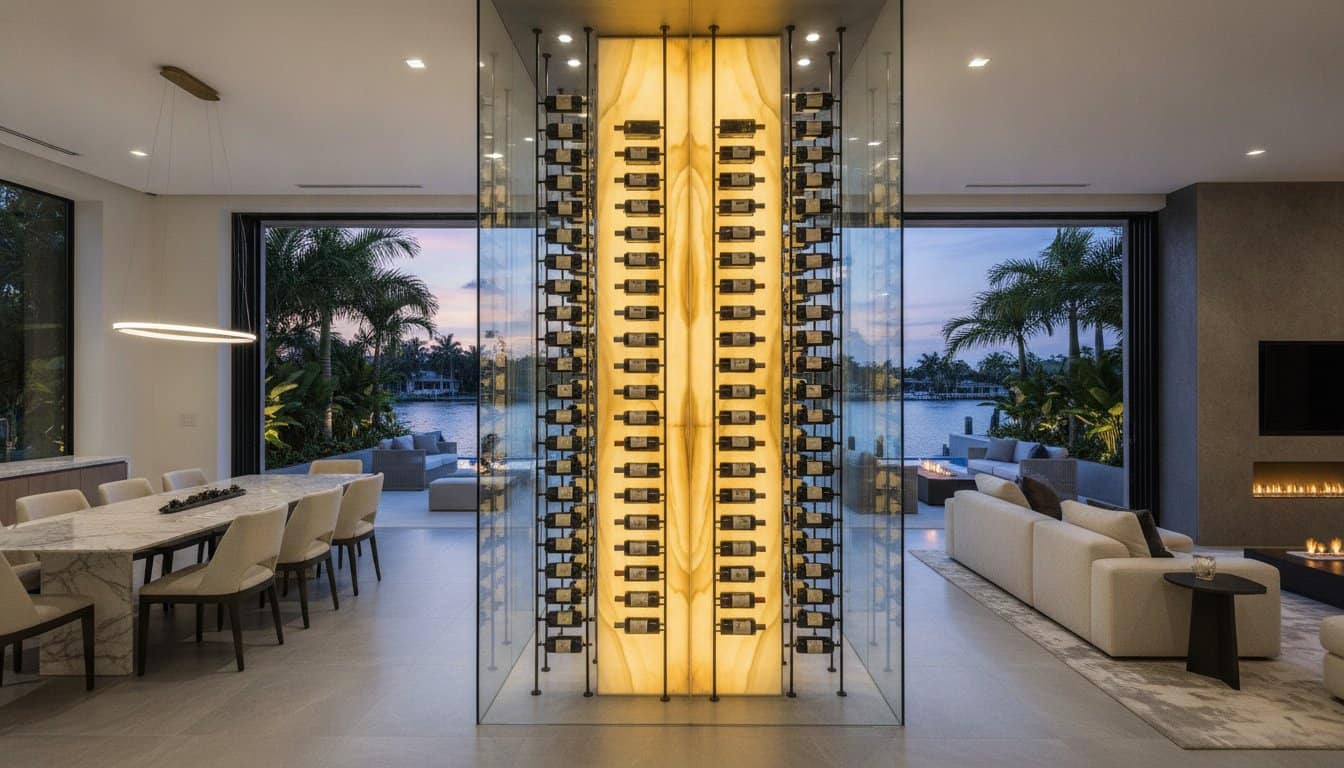
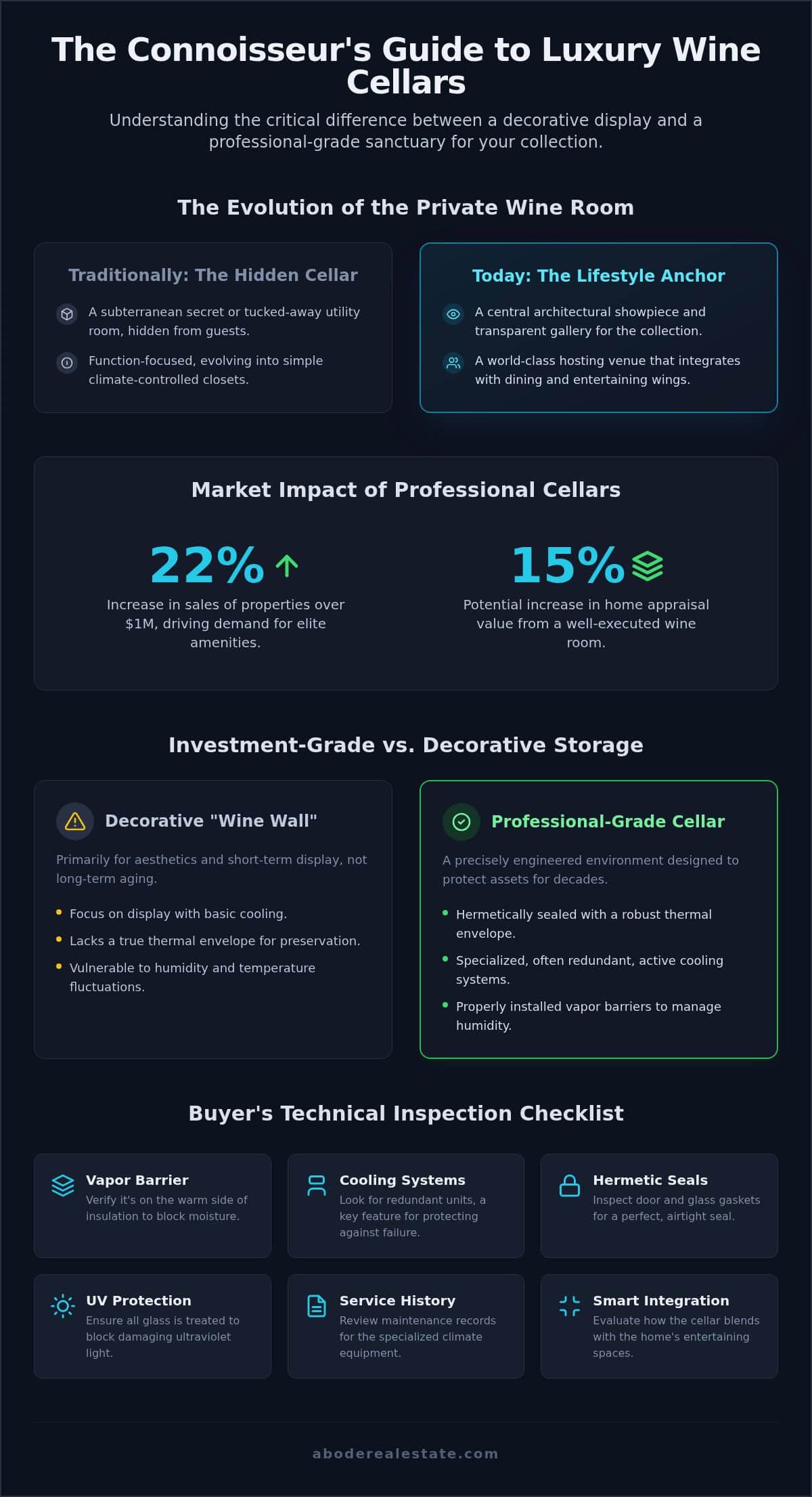
The architectural narrative of the high-end residence is shifting. For decades, wine storage was often treated as a subterranean secret or a tucked-away utility, hidden from the eyes of guests. In the vibrant landscape of South Florida, where subterranean basements are a geological impossibility, this evolved initially into climate-controlled closets. Today, however, the wine room has stepped into the light. It has become a transparent gallery and a central architectural showpiece that defines the character of the entire home. This transition mirrors a broader movement toward lifestyle-oriented real estate, where the property is no longer just a dwelling but a curated reflection of personal passions and sophisticated hosting.
National buyers are driving this demand. As the region experienced a 22 percent increase in sales of properties over $1 million during the first quarter of 2026, the expectations for amenities have reached a new peak. These individuals aren't just looking for square footage; they're seeking a sense of arrival and belonging. They want a space that serves as a world-class hosting venue, capable of facilitating social bonds over a rare vintage. While understanding the fundamentals of wine storage remains critical for preservation, the modern focus is on how these spaces integrate into the daily rhythm of life.
The Wine Cellar as a Lifestyle Anchor
The contemporary wine cellar acts as a sanctuary for personal retreat. It's a quiet corner of the estate where a collector can step away from the world to reflect on their journey. By integrating dedicated tasting areas directly into the cellar's footprint, the ritual of the final pour is elevated. No longer do you simply retrieve a bottle; you experience it in the environment where it was aged. This seamless integration into dining and entertaining wings ensures that the collection is a living part of the home's social fabric. It's a tactical design choice that turns a technical necessity into an emotional anchor for the family.
Market Trends for the Modern Oenophile
In the 2026 market, "wine-centric" residential design has become a primary differentiator for luxury residential sales. Collectors are increasingly prioritizing display-grade storage over traditional hidden rooms. They want to see their inventory through floor-to-ceiling glass, treated with UV protection and framed by natural materials like reclaimed wood or stone. This trend has a tangible impact on property value. A well-executed wine room can increase a home's appraisal by up to 15 percent in this region. When exploring south florida luxury homes for sale, savvy investors look for these professional-grade amenities as markers of a sound, long-term asset. The presence of luxury homes with wine cellars South Florida signals a property that has been maintained with precision and an eye for the finer details of modern living.
Defining the Architecture of a Professional-Grade Wine Cellar
A professional-grade wine cellar is far more than a beautiful room. It's a precisely engineered, hermetically sealed environment designed to protect your most delicate assets from the harsh external climate. While many modern properties feature stunning wine walls, these are often intended for short-term display rather than long-term aging. A true cellar requires a dedicated thermal envelope. This includes specialized active cooling systems and robust vapor barriers to prevent the intrusion of Florida's relentless humidity. If you're ready to see how these elements come together in person, you can explore our current portfolio of high-end estates.
Technical precision is the foundation of any serious collection. The environment must maintain a consistent temperature and humidity level to avoid cork failure or oxidation. In our region, this means the construction must include a vapor barrier on the warm side of the insulation to manage moisture effectively. Without these invisible layers of protection, even the most expensive aesthetic finishes won't prevent damage to your inventory. We focus on these mechanical details to ensure your home remains a secure sanctuary for your investment.
The Aesthetic Harmony of Form and Function
Modern oenophiles often favor frameless glass and minimalist metal racking. This creates a gallery-like effect that showcases the labels. However, the choice of materials must also consider thermal mass. Natural stone or high-density woods offer both visual elegance and the ability to maintain stable temperatures. Lighting is equally critical. It must be ambient and entirely UV-free to prevent light-strike from damaging the wine's chemical structure. This careful management of light and material ensures the space feels like a sophisticated sanctuary rather than a mere utility room.
Capacity vs. Curation
Balance is key. Some collectors focus on a high bottle count for investment purposes. Others prefer a curated selection for personal enjoyment. A well-designed space accommodates various bottle formats, including magnums and large-format bottles. The strategic placement of the tasting area is also vital. It should facilitate a natural flow during social events while remaining close enough to the inventory for effortless service. When evaluating luxury homes with wine cellars South Florida, we look for this harmony between storage volume and hospitality potential. This approach ensures the property serves as both a private retreat and a tactical real estate asset.
Evaluating the Engineering: Beyond Aesthetics and Glass Walls
In our tropical climate, the beauty of a glass-enclosed cellar can be deceptive if the underlying engineering isn't robust. The primary challenge for luxury homes with wine cellars South Florida is the relentless humidity, which can quickly compromise both the wine and the structure of the home if managed incorrectly. While the Florida Building Code doesn't have a specific wine cellar chapter, the 9th Edition taking effect on December 31, 2026, reinforces strict standards for ventilation and insulation. A professional-grade space must be treated as a hermetically sealed envelope, where every component works in harmony to resist moisture intrusion and heat.
A proper vapor barrier is the most critical invisible feature of any high-end cellar. It's typically installed on the warm side of the insulation to prevent condensation from forming within the walls. Without this barrier, the temperature differential between the 55-degree cellar and the 80-degree humid air outside will lead to mold growth and structural decay. Protecting these details is part of a broader strategy for building long-term wealth through property acquisition, as a poorly engineered cellar can become a significant liability during a future sale.
Climate Control and Redundancy
Serious collectors prioritize redundant cooling units to safeguard high-value inventory. If a primary system fails during a summer heatwave, a secondary unit ensures the temperature remains stable. Split systems are generally preferred over self-contained through-the-wall units because they displace heat and noise away from the tasting area. In the 2026 market, smart hygrometers have become standard, allowing for real-time remote monitoring via mobile devices. This level of precision provides peace of mind, ensuring you're alerted to even minor fluctuations before they impact your collection.
Insulation and UV Protection
Closed-cell spray foam insulation is the gold standard for cellar construction. It provides an exceptional R-value while acting as its own vapor and air seal. When evaluating a property, we look for a minimum R-19 value in the walls and R-30 in the ceiling to ensure the cooling system doesn't overwork. UV-rated glazing on glass partitions is also non-negotiable. Even indirect sunlight can cause light-strike, a chemical reaction that ruins the flavor profile of a vintage. By focusing on these technical crafts, we treat the mechanical aspects of the home as a refined discipline that protects your lifestyle and your assets.
A Buyer’s Checklist for Inspecting High-End Wine Storage
When touring luxury homes with wine cellars South Florida, the initial visual impact of a glass-walled gallery can be overwhelming. However, a disciplined buyer must look past the LED accents to conduct a tactile inspection of the door seals and glass gaskets. In our tropical region, even a microscopic air leak will invite humidity to condense on the cool surfaces. This leads to eventual system failure and potential damage to the home's structure. It's essential to verify the age and service history of the specialized cooling equipment. A system approaching its ten-year mark may require a proactive upgrade to meet the efficiency standards of the 2026 market.
Check the surrounding cabinetry for any signs of discoloration or a faint musty scent. These are early warnings of humidity leakage or inadequate vapor barriers. Vibration is another silent enemy of a great vintage. Gently touch the racking systems while the cooling unit is running. If you feel a distinct hum, the mechanical isolation is insufficient. Constant vibration can disturb the sediment in your bottles, which prematurely ages the wine and alters its intended flavor profile. If you're ready to find a property that meets these rigorous standards, contact our team for a specialized consultation.
The Professional Walkthrough
Listen closely to the decibel levels of the cooling system during its operation. A high-end split system should be nearly silent, allowing the tasting room to remain a place of quiet reflection. Inspect the quality of the racking materials. Mahogany and redwood are the industry standards for their natural resistance to rot and warping in cool, damp environments. Don't hesitate to ask for documentation regarding the vapor barrier installation and the specific thickness of the insulation. These invisible details are what truly define a professional-grade sanctuary.
Evaluating Future Expansion
Consider whether the current footprint can accommodate the growth of your collection. A cellar that is 90 percent full at the time of purchase offers little room for new acquisitions or investment-grade cases. Check the available electrical capacity in the home's panel to see if it can support additional cooling units if you choose to expand. You should also evaluate how easily the display elements can be upgraded. As design trends shift toward more minimalist, modern styles, having a space that allows for racking reconfiguration is a significant tactical advantage for your long-term real estate asset.
Navigating the Luxury Market with Abode Real Estate
Finding a home that balances aesthetic grandeur with mechanical precision requires more than a standard search. It demands a partnership with a boutique brokerage that views real estate as a curated lifestyle move rather than a mere transaction. At Abode Real Estate, we intentionally avoid the cold, clinical feel of national franchises. We prefer a personal, client-centric style that prioritizes your peace of mind. Our team acts as a high-level facilitator, ensuring that the search for luxury homes with wine cellars South Florida feels less like a financial hurdle and more like a refined move into a new chapter. We invite you to connect with our team for a personalized consultation to begin this journey.
Our commitment to transparency and long-term relationships is the cornerstone of our practice. We understand that acquiring a property with professional-grade wine storage involves complex due diligence. From verifying vapor barriers to assessing redundant cooling systems, we provide the quiet authority needed to navigate these high-stakes processes. We don't just sell property; we optimize assets and plan tactically for your future. This sophisticated approach ensures that your next residence is both a private sanctuary and a sound investment.
A Philosophy of Belonging
For us, the term "abode" is more than a label. It's a philosophy of living. We frame every home search as a curated discovery of your personal sanctuary. We move beyond basic market data to find properties with true character and soul. Our commitment to high-touch, customized service models ensures that your unique passions, whether for vintage Bordeaux or modern architectural design, are at the forefront of every recommendation. We believe that a home should provide emotional security and social bonds, serving as the ultimate backdrop for your life's most meaningful moments.
Your Strategic Partner in South Florida
We leverage deep local market insights to optimize your real estate portfolio. In a market that saw a 22 percent increase in million-dollar sales in early 2026, specialized knowledge is essential. This is particularly true when purchasing amenity-rich estates that require technical due diligence. We help you identify tactical real estate assets that offer both lifestyle value and long-term financial security. Whether you are interested in luxury residential sales or investment property acquisition, our role is to act as your trusted advisor. We provide the transparency needed to navigate high-stakes processes with ease. We invite you to explore our exclusive listings and discover how our expertise can facilitate your next major move.
Securing Your Legacy in the Sunshine State
Acquiring a residence that protects your liquid assets requires a blend of architectural vision and rigorous engineering. We've explored how a professional-grade cellar is a hermetically sealed sanctuary, far beyond a simple display wall. By prioritizing vapor barriers and redundant cooling, you ensure your inventory remains a sound financial and lifestyle investment. The search for luxury homes with wine cellars South Florida is ultimately a search for a place where your passions can thrive in a secure, curated environment.
At Abode Real Estate, we bring boutique expertise in luxury residential sales and specialized investment property analysis to every search. Our curated approach to lifestyle-oriented real estate ensures you find more than just a property; you find your personal abode. We're here to act as your trusted guide, facilitating a frictionless transition into your next chapter. This is about more than square footage; it's about the precision and care required to manage high-value assets.
Begin your search for the perfect South Florida estate and discover a home that truly reflects your legacy. We look forward to helping you find a sanctuary that meets your highest standards.
Frequently Asked Questions
Does a wine cellar increase the resale value of a luxury home?
A professionally designed wine cellar can increase a luxury home's appraisal value by 5 to 15 percent in the South Florida market. This is particularly relevant as luxury single-family transactions in Miami-Dade and Palm Beach counties rose by over 19 percent in early 2026. Beyond the numbers, these spaces serve as a central pillar of the home’s story, attracting high-net-worth buyers who view a cellar as a non-negotiable amenity for hosting and asset protection.
What is the ideal temperature and humidity for a residential wine cellar?
The gold standard for wine preservation is a consistent 55 degrees Fahrenheit with a relative humidity level between 60 and 70 percent. Maintaining these precise conditions is vital to keep corks from drying out or mold from forming on labels. In our regional climate, achieving this balance requires a hermetically sealed environment and a cooling system specifically designed for wine, rather than a standard residential air conditioner.
Can I convert an existing room into a wine cellar in a Florida home?
You can certainly convert an existing room, but it requires a specialized technical craft to manage the tropical heat. The process involves stripping the space to the studs to install a proper vapor barrier and closed-cell spray foam insulation. Without these invisible features, the temperature differential will cause moisture intrusion. When evaluating luxury homes with wine cellars South Florida, we often check if conversions were handled by professionals who understand these local engineering demands.
What are the maintenance requirements for a high-end wine cooling system?
High-end cooling systems require annual professional inspections to ensure the compressor and fans are operating at peak efficiency. Owners should regularly clear condensate drain lines and replace air filters every three to six months to prevent system strain. Because these units work harder in the Florida humidity, proactive maintenance is the only way to avoid a catastrophic failure that could put a high-value collection at risk.
How much does it cost to build a custom wine cellar in a luxury estate?
The investment required for a custom cellar varies significantly based on bottle capacity, material choices, and the complexity of the cooling system. Factors such as frameless UV-rated glass, custom mahogany racking, and integrated smart technology will influence the final figure. Rather than focusing on a base price, we encourage collectors to view the project as a tactical asset that enhances both the lifestyle value and the long-term marketability of the estate.
Are glass wine walls as effective as traditional cellars for long-term aging?
Glass wine walls are exceptionally effective for short-term display and architectural impact, but they require more robust cooling to compensate for the lower R-value of glass. For long-term aging of investment-grade inventory, a traditional cellar with solid, insulated walls offers superior thermal stability. Many modern estates now combine both, using a glass-fronted gallery for active bottles and a private, solid-walled room for the core collection.
What should I look for in a wine cellar cooling unit redundancy plan?
A robust redundancy plan should include dual, independent cooling units and a dedicated backup power source, such as a whole-home generator. This ensures that if the primary unit or the local grid fails, your inventory remains protected. Integrating smart hygrometers for real-time remote monitoring is also a modern standard. These systems provide immediate alerts to your mobile device, allowing for quick intervention before temperature fluctuations can damage the wine's chemical structure.
Posted by Brook Walsh onEnjoy this blog post? Click here to subscribe for updates
Leave A Comment