

For the discerning investor, South Florida has long represented more than just a place on the map; it is a strategic destination for capital preservation and lifestyle enrichment. As we navigate 2026, the conversation around South Florida rental yield has matured. It is no longer a simple calculation of costs versus income but a sophisticated analysis of asset performance, market dynamics, and the powerful influence of curated living. The market's evolution demands a new perspective—one that moves beyond broad statistics to identify the specific enclaves and property classes where true value resides.

Understanding South Florida Rental Yield in the 2026 Market Climate
In the context of the current economic landscape, rental yield is the metric that measures the efficiency of an investment property. It reflects the annual return generated relative to the asset's cost or market value. However, the high-carrying-cost environment of 2026 demands a crucial distinction between a superficial gross yield and a much more telling net yield. Following a historic arc of growth from 2020 to the present, investor expectations have been redefined. South Florida remains a global outlier, a market where inbound wealth and lifestyle-driven demand continue to create a resilient ecosystem for both income generation and long-term capital appreciation.
Gross vs. Net Yield: The 2026 Reality Check
The difference between an attractive paper-based return and a genuine profit lies in the details of your operating expenses. A simple gross yield calculation (annual rent divided by property value) fails to capture the nuances of today's market.
- Calculating the Real Bottom Line: To understand your true return, you must account for the modern insurance premiums, which have become a significant factor in the region.
- The Role of Property Taxes: Property taxes, particularly for new acquisitions assessed at current market values, play a substantial role in the final yield equation.
- Net rental yield in 2026 is the true measure of an asset's performance, calculated by subtracting all operating expenses—including insurance, taxes, and management fees—from the gross rental income.
Macro Trends Shaping the 2026 Investment Horizon
Several powerful currents are influencing the performance of luxury rentals. The sustained inbound migration of high-net-worth individuals and corporate headquarters continues to fuel demand for high-end, long-term leases. While a recent surge in new construction has added to inventory, the market is demonstrating a remarkable capacity for absorption, driven by tenants seeking quality and stability. Compared to other national sunbelt hubs, South Florida's market offers a unique combination of economic dynamism and lifestyle appeal, creating a foundation of stability for the sophisticated investor.
Key Variables Influencing Your South Florida Rental Yield
While location remains fundamental, the highest yields in 2026 are achieved through a more granular approach. The correlation between lifestyle and yield is stronger than ever; curated properties that offer a complete living experience command higher premiums and experience lower vacancy rates. The performance varies significantly between property types, with single-family waterfront estates and amenity-rich luxury condos serving distinct segments of the rental market. For yachting enthusiasts, the "No Fixed Bridges" premium is a tangible asset, as direct ocean access directly influences desirability and, consequently, occupancy. Finally, a strategic decision between short- and long-term rental strategies is essential and requires a deep understanding of the evolving 2026 regulatory environment.
The Migration of Wealth and Rental Demand
The tenant profile in South Florida has undergone a significant transformation. We are seeing a definitive shift from seasonal visitors to affluent, full-time renters who are establishing permanent roots in the community. This trend is amplified by corporate relocations, which drive a steady stream of executives and professionals seeking high-end, long-term leases. These discerning tenants demand "turn-key" living—impeccably designed, fully furnished, and professionally managed residences—and are willing to pay a premium for the convenience, driving up both nightly and monthly rates.
Optimizing Asset Performance Through Curation
In a competitive market, presentation is paramount. The strategic value of professional interior design and high-end staging cannot be overstated, as it directly impacts a property's perceived value and its ability to attract premium tenants. Furthermore, modern renters expect a certain standard of living. Smart home technology and sustainability features are no longer optional luxuries but essential requirements for the 2026 tenant. Through meticulous staging and the integration of desirable amenities, professional curation aligns the property with peak market demand, thereby compressing the time it sits vacant between tenants.
Comparative Yield Analysis Across Prime Coastal Corridors
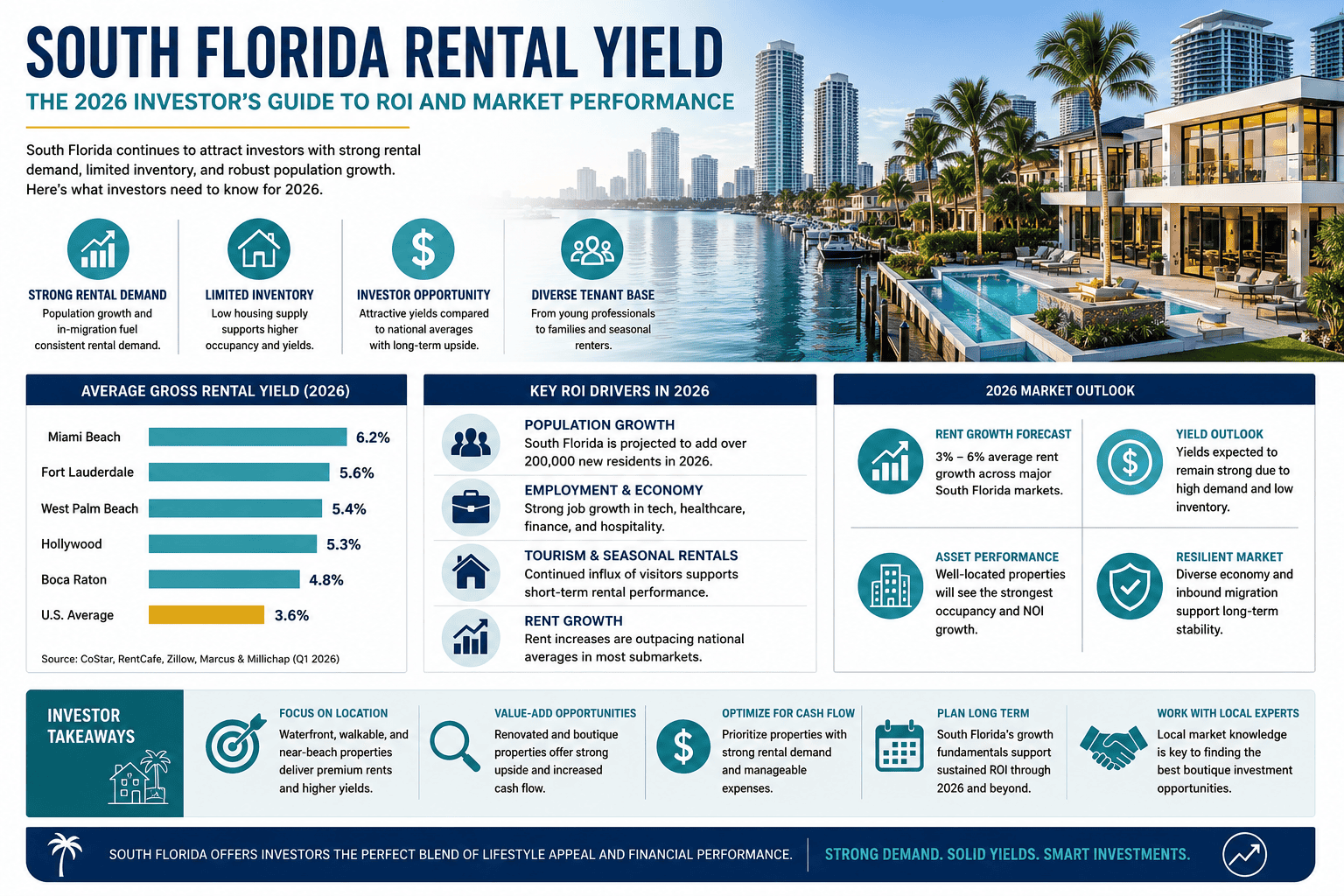
To truly understand the South Florida rental yield, one must look beyond metro-level data and analyze the distinct performance of its prime coastal corridors. Each enclave, from the vibrant urban centers to quiet residential retreats, offers a unique risk-reward profile. The yield potential of a property is deeply connected to its proximity to key lifestyle drivers, such as private schools, international airports, and thriving business hubs. By examining these corridors, we can identify areas poised for continued growth through the remainder of 2026 and into 2027, allowing for a more tactical deployment of capital.
Coastal Enclaves vs. Urban Financial Districts
A clear distinction exists between the investment profiles of beachfront properties and downtown luxury units. While urban condos may offer competitive yields driven by proximity to financial districts, exclusive coastal enclaves often present superior long-term appreciation potential. The tenant profiles also differ dramatically; a downtown high-rise attracts young professionals and corporate renters, whereas a waterfront home in a residential corridor appeals to families and established individuals seeking privacy and community.
The Waterfront Factor: Yield or Appreciation?
Waterfront assets command a higher entry cost, but this is often justified by significantly lower vacancy rates and a more resilient tenant base. For many investors, access to the water is not just an amenity but a strategic hedge against market volatility, as these properties are always in finite supply and high demand. While the maintenance costs for waterfront investments can be higher, the combination of steady rental income and superior appreciation often results in a more robust total return over the long term.
Navigating the 2026 Obstacles: Insurance and Property Taxes
A clear-eyed view of the market requires acknowledging its challenges. The 2026 insurance landscape has introduced a new layer of complexity to yield calculations, with rising premiums impacting net operating income (NOI). Similarly, property tax assessments must be carefully factored into any long-term financial forecast. However, these obstacles are not insurmountable. With tactical planning and a holistic view of returns—one that includes appreciation as a secondary driver—investors can effectively protect their margins and continue to thrive.
Mitigating the Insurance Equation
Proactive measures can significantly influence insurance costs. Investing in structural upgrades, such as a new roof or impact-resistant windows, can lead to meaningful premium credits. Partnering with a specialized insurance broker who understands the nuances of the luxury and waterfront markets is critical. For many investors, evaluating new construction has become a primary strategy, as modern building codes and materials often result in substantially lower carrying costs compared to older properties.
Appreciation as a Component of Total Return
In a high-appreciation market like South Florida, focusing solely on rental yield tells only half the story. The total return on an investment is a combination of the cash flow it generates and the capital gains realized upon its sale. Crafting a clear exit strategy is essential, allowing you to balance the pursuit of rental income to maximize asset appreciation. In a maturing luxury market, yield compression is often a direct consequence of rapid asset appreciation, as rising property values outpace the growth of rental rates.
Strategic Acquisition and Management with Abode Real Estate
Achieving superior returns in the 2026 market is the result of a deliberate, expert-led process. Our boutique approach to investment property acquisition is designed to move beyond the numbers, aligning your financial objectives with your lifestyle values. We believe that professional management is not a cost center but a value multiplier, a service that transforms a physical property into a high-performing, hands-off asset. By leveraging our deep local market insights, we provide the tactical framework necessary for success, ensuring every decision is made with confidence and clarity.
A Curated Path to Investment Success
Our process begins with understanding your unique goals. We offer dedicated investment property acquisition services for out-of-state and international buyers, providing a seamless experience from search to closing. Through our boutique network, we provide access to off-market opportunities that are not available to the general public. Before any purchase, we conduct a rigorous analysis of a property's potential ROI, ensuring your capital is deployed with precision.
Professional Management as a Yield Multiplier
Exceptional management is the key to maximizing returns. Our team works to optimize rental rates, whether for long-term leases or through vacation rental management commissions on short-term stays. We implement a meticulous tenant screening and retention process, recognizing that securing high-quality, long-term tenants is crucial in the luxury segment. Ultimately, our goal is to ensure the longevity and appreciation of your investment through best-in-class luxury property management South Florida.
Frequently Asked Questions
What is considered a strong rental yield in South Florida for 2026?
A strong net rental yield in South Florida for 2026 typically falls between 3% and 5% for luxury long-term rentals, after accounting for all expenses like insurance, taxes, and management fees. However, this varies significantly by asset class and location, with some curated short-term rentals achieving higher effective yields.
How do rising insurance premiums specifically impact net rental yield in Florida?
Rising insurance premiums directly increase a property's operating expenses. This reduces the Net Operating Income (NOI), which in turn compresses the net rental yield. For example, a $10,000 annual increase in insurance on a property generating $100,000 in gross rent immediately lowers the net yield by a full percentage point on a $1 million asset.
Is it better to pursue short-term or long-term rentals for ROI in the current market?
The choice depends on your risk tolerance and management capacity. Short-term rentals can offer higher gross revenue but come with greater volatility, more intensive management, and evolving regulations. Long-term rentals provide more stable, predictable income and are often preferred by investors seeking a less hands-on approach.
How does property appreciation factor into the total return on investment for Florida real estate?
Property appreciation is a critical component of total return. While rental yield represents the annual cash flow, appreciation represents the growth in the asset's underlying value over time. In a market like South Florida, appreciation can often contribute more to an investor's total long-term profit than rental income alone.
What are the current tax implications for out-of-state investors in the South Florida market?
Out-of-state investors are subject to Florida's property taxes, which are based on the assessed value of the property. While Florida has no state income tax, investors must report rental income on their federal tax returns. It is highly recommended to consult with a tax professional who specializes in real estate to understand all implications, including potential deductions.
Can professional property management truly increase my annual rental yield?
Yes. While management services come with a fee, a top-tier professional manager can increase net yield by securing higher-quality tenants, minimizing vacancy periods through strategic marketing, commanding premium rental rates, and preventing costly maintenance issues. Their expertise often generates more income and savings than the cost of their service.
Enjoy this blog post? Click here to subscribe for updates
Leave A Comment