

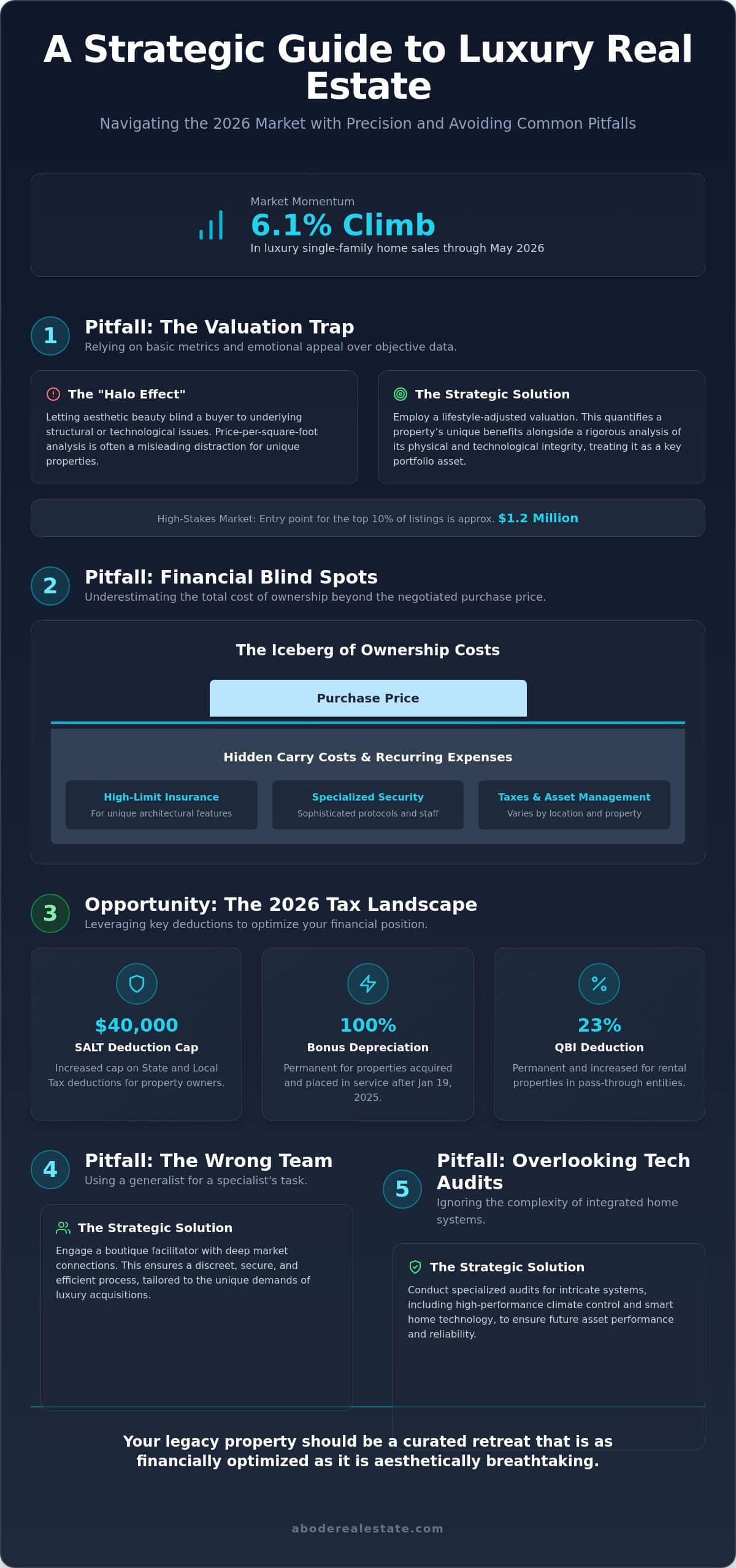
Would you gamble a seven-figure investment on a property that looks like a masterpiece but functions like a money pit? In a market where luxury single-family home sales have climbed 6.1 percent through May 2026, the competition for exceptional inventory remains fierce, yet the margin for error has never been thinner. Even the most sophisticated investors can fall victim to common mistakes when buying a luxury home if they prioritize the dream over the data. It's natural to feel a sense of hesitation when off-market transparency is low and the fear of unforeseen maintenance looms over a beautiful facade.
We believe your next acquisition should be a frictionless transition into a new chapter of refined living. By understanding the strategic pitfalls that others ignore, you can move through the transaction with clinical precision and quiet authority. This guide uncovers the nuances of the current market, from leveraging the $40,000 SALT deduction cap to identifying the wellness features that truly preserve asset value. We'll show you how to ensure your legacy property is a curated retreat that's as financially optimized as it is aesthetically breathtaking.
Key Takeaways
- Reframe your valuation strategy by moving beyond basic metrics to analyze the intersection of emotional resonance and capital growth.
- Avoid the common mistakes when buying a luxury home by conducting specialized audits of intricate smart technology and high-performance climate systems.
- Navigate the total cost of ownership with precision, accounting for specialized security protocols and the evolving tax landscape of 2026.
- Ensure a discreet and secure transaction by leveraging the connections of a boutique facilitator rather than a generalist agent.
- Streamline your arrival by aligning your lifestyle goals with a proactive management plan that begins well before the keys change hands.
Table of Contents
- The Unique Complexity of High-End Real Estate Acquisitions
- Financial Blind Spots Beyond the Negotiated Purchase Price
- Overlooking Technical Due Diligence and Future Asset Performance
- Navigating the Human Elements of a Luxury Transaction
- Crafting a Frictionless Path to Your Next Chapter
The Unique Complexity of High-End Real Estate Acquisitions
Luxury real estate represents a delicate intersection where emotional resonance meets strategic capital investment. It isn't merely about finding a place to reside; it's a high-stakes asset acquisition that demands a level of scrutiny far beyond the standard residential purchase. In the 2026 market, where the entry point for the top 10 percent of listings sits at approximately $1.2 million, the distinction between a house and a legacy asset becomes vital. One of the most frequent common mistakes when buying a luxury home is treating the transaction with the same tools used for a mid-market suburban property.
To better understand the nuances of this specialized market, watch this helpful video:
Exclusivity creates an artificial scarcity that often defies traditional supply and demand. A property isn't just valuable because of its materials, but because of its rarity and the lifestyle it facilitates. This lifestyle premium impacts long-term valuation in ways that standard algorithms simply cannot predict. When you view a home as a curated move into a new chapter, you must also view it as a tactical component of your broader financial portfolio.
Moving Beyond Basic Residential Metrics
Traditional comparables often fail to capture the soul of a property. When a home features bespoke architectural elements or rare historical significance, a simple price-per-square-foot analysis becomes a misleading distraction. A deeper level of understanding property appraisal is required to separate the value of the land from the depreciating structural improvements. This is especially true in premium markets where the location's character provides a floor for the asset's value. Lifestyle-adjusted valuation is a precision-based calculation that quantifies the intrinsic worth of a property’s unique environmental and social benefits alongside its physical attributes.
The Emotional Premium vs. Market Reality
The "halo effect" is a psychological trap where the sheer beauty of a view or a grand entrance blinds a buyer to underlying structural deficiencies. It's easy to be swayed by the aesthetic appeal of professional staging, yet the intrinsic value of the dwelling remains rooted in its physical integrity and technological infrastructure. Avoiding common mistakes when buying a luxury home requires you to balance personal desire with the objective data found in a rigorous investment property analysis. Don't let the dream of the destination obscure the reality of the asset's performance. Focus on the optimization of the asset to ensure it serves as both a personal retreat and a sound financial anchor.
Financial Blind Spots Beyond the Negotiated Purchase Price
The purchase price of a high-end estate is often just the visible portion of a much larger financial commitment. One of the most common mistakes when buying a luxury home is failing to account for the specialized carry costs that preserve the asset's prestige. From high-limit insurance policies tailored for unique architectural features to sophisticated security protocols, these expenses are vital for protecting your peace of mind and your capital. Overlooking these recurring obligations can turn a curated retreat into a source of unexpected fiscal stress.
Tax optimization is another area where precision pays dividends. For the 2026 tax year, the cap on State and Local Tax (SALT) deductions has increased to $40,000, offering a more favorable landscape for property owners. Additionally, real estate investors can leverage the permanent 100% bonus depreciation for properties acquired and placed in service after January 19, 2025. The Qualified Business Income (QBI) deduction has also been made permanent and increased to 23% for rental properties operated through pass-through entities. Neglecting these tactical advantages can lead to significant missed opportunities in your broader wealth management strategy.
Standard financing rarely fits the profile of a seven-figure acquisition. While 2026 mortgage rates are expected to range between 5.5% and 6.4%, many affluent buyers choose to bypass traditional routes entirely. In fact, 84.7% of homes priced between $5 million and $10 million are purchased with cash. For those utilizing leverage, private banking products often provide the liquidity and flexibility that standard jumbo loans cannot match. Securing a bespoke lending structure ensures your capital remains optimized for long-term growth rather than being tied up in rigid debt obligations.
Maintaining the technological pulse of a modern dwelling also requires a dedicated budget. Custom smart home systems and automated climate zones aren't set-and-forget features; they require regular updates and professional management to remain functional. To ensure your financial plan accounts for these nuances, it helps to partner with experts in investment property acquisition who understand the long-term fiscal requirements of luxury ownership. This proactive approach prevents the common mistakes when buying a luxury home that often lead to maintenance-heavy assets.
Underestimating Specialized Financing and Carry Costs
Jumbo loans and portfolio lending are standard in this tier, yet high-net-worth individuals often find better value in liquidity-backed structures. These products allow you to maintain investment momentum while securing your new residence with quiet authority. Beyond the loan, you must calculate the real-world cost of monthly maintenance for estates with extensive amenities. Features like infinity pools, wine cellars, and multi-zone HVAC systems demand specialized contractors whose fees reflect their refined craft.
The Capital Requirements of Curating a Luxury Interior
Furnishing a 10,000-square-foot home is a monumental undertaking that requires a professional design budget from the outset. Utilizing retail furniture for custom architectural dimensions is a frequent error that diminishes the home's character and aesthetic flow. A thoughtfully curated interior acts as a final layer of architectural intent that significantly bolsters the property's future resale value. By treating interior curation as a capital improvement rather than a shopping trip, you protect the long-term desirability of the dwelling.
Overlooking Technical Due Diligence and Future Asset Performance
A standard home inspection often provides a false sense of security for properties with specialized infrastructure. High-end dwellings aren't just larger houses; they're complex machines with integrated systems that require a refined craft to evaluate. One of the common mistakes when buying a luxury home is relying on a generalist inspector who might overlook the intricacies of industrial-grade water filtration or multi-zone HVAC systems designed for massive floor plans. These "invisible" systems are the backbone of a frictionless living experience, and their failure can lead to significant lifestyle friction and unexpected capital outlays.
Infrastructure audits must extend to the digital and environmental layers of the property. Smart home technology and automation should be tested for compatibility and ease of use, ensuring the system enhances your personal retreat rather than creating a technical burden. Beyond the property lines, ignoring future development or zoning changes in the surrounding micro-market can erode the exclusivity you're paying for. In 2026, the luxury market is increasingly localized, and a deep understanding of neighborhood-specific narratives is essential for protecting your investment's long-term spirit and character.
Analyzing the property through the lens of investment property acquisition is vital, even for a primary residence. You should evaluate the potential for the asset to serve as a high-end vacation rental or a corporate retreat if your lifestyle needs change. With luxury home sales rising 6.1 percent in early 2026, the market remains resilient, but discerning buyers prioritize properties with environmental resilience. A home's ability to withstand shifting climate patterns significantly impacts long-term insurance costs and future resale viability. Moving beyond the aesthetic allows you to secure an asset that is as durable as it is beautiful.
The Myth of the Turnkey Estate
Even a newly constructed masterpiece can hide technical flaws that only a specialized engineering audit can reveal. High-register materials like rare marble, hand-applied plasters, or reclaimed wood aren't just aesthetic choices; they are specialized assets that require specific maintenance protocols. Vetting the existing service contracts and warranties for home automation systems is a critical step in the due diligence process. This ensures that your arrival into a new chapter isn't marred by the need to troubleshoot complex systems that should have been optimized before the transfer of ownership.
Evaluating Long-Term Resale and Investment Viability
It's a strategic necessity to assess your exit strategy before the initial purchase is finalized. In March 2026, luxury properties spent a median of 73 days on the market, reflecting a more deliberate and unhurried pace among affluent buyers. Properties that align with the growing demand for wellness features, such as integrated cold plunges or advanced air purification, tend to maintain higher desirability. By considering the potential for luxury vacation rentals, you ensure the property remains a versatile component of your financial portfolio while matching your evolving lifestyle objectives.
Navigating the Human Elements of a Luxury Transaction
High-stakes property transfers are rarely just about the data; they are deeply human processes that require a high-level facilitator rather than a traditional salesperson. One of the most common mistakes when buying a luxury home is assuming that a generalist agent, who typically handles mid-market residential sales, possesses the specialized skill set required for seven-figure asset acquisitions. A boutique approach offers a sophisticated blend of professionalism and approachable warmth, ensuring that your transition feels less like a financial hurdle and more like a curated move into a new chapter of belonging.
Ego and emotional attachment can often derail even the most sophisticated negotiations. While many high-net-worth individuals are masters of negotiation in their respective industries, the emotional weight of a personal retreat can lead to tactical errors. A trusted advisor provides a sense of calm confidence and quiet authority, acting as a buffer between your personal desires and the objective realities of the transaction. This perspective is vital for maintaining integrity and transparency throughout the process, ensuring that long-term value is never sacrificed for a quick win.
Accessing the "hidden" inventory is another area where representation matters. In 2026, the most exclusive properties often never reach public listing platforms, moving instead through private networks of well-connected guides. If you are ready to move beyond generic advice and secure a property that truly aligns with your lifestyle, you can explore our luxury residential sales to find a partner who values discretion as much as you do. This level of personalized, hands-on attention is what separates a standard purchase from a frictionless acquisition of a legacy asset.
The Pitfalls of Inadequate Representation
Luxury buyers require a facilitator who possesses deep local market insights and a refined understanding of investment property performance. There is a profound difference between a salesperson focused on volume and a trusted advisor who prioritizes the optimization of your personal portfolio. A refined local expert manages the complexities of escrow with surgical precision, coordinating with legal and financial teams to ensure every detail of the transfer is handled with absolute care. This level of customized, high-touch service is a verbal shorthand for the tailored approach you deserve.
Misjudging Privacy and Off-Market Dynamics
Discretion is the cornerstone of high-end real estate, yet many buyers overlook the importance of formalizing privacy early in the process. The strategic use of non-disclosure agreements (NDAs) protects your identity and the details of your acquisition from public scrutiny. Accessing exclusive portfolios requires a guide who is deeply rooted in the geographic market and attuned to the essential character of the community. Negotiating with high-profile sellers demands a level of quiet authority that respects the social bonds of the area while securing the best possible terms for your new retreat.
Crafting a Frictionless Path to Your Next Chapter
The successful acquisition of a luxury property is not merely the conclusion of a search; it is the beginning of a curated lifestyle. One of the most common mistakes when buying a luxury home is treating the closing date as the finish line rather than the start of a long-term asset management strategy. A truly frictionless move requires you to align your personal lifestyle objectives with rigorous financial planning long before the keys change hands. This proactive approach ensures that your arrival into a new community feels like a natural belonging rather than a logistical hurdle.
A boutique firm treats real estate as a refined craft, providing the quiet authority needed to facilitate complex transitions. By moving beyond the generic advice of large national franchises, you gain access to a tailored approach that prioritizes the optimization of your assets. This involves a steady, intentional progression from the initial property search to the final stages of professional engagement. When you view your home as both a personal retreat and a tactical investment, you reduce the anxiety often associated with seven-figure transactions.
To ensure a seamless transition into your new estate, consider this strategic checklist for the final acquisition phase:
- Integrate a professional management audit during the due diligence period to identify immediate staffing or maintenance needs.
- Align your property search with 2026 tax fixtures, such as the permanent bonus depreciation for investment assets.
- Establish a concierge protocol for the first ninety days of occupancy to master the home's complex technical systems.
- Verify that your insurance coverage is tailored for high-register materials and specialized architectural features.
- Audit the property's potential for high-end vacation rental income to maintain financial flexibility.
The Boutique Approach to High-Stakes Moves
Curated service models are designed to reduce the friction of a move by providing personalized, hands-on attention at every stage. A firm that understands the nuances of both residential sales and investment property analysis can help you navigate the common mistakes when buying a luxury home with clinical precision. This level of expertise transforms a high-stakes transaction into a curated move into a new chapter, ensuring your legacy property is financially optimized for long-term growth. It's about finding a guide who values your time and privacy as much as you value the integrity of the asset.
Integrating Professional Management from Day One
The most successful luxury owners consider their management strategy during the buying process rather than after the move. If you intend to utilize the property as part of a broader portfolio, evaluating its viability for luxury vacation rentals can provide a significant return on investment. For seasonal residents, the peace of mind provided by concierge property management ensures the dwelling remains a sanctuary even in your absence. This holistic view of ownership is what distinguishes a sophisticated buyer from one who is merely purchasing property. Discover how Abode Real Estate elevates the luxury buying experience by transforming technical expertise into a refined craft for our clients.
Mastering Your High-Stakes Property Acquisition
The transition into a legacy property should be a moment of arrival, not a period of unforeseen maintenance and financial oversight. By moving beyond basic residential metrics and prioritizing technical due diligence, you protect both your peace of mind and your capital investment. Avoiding the common mistakes when buying a luxury home requires a shift in perspective, where you treat the transaction as a refined craft rather than a standard sale. You deserve a facilitator who understands that exclusivity is about more than just a price point; it's about the essential character of where you belong.
When you're ready to navigate the 2026 market with quiet authority, we invite you to partner with Abode Real Estate for your next high-end acquisition. Our boutique service model is led by local market experts who provide a level of personalized, hands-on attention that national franchises cannot match. We offer specialized investment property analysis expertise and an exclusive portfolio of curated luxury assets designed to meet your highest standards. Your next chapter is waiting. Let's ensure it begins with the clarity and confidence your lifestyle demands.
Frequently Asked Questions
Is a standard home inspection enough for a luxury property?
A standard home inspection is insufficient for properties with industrial-grade systems and complex architectural features. You require a specialized engineering audit to evaluate multi-zone climate controls and high-performance smart technology. These technical layers are the backbone of a frictionless living experience. Relying on a generalist is one of the common mistakes when buying a luxury home that can lead to significant capital outlays shortly after you arrive in your new retreat.
How much should I budget for furnishing a high-end estate?
You should establish a professional design budget from the moment you begin your acquisition. Furnishing a high-register estate requires custom curation because retail pieces rarely align with bespoke architectural dimensions. A thoughtfully designed interior acts as an extension of the home's intent and preserves its future resale value. We recommend treating curation as a capital improvement that enhances the asset's overall performance rather than a secondary aesthetic choice.
Can I buy a luxury home through an LLC for privacy?
Purchasing through an LLC or a trust is a standard practice for high-net-worth individuals seeking to maintain discretion and privacy. This structure shields your personal identity from public records and provides an additional layer of asset protection. It's essential to coordinate with your legal and financial advisors to ensure the entity is optimized for your specific portfolio. This approach reflects the quiet authority and security needed when managing significant residential assets.
What are the most common hidden costs in luxury real estate?
Beyond the purchase price, hidden costs often include specialized insurance for unique materials and high-limit liability coverage. You must also account for the recurring maintenance of custom smart home systems and industrial-grade landscaping. These carry costs are vital for protecting the prestige and functionality of your personal retreat. Understanding these fiscal nuances helps you avoid common mistakes when buying a luxury home that might otherwise result in unexpected financial friction.
How do off-market sales work in the luxury sector?
Off-market sales occur within private networks to ensure the highest level of discretion for both parties. These exclusive portfolios are never listed on public platforms and are accessed through well-connected local facilitators. The process typically involves non-disclosure agreements to protect the privacy of the transfer. This hidden inventory represents some of the most desirable assets in the market, requiring a guide who is deeply rooted in the community and attuned to its spirit.
Is it better to buy a turnkey home or a renovation project?
Choosing between a turnkey estate and a renovation project depends on your timeline and appetite for customization. A turnkey home offers an immediate, frictionless transition into your new chapter of living. Conversely, a renovation allows you to tailor a dwelling to your exact aesthetic specifications, though it requires a sophisticated management plan. You should evaluate each option through the lens of long-term asset performance and how well the property facilitates your desired lifestyle.
What should I look for in a luxury real estate brokerage?
You should look for a boutique firm that treats real estate as a refined craft rather than a volume-based business. A superior brokerage offers a sophisticated blend of local market expertise and high-level investment property analysis. They should act as a facilitator who prioritizes long-term relationships and provides personalized, hands-on attention. This boutique emotional style ensures that your transition is managed with the precision and integrity a seven-figure asset acquisition demands.
How does luxury property management differ from standard management?
Luxury property management involves a higher register of service that includes proactive technical oversight and 24/7 concierge support. It moves beyond basic maintenance to focus on the optimization of the asset and the preservation of its refined character. Whether it's managing a short-term vacation rental or maintaining a seasonal retreat, the focus remains on delivering a frictionless experience. This high-touch model ensures the dwelling is always prepared for your arrival and belonging.
Posted by Brook Walsh onEnjoy this blog post? Click here to subscribe for updates
Leave A Comment